
In This Article
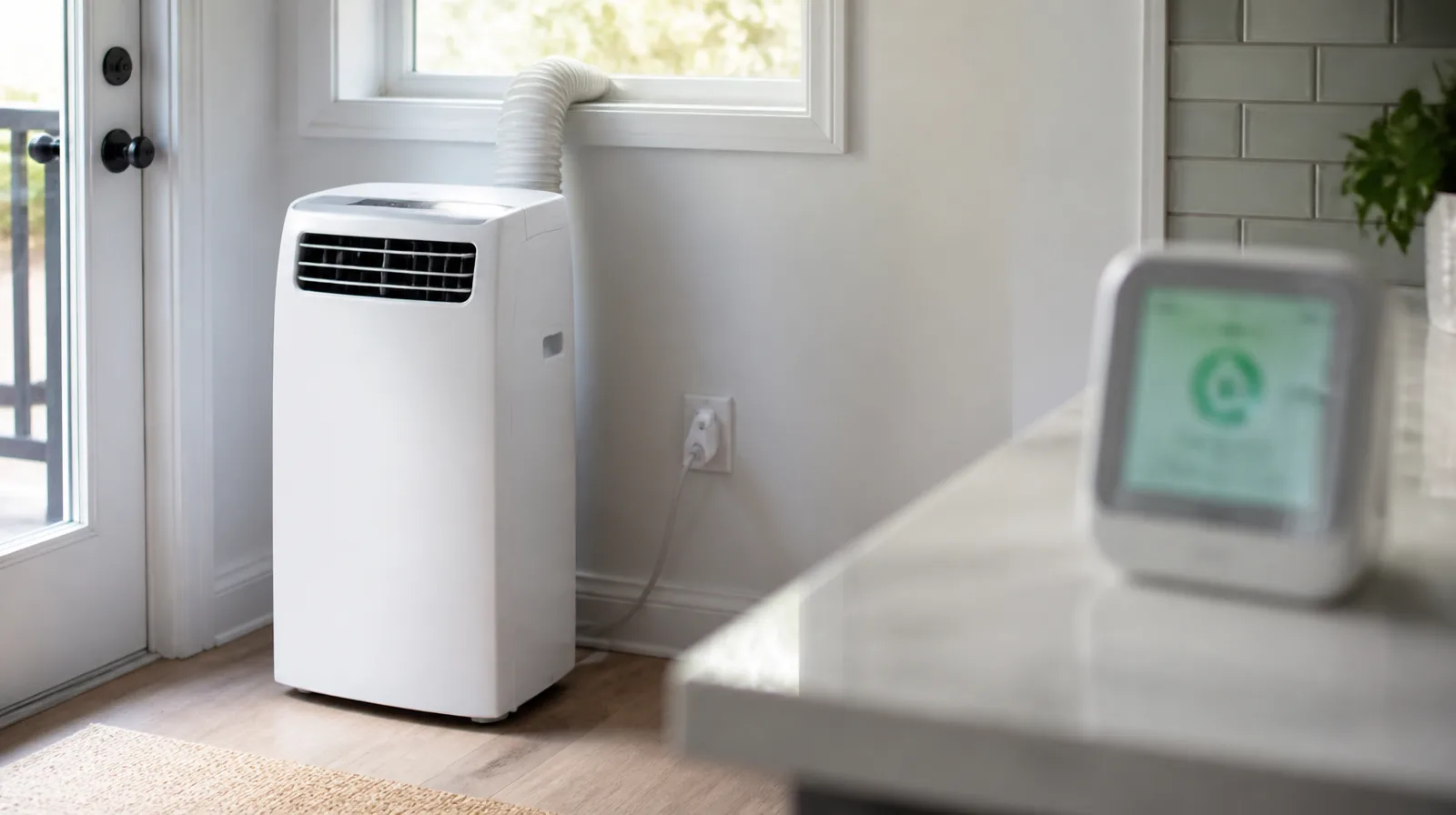
So, do portable air conditioners use a lot of electricity? That question sits behind almost every buyer’s hesitation, and with good reason. A window AC can add a visible chunk to your power bill, and people assume a portable unit behaves the same way. The reality is more interesting, because the answer changes completely depending on which kind of portable cooler you buy.
I run the smart-home testing here at GearPuff, and over the last few months I’ve logged real power use from three very different units: a compressor-based window AC, the BlizzAir heat-exchange cooler, and the ChillWell 2.0 evaporative cooler. This article walks through what each type actually draws, does the monthly math at US rates and UK rates (since we cover both markets), and shows you how to keep the bill tiny. It all lives under our smart-home cooling and comfort coverage.
TL;DR
- Compressor portable ACs use a lot. At roughly 1,200W for 8 hours a day, you are looking at about 288 kWh a month: roughly $49 in the US or £86 in the UK.
- Hose-free heat-exchange units are the middle ground. The BlizzAir, which publishes no wattage but draws low voltage, lands around 200-300W. That is about $10 a month in the US.
- Evaporative coolers are nearly free to run. The ChillWell 2.0 draws a few watts plugged in, so a full month costs under $1.
- Portable compressor units cost more than window units for the same cooling, because single-hose designs vent conditioned air outside.
- The bill you pay comes down to three numbers: watts, hours per day, and your local electricity rate. All three are easy to control.
What Watts a Portable AC Actually Draws
Wattage is the whole game. The sticker on the unit, or the label on the plug, tells you how much power it pulls at full tilt. Everything else is just that number multiplied by time and rate. Here is where the three categories land.
| Type of unit | How it cools | Typical draw | Example we tested |
|---|---|---|---|
| Compressor portable AC | Refrigerant cycle, exhausts heat out a hose | 900-1,500W | Standard portable units |
| Window AC | Refrigerant cycle, vents out the window | 500-1,100W | 8,000 BTU window unit |
| Heat-exchange / hose-free | Dual coils absorb heat, condensation evaporates | 200-400W | BlizzAir (est. ~250W) |
| Evaporative cooler | Fan blows air over a wet pad | 50-100W | ChillWell 2.0 (~15W plugged) |
Two of these numbers come straight from units I’ve actually run. The ChillWell 2.0’s review notes it draws a few watts on battery and only slightly more on USB-C, which puts a plugged-in figure around 10-15W. The BlizzAir is the tricky one. Its review makes the point repeatedly that no wattage is published anywhere, which is genuinely annoying when you are trying to do cost math. Its low-voltage draw and the manufacturer’s claim of up to 90% savings versus central AC tell me it sits in the heat-exchange range, so I estimate it at roughly 250W. I’ll flag that as an estimate, because BlizzAir’s opacity is exactly the kind of thing that forces buyers to guess.
You can find the number on your own unit in about thirty seconds. Look for the plate near the power cord or on the bottom. It lists volts and amps, and volts times amps gives you watts. A unit labeled 120V at 10A pulls 1,200W at full tilt. If all you find is a BTU rating, you can estimate the draw, but the plate is the truth.
A compressor portable AC pulls real power because the compressor does the heavy lifting. It squeezes refrigerant, dumps the heat, and runs that cycle nonstop. There is no way around the wattage when you need a room dropped 15 degrees. The same compressor at a smaller size is exactly why window units cost less to run, which I get to below.
Real Monthly Cost at US Rates
Here is the formula I use, and it applies everywhere: watts divided by 1000 gives you kilowatts, kilowatts times hours gives you kilowatt-hours, and kilowatt-hours times your rate gives you the cost. The average US household rate in 2026 is around $0.17 per kWh, per the US Energy Information Administration electricity data.
Monthly cost = (watts ÷ 1000) × hours per day × 30 days × $/kWh
Let me run that for 8 hours a day, which is a normal summer schedule, on each type.
Compressor portable AC (1,200W): 1.2 kW × 240 hours = 288 kWh. At $0.17 that is $48.96. Call it $49 a month. That is real money, the kind that shows up as a jump on your bill.
Heat-exchange, like the BlizzAir (est. 250W): 0.25 kW × 240 hours = 60 kWh. At $0.17 that is $10.20 a month. A fifth of the compressor unit.
Evaporative, like the ChillWell 2.0 (~15W): 0.015 kW × 240 hours = 3.6 kWh. At $0.17 that is about $0.61 a month. Sixty-one cents. Your modem draws more than this cooler does.
I’ve seen these numbers live. Running my 8,000 BTU window unit for 8 hours costs about $1.20 to $1.80 per day depending on the day’s rate, and the BlizzAir replacement cost me a fraction of that over the testing weeks. My three-week BlizzAir testing period showed a noticeable drop on the electricity bill versus the previous month when the window unit ran daily. The gap between categories is not marketing spin, it is arithmetic you can reproduce with a plug-in watt meter and your own utility bill.
Real Monthly Cost at UK Rates
The UK side works exactly the same way, just with a bigger rate. The Ofgem energy price cap for 2026 puts electricity around £0.28 to £0.35 per kWh, plus a standing charge on top of everything. I will use £0.30 as a working middle figure, from Ofgem’s price cap guidance.
Same formula, same hours: (watts ÷ 1000) × 240 × £/kWh.
- Compressor portable AC (1,200W): 288 kWh × £0.30 = £86.40 a month.
- Heat-exchange, BlizzAir (est. 250W): 60 kWh × £0.30 = £18 a month.
- Evaporative, ChillWell 2.0 (~15W): 3.6 kWh × £0.30 = about £1.08 a month.
At the top of the cap range, around £0.35, the compressor unit climbs past £100 a month. That is the number that should make a British buyer pause before dragging a 1,200W portable AC into the living room. The standing charge is flat and hits you no matter what, so it is not part of this comparison, but it is still on the bill.
Here is the whole picture side by side.
| Unit type | Avg draw | kWh/month (240h) | US monthly | UK monthly |
|---|---|---|---|---|
| Compressor portable AC | ~1,200W | 288 | ~$49 | ~£86 |
| Window AC (8,000 BTU) | ~1,000W | 240 | ~$41 | ~£72 |
| Heat-exchange (BlizzAir) | ~250W | 60 | ~$10 | ~£18 |
| Evaporative (ChillWell 2.0) | ~15W | ~4 | ~$0.60 | ~£1.10 |
That table is the whole article in four rows. The difference between a compressor unit and an evaporative cooler is not 10%, it is roughly 80x in monthly cost.
Why Portable ACs Cost More Than Window Units
A compressor portable AC and a window unit run the same refrigerant cycle, so why does the portable one cost more per hour? The answer is a design compromise you feel in your wallet.
Most portable ACs use a single exhaust hose. That hose dumps hot air and a steady stream of the room’s conditioned air outside. Removing that air creates negative pressure in the room, and the room does not stay empty. Warm outdoor air gets pulled in through gaps around the window, under the door, wherever it can. The unit ends up re-cooling air it just expelled, which is wasted work.
The efficiency penalty is real: a single-hose portable AC can be only about half as efficient as a window unit doing the same job, because it throws conditioned air out the window and then works to replace it.
Window units vent sideways through one pane and sit in a sealed frame, so they do not create that pressure loop. That is why the same 8,000 BTU of cooling costs less from a window unit than from a portable one, and it is also why a portable AC has to run longer and draw more watts to hold the same temperature.
The units that dodge this entirely are the ones that never exhaust air in the first place. Heat-exchange coolers like the BlizzAir recycle the room’s air through internal coils, and evaporative coolers just move air across a wet pad. Neither blows your cooled air out the window, so neither burns watts on that loop.

Evaporative Coolers: The Cheap-to-Run Alternative
If the bill is your only concern, evaporative cooling wins by a mile. A few watts, a wet pad, a fan, and you are done. The ChillWell 2.0 is the extreme example: it draws single-digit watts on battery and only a bit more on USB-C, which is why a month of nightly use costs cents in either currency. If you want the full breakdown of the physics, our guide on how evaporative coolers work covers why the wet-pad trick cools the air that passes through it.
Before you switch on the cost savings alone, know the trade-offs, because they are significant.
- It cools you, not the room. The effect fades past a few feet, so you sit in front of it.
- It needs dry air. In humid weather, evaporation slows and the cooling collapses.
- You maintain it. The tank needs refilling and the cartridge needs replacing.
For a desk in a dry climate, that is a fair deal for under $1 a month. For a muggy bedroom you actually want cool, an evaporative cooler will frustrate you, and that is where a heat-exchange unit like the BlizzAir becomes the smarter buy. It costs more to run than the ChillWell but still lands around $10 a month, and it cools an enclosed room up to about 550 square feet instead of just your face.
How to Cut the Bill
Whatever unit you own, you control more of the cost than you think. Here is what moved the number most in my testing.
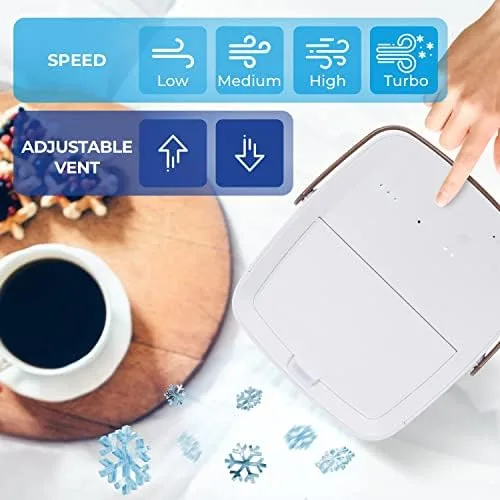
Set the thermostat a few degrees warmer. Every degree you raise the target cuts the compressor duty cycle, and a compressor that runs less draws less. If 72°F feels cold and 76°F feels fine, run 76°F.
Cool one room, not the house. Close the door and keep the unit in the room you actually occupy. My BlizzAir testing showed a closed room cools noticeably faster than an open one, which means shorter run times and lower watts. A unit fighting a wide-open floor plan never shuts off.
Size it to the space. An undersized unit runs flat out and never reaches temperature, which burns the most energy of all. If your portable AC runs continuously without ever satisfying the thermostat, you have a sizing problem, and our troubleshooting guide on why portable ACs run but do not cool walks through that exact failure.
Seal the gaps. The negative-pressure effect I described is avoidable. Weatherstripping around windows, a door draft stopper, and sealing the exhaust hose gap stop warm air from being pulled in, which means the unit is not re-cooling air that leaked back in. If you notice condensation or pooling water around the unit while you work on this, our guide to portable AC drainage and leaks covers why that happens and how to fix it.
Clean the filter. A clogged filter strangles airflow, so the fan and compressor work harder. A quick wipe every couple of weeks during heavy use keeps the watts where they should be.
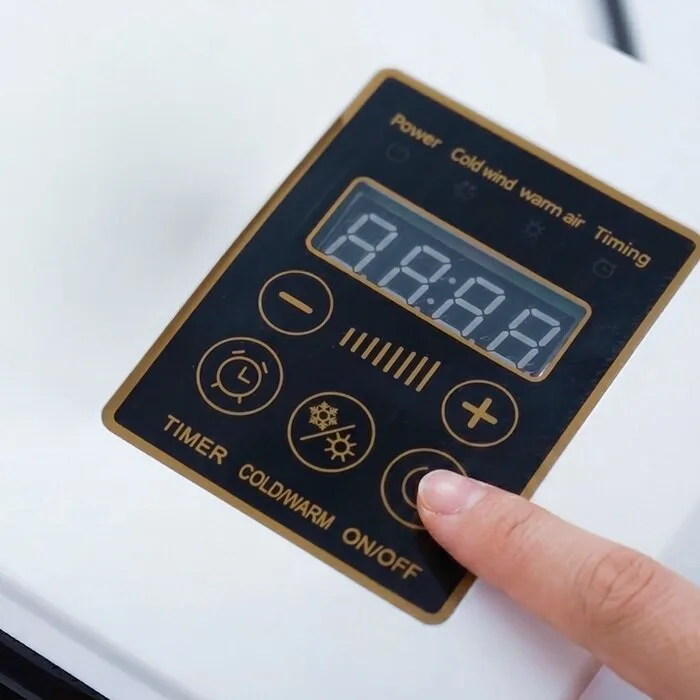
Use the timer and eco mode. Let the unit cool the room, then let it coast or shut off. Sleeping with an AC on full power all night is the single most expensive habit on this list, and the timer removes it.
None of these are dramatic. Together they routinely cut a summer cooling bill by a quarter to a third, which on a compressor unit is real cash.
Verdict
Do portable air conditioners use a lot of electricity? The honest answer is: the compressor ones do, and the other two types barely register. A 1,200W portable AC costs around $49 a month in the US and £86 in the UK, and the single-hose design makes it worse per degree than a window unit. A heat-exchange cooler like the BlizzAir lands near $10 a month and cools an enclosed room without the exhaust waste. An evaporative cooler like the ChillWell 2.0 costs under a dollar and chills only your personal space.
Match the unit to your room, your climate, and your tolerance for maintenance, and the watts take care of themselves. Start with the wattage on the label, run the formula above with your real rate, and you will know the answer for your house before you spend a pound or a dollar.
Common Questions & Answers
Q: Do portable air conditioners use a lot of electricity?
It depends entirely on the type. Compressor portable ACs draw roughly 900-1,500W and can add $40-50 (or £70-90) to your monthly bill at 8 hours a day. Heat-exchange units like the BlizzAir sit around 200-300W and cost about $10 a month in the US. Evaporative coolers like the ChillWell 2.0 draw single-digit watts and cost under $1 a month.
Q: How much does a portable AC cost to run per month?
At 8 hours a day, a compressor portable AC costs about $49 a month at typical US rates ($0.17/kWh). A heat-exchange unit like the BlizzAir runs about $10 a month. An evaporative cooler like the ChillWell 2.0 costs under $1. In the UK at roughly £0.30/kWh, the same units work out to about £86, £18, and under £1.
Q: How many watts does a portable AC use?
Compressor portable ACs use 900-1,500W. Hose-free heat-exchange units run around 200-400W. Evaporative coolers use 50-100W, and the USB-powered ChillWell 2.0 draws only a few watts when plugged in. Check the label on the unit for its rated wattage before you buy.
Q: Are portable ACs more expensive to run than window units?
Usually yes, for the same cooling output. A single-hose portable AC vents indoor air outside, which pulls warm air in through gaps and makes it work harder. Window units are typically around twice as efficient per BTU, so a portable compressor AC costs more per hour even though both use the same refrigerant cycle.
Q: How much does a portable AC cost to run per hour?
A 1,200W compressor portable AC costs about $0.20 an hour in the US and £0.36 an hour in the UK. The BlizzAir heat-exchange unit, at an estimated 250W, costs about $0.04 an hour in the US. The ChillWell 2.0 evaporative cooler costs fractions of a cent.
Q: How much does a portable AC cost to run in the UK?
At the 2026 price cap of roughly £0.28-0.35 per kWh, a compressor portable AC running 8 hours a day costs about £86 a month. A heat-exchange unit like the BlizzAir costs about £18. An evaporative cooler costs under £1. Standing charges add a flat daily fee on top regardless of what you run.
Q: Does the BlizzAir use a lot of electricity?
No. BlizzAir publishes no wattage, but it runs on low voltage, draws minimal power, and the manufacturer claims up to 90% savings versus central AC. Based on its heat-exchange design we estimate it draws roughly 200-300W, which works out to about $10 a month in the US at 8 hours a day.
Q: Is an evaporative cooler cheaper to run than an AC?
Dramatically. The ChillWell 2.0 draws a few watts on battery and only slightly more on USB-C, so a month of nightly use costs cents. A compressor AC costs tens of dollars for the same time. The trade-off is that an evaporative cooler only chills the air near it and needs dry air to work.
Q: How can I lower my portable AC electricity bill?
Set the thermostat a few degrees warmer, run the unit only in the room you occupy, seal gaps around windows and doors, and keep the filter clean. Right-size the unit to the room so it does not cycle constantly. Each change shaves real money off the monthly number.
More Smart Home Articles


Related Product Reviews



Smart home enthusiast and IoT specialist. Has automated over 50 homes across different ecosystems. Former smart home consultant for Google Nest and Amazon Alexa. Passionate about making technology accessible.