
In This Article
- TL;DR
- 5 Compressors Ranked by How Much Work They Finish
- How I Tested Workload Instead of Reading Spec Sheets
- What Duty Cycle Actually Means
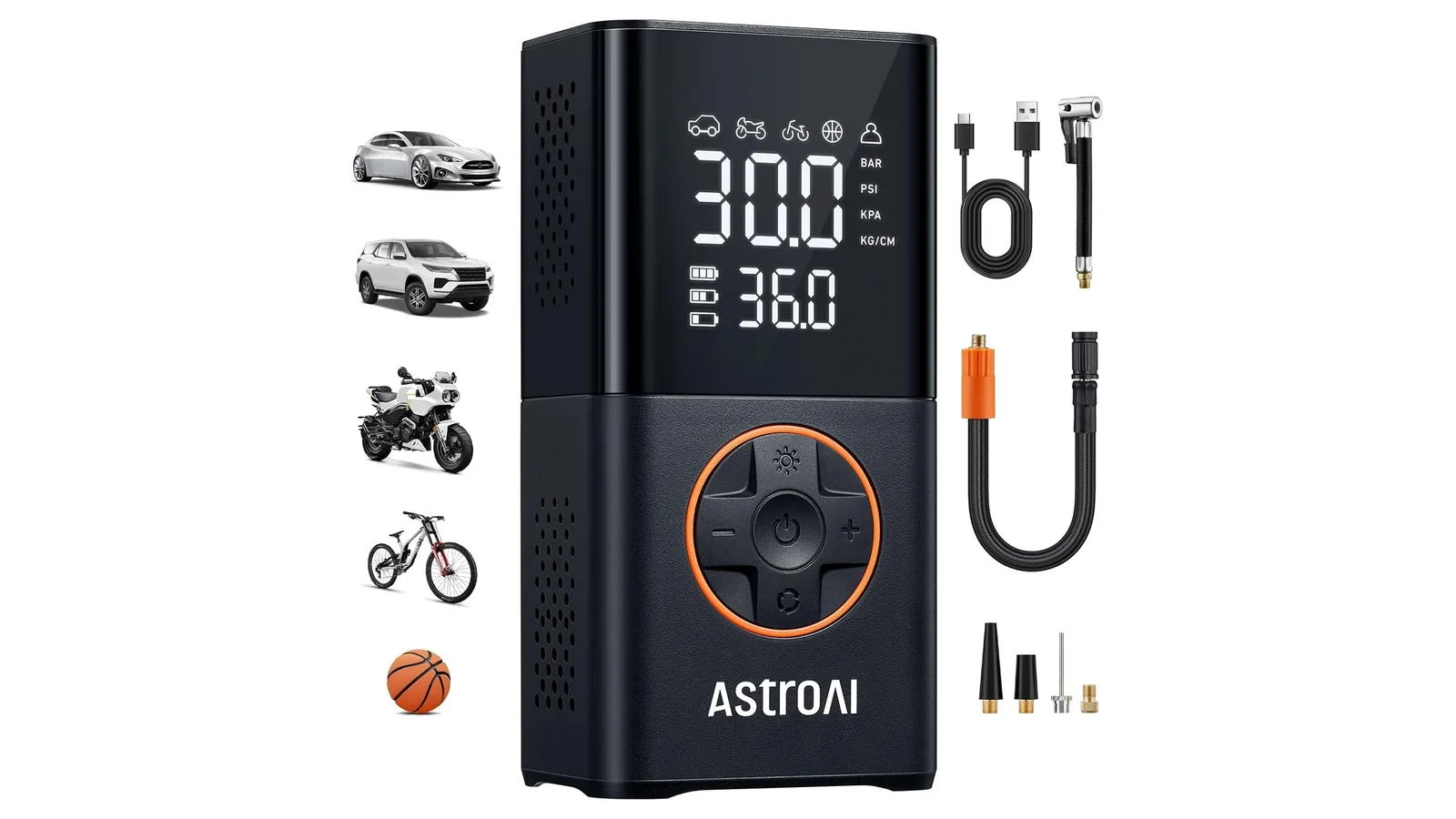
- 1. Airmoto, Around $89
- 2. Auto Air Pump, Around $89
- 3. Fanttik X8 Apex, Around $60 to $90 on Sale
- 4. VIAIR 88P, Around $90
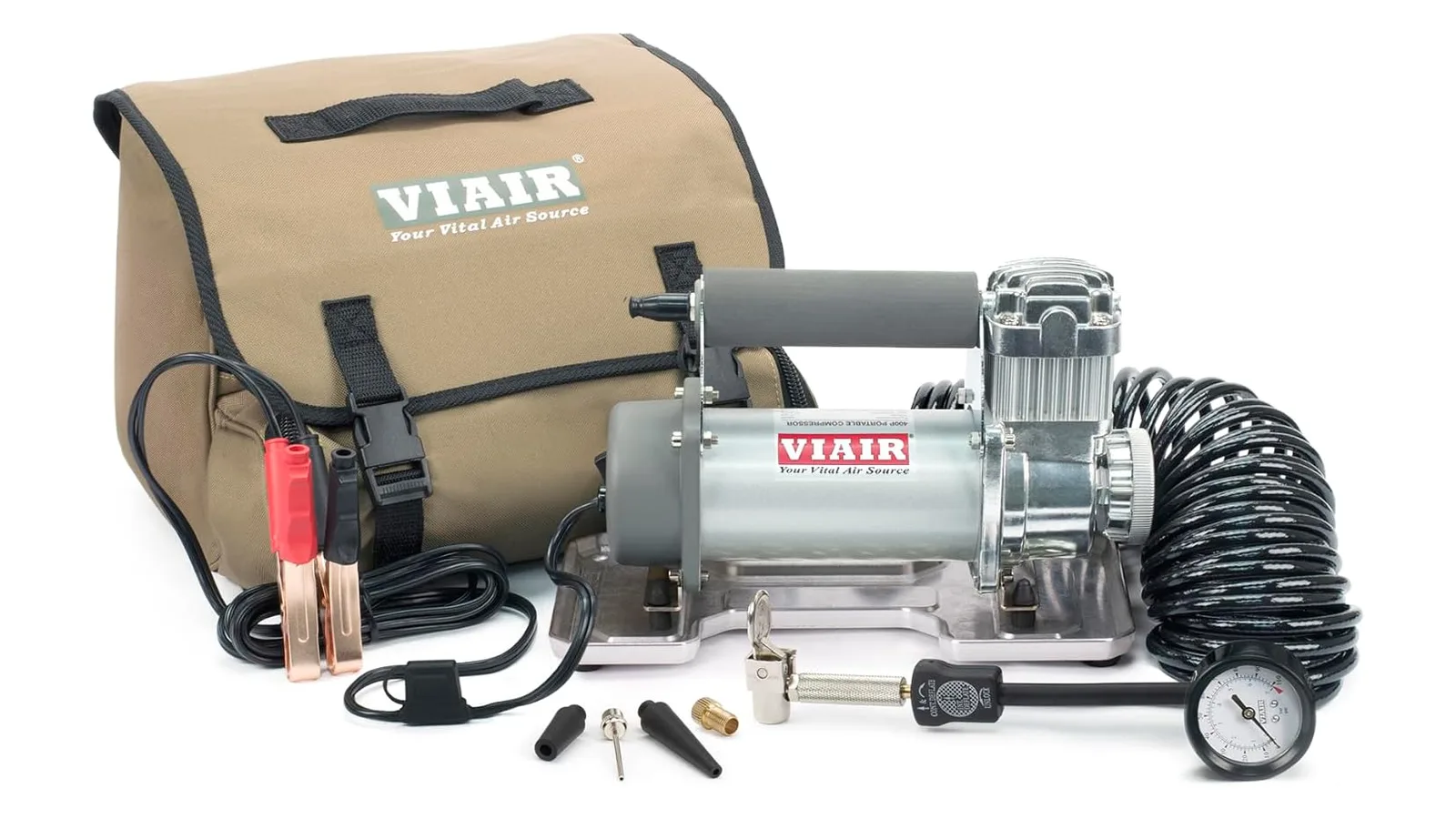
- 5. VIAIR 400P, Around $226
- How to Choose Your Tier
- The Cooldown Routine That Doubles Pump Life
- What to Do When It Quits Mid-Job Anyway
- Verdict
I killed a cheap inflator on a Saturday morning trying to air up all four tires plus a spare. Two tires went fine. The third got slow. By the fourth the hose was too hot to touch and the motor quit with a smell I still remember. That failure taught me the rule behind this whole article: every portable inflator has a duty cycle, and the Airmoto class of pocket pumps is built for top offs, not full fills. If your pump gets hot and quits after 2 tires, it is probably working as designed. You just asked it to do the wrong job.
This guide explains duty cycle in plain terms, gives you cooldown rules that save pumps, and ranks five compressors by how many tires they actually finish. Pick the tier that matches your worst day, not your average day.
TL;DR
- Pocket cordless inflators top off 2 to 3 car tires, then need 5 to 10 minutes of rest.
- A 12V clamp compressor like the VIAIR 88P does all four car tires without stopping.
- Trucks, trailers, and anything filled from flat need a high CFM unit like the VIAIR 400P.
- Hot hose is normal. Burning smell or melted plastic means you ignored the cutoff.
- If it quit below target on a hot unit, rest it 10 minutes and finish. The pump is fine.
5 Compressors Ranked by How Much Work They Finish
| Compressor | Type | Realistic workload | Cooldown needed | Around |
|---|---|---|---|---|
| Airmoto | Cordless pocket | 2 to 3 car top offs | 5 to 10 min after 10 min work | $89 |
| Auto Air | Cordless pocket | 2 to 3 car top offs | 5 to 10 min after 10 min work | $89 |
| Fanttik X8 Apex | Cordless, larger | 3 to 4 car top offs, faster | Short rests between tires | $60 to $90 |
| VIAIR 88P | 12V clamps | All 4 car tires back to back | Minimal on car tires | $90 |
| VIAIR 400P | 12V clamps, high CFM | Trucks, trailers, RVs, 30 min runs | Duty cycle 33 percent at 100 PSI | $226 |
Price order and capability order are not the same here, which is the point. The two $89 pocket pumps lose to the $90 clamp unit on sustained work because physics favors a bigger piston with car battery power behind it. Read the table as workload tiers, then match your worst day.
How I Tested Workload Instead of Reading Spec Sheets
CFM numbers on Amazon listings lie by omission, so I tested the only way that matters: I aired tires and counted. Each pump got the same jobs in order. Top off four sedan tires from 28 to 35 PSI. Then fill one tire from 15 to 35 PSI. Then I touched the hose, timed the fill, and noted every slowdown and cutoff. Room temperature sat around 70 degrees for every run, and each pump started cold.
The pocket pumps finished the four top offs in about 15 minutes including a rest I forced after tire two. The single fill from 15 PSI took one pocket pump out on thermal cutoff at 29 PSI, and it needed 12 minutes before it would run again. The VIAIR 88P did all five jobs back to back with a warm but comfortable hose. The 400P did everything fastest and never got more than warm. My notes on heat quirks and error behavior live in the Airmoto troubleshooting guide, which covers what each warning light means while this article covers how to avoid seeing them.
Small pistons move roughly 1 CFM or less while a 35 inch truck tire can need 10 times the air of a sedan tire. That volume gap is why pocket pumps take 10 minutes per truck tire and overheat trying. Match displacement to tire size first and brand second.
What Duty Cycle Actually Means
Duty cycle is the fraction of a 10 minute window a compressor may run. A 50 percent duty cycle means 5 minutes on, 5 minutes off. Pocket pumps rarely publish a number, which tells you everything: assume 10 minutes on, 10 minutes off, and you will never melt one. Published numbers on bigger units assume moderate pressure. Pumping to 100 PSI for a trailer works the motor harder than 35 PSI for a sedan, so give it extra rest at high pressures.
Heat kills in three stages. Stage one is a hot hose and slower pumping, which is your warning. Stage two is thermal cutoff, the protection tripping, which costs you 10 minutes of waiting. Stage three is damage: softened seals, warped housing, cooked battery. Almost nobody reaches stage three on purpose. They get there by restarting the pump the second it cools enough to run, over and over, on a hot afternoon.
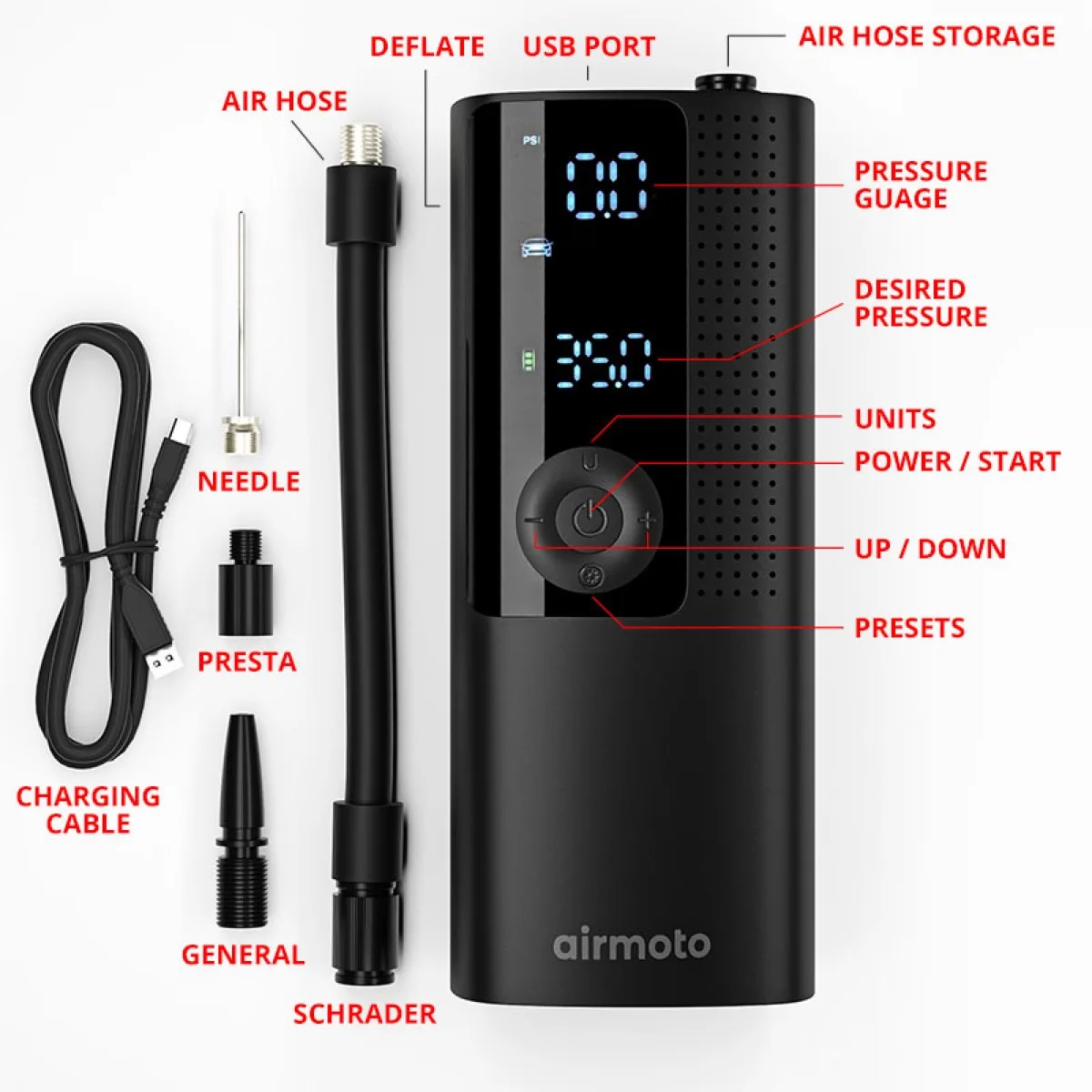
1. Airmoto, Around $89
Why it earns the top off specialist spot: auto shutoff, preset modes, and a size that lives in a door pocket, perfect for the monthly top off routine it was built for.
Used inside its limits, the Airmoto is the pump I recommend most. Set the target 1 PSI above the door sticker, since these displays read high while pumping, a quirk I documented with test data in why inflators read high versus gauges. Let it beep, move to the next tire, and rest the unit after every two tires. Two full top off rounds per charge is realistic. Its limits are workload, not quality: ask it to fill a flat or service an SUV fleet and you will meet the thermal cutoff personally.
2. Auto Air Pump, Around $89
Why it earns the twin pick spot: same pocket class and presets as the category leader, so the same duty rules apply and the same monthly routine suits it.
Auto Air plays the same position as the Airmoto: glovebox friendly, preset driven, ideal for keeping four tires at spec with minimal fuss. Run it two tires on, a few minutes off, and confirm the final number with a standalone gauge after disconnecting, since screw chucks bleed about 1 PSI. It will not outwork physics either. Treat flat fills and truck tires as someone else’s job and this pump serves for years.
3. Fanttik X8 Apex, Around $60 to $90 on Sale
Why it earns the strongest cordless spot: a bigger pump and battery than pocket minis, so it finishes the same jobs faster with less heat per tire.
The X8 Apex is what you buy when you like cordless but keep hitting the ceiling of tiny pumps. It moves air noticeably quicker, which matters more than it sounds, because a shorter run means less heat buildup before the cutoff threshold. Expect three to four car top offs per session with brief pauses. Sale prices swing a lot on this one, and the low $60s during events make it the value pick of the cordless tier. It still answers to a car battery clamp unit on big tires, so read its limits the same way.
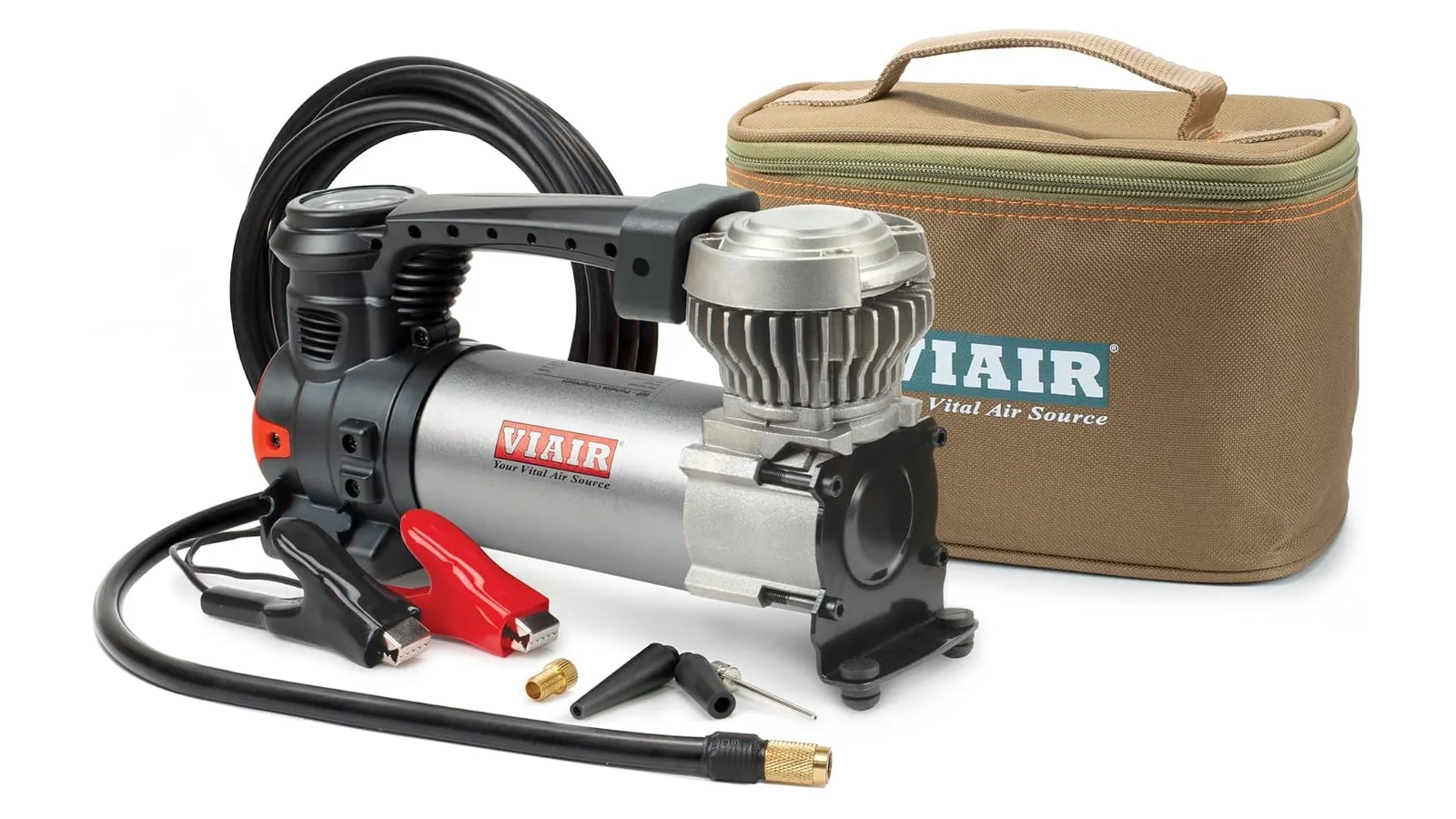
4. VIAIR 88P, Around $90
Why it earns the best all rounder spot: battery clamps feed a real piston that does all four car tires back to back with no battery to babysit and no fuse to blow.
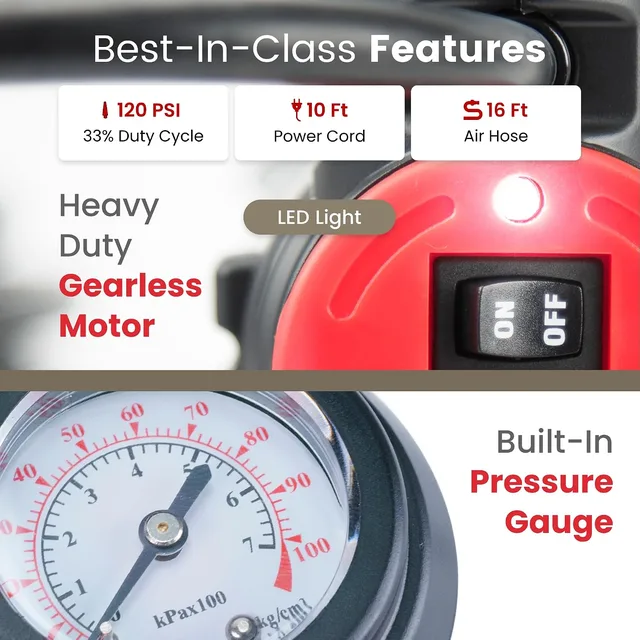
This is the pump that ends most overheating complaints in one purchase. Rated 4.7 across more than 8,100 owner ratings at last check, it clips straight to the battery terminals, the engine runs to hold voltage steady, and the 88P fills four sedan tires in roughly 15 minutes of continuous work with only a warm hose to show for it. The 10 foot power cord plus 16 foot air hose reach every corner of most vehicles. Downsides are honest ones: it is loud, it lives in the trunk rather than a pocket, and it needs a running car. Around $90 buys the last inflator most car owners ever need. If fuse anxiety is your specific fear, my comparison of plug-in versus cordless versus clamp power explains why clamps dodge that failure entirely.
5. VIAIR 400P, Around $226
Why it earns the truck and trailer spot: high CFM output and a 30 minute duty envelope that treats big tires as routine instead of an emergency.
A 35 inch tire holds a cavern of air, and only displacement answers it. The 400P moves several times the volume per minute of any pocket pump, so a truck top off takes minutes and a trailer fill stays inside the duty rating. The 150 PSI ceiling covers high pressure trailer tires that stop smaller pumps cold. The price and bulk rule it out for sedan owners, and it demands the same running engine and clamp routine as its smaller sibling. Buy it when your worst day involves sidewalls taller than your forearm.
How to Choose Your Tier
- Monthly top offs on one or two cars? Airmoto or Auto Air, rested after every two tires.
- Hate waiting and want the fastest cordless? Fanttik X8 Apex on sale.
- Four tires, zero patience, zero dead batteries? VIAIR 88P with clamps.
- Trucks, trailers, RVs, or off road air downs? VIAIR 400P, no substitute.
- Still deciding between power types? The portable inflator power guide maps vehicles to tiers with PSI and battery math.
One habit multiplies every pump on this list. Work rear tires first while the unit is cold, since they usually need the most air, then finish the fronts. Rest the pump while you check pressures with a gauge. By the time you have confirmed two tires, a pocket pump has cooled enough for the next round.
The Cooldown Routine That Doubles Pump Life
Pumps die from heat cycles, not birthdays. A simple routine between tires adds years, and it costs nothing but a few minutes you spend checking pressures anyway.
Work in a two on, rest, two off rhythm with pocket pumps. Fill two tires, then stop and check both with your standalone gauge while the pump sits untouched. That checking pause runs 3 to 5 minutes, which is most of the cooldown a small unit needs. Then finish the last two tires and check those. You never stand around waiting because the gauge work fills the rest window.
Park in shade and pop the hood or trunk for airflow when you run a 12V unit on a hot day. Direct sun on black asphalt adds 20 degrees to the starting temperature of the pump body, which is free heat working against you. I drape a light towel over the unit between tires on summer days, leaving the vents open, which sounds silly until you touch the difference.
Store the pump right and it starts every job cooler. Cordless units live indoors between uses, charged to roughly half, never baking in a trunk all August. Heat-soaked batteries sag under load from the first second, which makes the motor strain and heat faster in a spiral. A pump stored cool starts strong and stays cooler throughout the job. The full storage routine with charge percentages is in my cordless care walkthrough, and it applies to every battery pump on this list.
What to Do When It Quits Mid-Job Anyway
It happens. Thermal cutoff trips on tire three, the display goes dark, and you are sitting in a parking lot with one soft tire. Do not panic and do not restart it immediately.
First, feel the hose. Hot but touchable means a normal cutoff, and 10 minutes of shade rest brings it back. Too hot to hold or smelling of burnt plastic means stop for the day on that pump and drive gently to a gas station air hose for the last tire. Forcing a scorched pump risks the seal damage that turns a pause into a replacement.
Second, while it cools, check what you already finished with your gauge. Most mid-job quits happen with three tires done and one half done. Knowing exactly where you stand keeps you from redoing work and reheating the pump on tires that were already fine.
Third, finish smart. Restart only when the body feels room temperature. Fill the remaining tire in two short bursts with a gauge check between them instead of one long run. That split keeps the second heat climb shallow enough to finish without tripping again.
Verdict
Overheating is not a defect in most cases. It is a small pump telling you the job is too big. Pocket cordless units own the monthly top off, the VIAIR 88P owns the four tire fill, and the 400P owns everything with a tall sidewall. Buy the tier above your worst day and you will never smell hot plastic on a Saturday morning again. My best portable inflators roundup keeps all three tiers side by side with current prices when you are ready to compare.
Whichever tier you buy, respect the rest window for the first month until the routine becomes habit. Pumps that survive their first summer of proper cooldowns tend to survive for years. The ones that die young almost always die from the same cause: a big job, a hot day, and an owner who kept restarting.
Common Questions & Answers
Q: Why does my portable tire inflator get so hot?
A micro-compressor squeezes air into a tiny piston at over 100 PSI, and that friction becomes heat with nowhere to go. The hose gets hot first, then the motor housing warms through. Pocket-size pumps have almost no metal to absorb it, so they hit thermal cutoff fast. Heat during a fill is normal physics. Heat that melts plastic or smells like burning means you ran past the duty cycle.
Q: How many tires can a portable inflator fill before overheating?
A pocket cordless unit like the Airmoto typically tops off 2 to 3 car tires before needing a rest, assuming each needs only a few PSI. Filling from flat cuts that to about one tire. A mid-size 12V compressor such as the VIAIR 88P handles all four car tires back to back. Big 12V units like the 400P run 30 minutes or more and cover trucks without breaking a sweat.
Q: How long should I let my tire inflator cool down?
Give a pocket inflator 5 to 10 minutes of rest after every 8 to 10 minutes of pumping. If the body is uncomfortable to hold, you waited too long already, so stop and let it cool fully. Larger 12V compressors publish duty cycles, often 15 to 30 minutes on followed by equal rest. When in doubt, if it smells hot, it is hot. Stop early rather than melting a piston.
Q: Can overheating permanently damage a tire inflator?
Yes. Repeated thermal abuse softens piston seals, warps plastic housings, and cooks lithium batteries, which then hold less charge. One overheated run usually just trips the cutoff and the unit recovers. A habit of running to cutoff every weekend shortens the pump's life from years to months. Respect the rest periods and the unit lasts.
Q: Is it better to fill tires in the morning to avoid overheating?
Cooler ambient air helps a little, since the pump starts from a lower temperature and the tires are cold, which is also when you should set pressure anyway. But ambient temperature is a small factor next to workload. Filling four nearly flat tires at noon will overheat any pocket pump regardless of a cool morning start. Match the tool to the job first, then enjoy the small bonus of morning fills.
Q: Why does my inflator shut off by itself mid-fill?
Two different shutoffs cause this. Auto shutoff at the target PSI is the feature working, and it restarts if pressure drops. Thermal cutoff from overheating is the protection working, and the unit stays dead until it cools. Tell them apart by the display: target reached shows your set number, while thermal trips often show an error or go dark. If it quit below target on a hot unit, let it rest 10 minutes and finish.
Q: Do battery clamps prevent overheating compared to cordless?
Not directly, but they remove the battery from the heat equation. A clamp compressor draws steady power from a running car, so voltage never sags as the pump works hard. Cordless units lose voltage as they heat, which makes the motor strain more and heat faster. Clamps also power bigger pistons that move more air per stroke, so the job finishes before heat builds.
Q: Can I use a portable inflator on truck or RV tires?
Pocket cordless pumps can top off a truck tire by a few PSI in a pinch, but filling large tires from low pressure overwhelms them. A 35 inch truck tire holds several times the air of a sedan tire, turning a 3 minute job into a 15 minute overheat. For trucks, trailers, and RVs, use a high CFM 12V compressor like the VIAIR 400P with battery clamps. It is built for exactly that workload.
More Smart Gadgets Articles
Related Product Reviews



Consumer electronics reviewer specializing in smart gadgets and everyday tech. Tests 100+ gadgets annually. Previously wrote for The Verge and Wired. Focus on practical daily-use value.