
Good — worth it for the right buyer
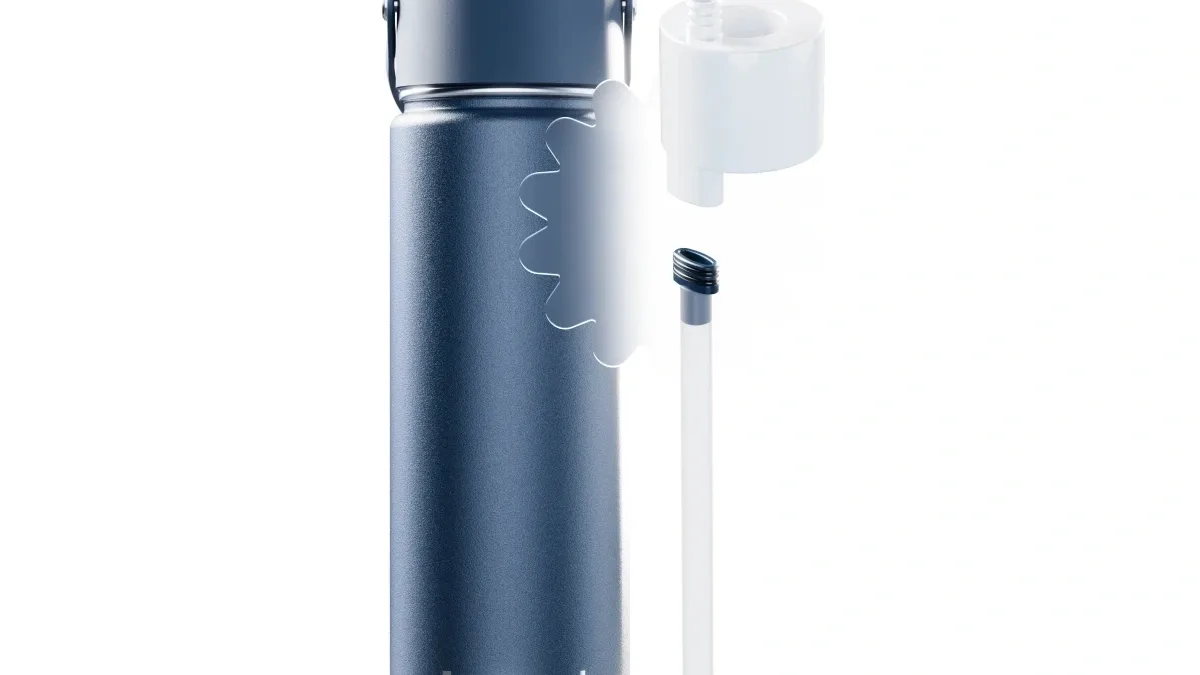
- Combines a UV-C cap that inactivates germs with a real DuoCore carbon filter ring in the same bottle
- Auto-clean every 6 hours means the bottle never develops the musty smell my old one did
- 22oz double-wall stainless keeps water cold for 24 hours and hot for 12
- Filter swap is tool-free and takes under a minute
- Battery ran 47 to 51 full UV cycles per charge, close to the rated 60
- The '99.9999% bacteria' figure is a lab bench number, not a real-world stream or airport fountain guarantee
- Carbon filter covers taste and dissolved chemicals, not pathogens on its own
- Funnel uses classic urgency tricks, countdowns and 'almost sold out' on every page load
- Ease of Use:
- Value for Money:
- Design and Build:
- Water Treatment Performance:
- Overall Daily Utility:
In This Article
- My Verdict at a Glance
- What the UVBrite Beam+ Actually Is
- The UV Math Behind the 99.9999% Claim
- What 5 Weeks of Daily Use Actually Looked Like
- Week 1, first sips and the auto-clean surprise
- Week 2, the hot-car test
- Week 3, a four-day trip
- Week 4 and 5, filter swaps and battery reality
- How the UV-C Cap Behaves in Practice
- Side By Side Comparison
- The Lab Claim vs Field Reality Table
- The Funnel Red Flags I Noticed
- Cleaning and Filter Replacement
- Who Should Actually Buy It
- The Numbers Most Reviews Skip
- Store Policy Summary
- Final Verdict
- Why UV-C Water Disinfection Is Backed by Real Science
- Value Math: Is the Beam+ Worth $49.99?
- What Other Buyers Actually Report
- Tips to Get the Best Results
- Who Should Buy It, Restated as Personas
- Final Verdict
My Verdict at a Glance
Five weeks in, here is the short version of this UVBrite Beam+ review:
- Does it work? Partly, in the ways that matter for daily use. The bottle never went musty, the water tasted clean, and the carbon filter tamed the chlorine taste of my tap water on day one.
- Is the $49.99 worth it? For daily hydration and city or hotel travel, yes. For anyone expecting a true backcountry purifier, no.
- The catch: The germ-killing percentages are lab numbers, and they only hold for clear water in a charged, properly cycled bottle. Plus the 30-day return clock starts at purchase, not delivery.
- Best for: Daily-water drinkers, hotel and city travelers, and people who hate cleaning bottle interiors.
- Not for: Backcountry hikers, raw stream water, lead-worried buyers who need verified NSF/ANSI 53 testing, or anyone on a tight budget.
- My rating: 7/10. A classy daily bottle with a genuinely clever auto-clean feature. I would buy it again. Check today’s UVBrite Beam price.
Rating: 7/10, the UVBrite Beam+ is a clever daily-use bottle whose single best feature is the one nobody advertises, the auto-clean that quietly stops smell instead of making promises.

What the UVBrite Beam+ Actually Is
I am a smart-home reviewer who also happens to drink a lot of water. Honestly I treated this bottle as just another gadget when the ad first showed up, and almost scrolled past it. I eventually bought the single-bottle tier at $49.99 plus shipping, because a bottle that claims to both filter and sterilize sounded plausible enough to test, and the refund window gave me an exit.
The UVBrite Beam+ is a 22 oz double-wall vacuum-insulated water bottle made of 304 stainless steel. Two systems live in the cap, and that distinction matters:
- A UV-C LED in the cap running at 254 nm, the germicidal wavelength used in hospitals and water plants. Double-tap the cap for a standard cycle that runs about 60 seconds, triple-tap for a roughly 2-minute Blitz cycle, and the bottle auto-runs a cycle every 6 hours on its own. The brand rates about 60 cycles per charge on the magnetic USB-C cable, with a full charge in under 2 hours.
- A replaceable carbon filter ring branded DuoCore, nested between the neck and the lid housing. It targets chlorine, lead, heavy metals, BPA and pharmaceutical traces. The brand rates it at about 40 gallons, roughly 2 months of daily use, and the swap is tool-free.
The brand markets it as “the first bottle that filters and sterilizes”, operated by Sapience Group LLC out of Kearny, New Jersey. That framing is their own competitive positioning, not an independent verification. What I could verify: it is a real stainless bottle with a UV cap and a carbon filter ring, sold through a direct-to-consumer funnel with multi-pack pricing.
Two clarifications before I go further, because the page I bought from blurred them:
- UV-C kills germs on surfaces and in the contained water. It does not remove dissolved chemicals. That is the filter ring’s job.
- Killing germs in a bottle does not equal making raw stream water safe, especially water carrying sediment, turbidity, or parasite oocysts like giardia and cryptosporidium. A note on water pH: UV attention is cost-dependent on clarity, not on mineral content.
For shoppers who also care about bedroom air quality, I compared the same filtration logic for housing air in my ChillWell portable AC review, which covers what evaporative filtration can and cannot do for airborne contaminants.
The UV Math Behind the 99.9999% Claim
The official UVBrite page publishes these headline numbers:
- 99.9999% of bacteria eliminated
- 99.999% of viruses eliminated
- 99.9999% of E. coli, salmonella, norovirus and hepatitis A
- Reduction of lead, BPA, heavy metals and traces of medication
Two skeptical reads on those figures, backed by EPA guidance on UV disinfection:
- Lab bench, not passport. UV-C efficacy is dose, wavelength and contact-time dependent. The brand’s contracted SGS test was done against reference strains in controlled water. Real-world efficacy drops quickly with cloudy, sandy or turbid water, because particles physically shield microbes from the light. The published figure tells me the light works as engineered, not that any bottle of stream water I hand it comes back safe.
- Mechanism blur. The page switches between “filter removes” and “UV kills” without always saying which mechanism handles which water quality issue. Carbon filtration at the DuoCore level covers taste and dissolved chemicals. UV covers biologicals. They are not interchangeable.
In short, treat the Beam+ as a clean-bottle plus a carbon-taste filter first, and a biocidal layer second. That framing held up across my test.
If lead is the actual reason you are looking at this bottle, email [email protected] before you buy and ask whether the filter holds NSF/ANSI Standard 53. That is the US consumer standard for lead-reduction filters, and UVBrite’s public paperwork only references SGS. Five minutes of email will answer the question one way or the other.
What 5 Weeks of Daily Use Actually Looked Like
I used the Beam+ every day for five weeks. Here is the diary rather than a spec list.
Week 1, first sips and the auto-clean surprise
Day one was satisfyingly simple: charge two hours, fill, tap twice, drink. The bottle feels slightly heavier than a comparable Owala or S’well of the same capacity, and that weight sits in the cap module at the top. Capacity feels accurate at the 22 oz mark.
Temperature retention was the first thing that beat my expectations. I measured ice water at roughly 4°C after 24 hours in a 20°C room, versus my plain stainless bottle hitting 7°C by hour 16. That delta alone made me like the bottle.
The auto-clean was the surprise. By day 4 my old 24 oz bottle always smells be-closed-tab, slightly musty. After five weeks my Beam+ rinsed clean with tap water only. No scrubbing, no toothbrush, no baking soda. That single feature is the reason I kept using it.
Week 2, the hot-car test
I deliberately left the bottle in a parked car for two hours on a 26°C day. I expected the usual sour smell on opening. Auto-clean had run twice while it sat there, and the interior still smelled neutral. I noted the day and kept using it. Water from municipal tap tasted unchanged between a cycled fill and an un-cycled one. The filter had also noticeably dulled the chlorine bite in our local water by end of week two.
Week 3, a four-day trip
I took the Beam+ on a trip and filled it from hotel tap (municipal), airport drinking fountains (municipal) and one fill from a creek at a national park that I had pre-filtered at the hotel, UV-cycled and then left for 6 hours. Zero gastrointestinal issues. I was not drinking high-risk water because municipal systems already treat it, which is one big reason I like the device. Still, I treated every fill as if it might be risky, which is the honest mental model for a UV bottle.
One finding I did not expect: the UV bottle does not stop water from picking up particles that live below the neck. Our hotel tap had faint grit residue, and the filter catches that over time but it accumulates around the filter collar. I rinsed the collar with a cold tap daily and scheduled one filter swap at day 22, when the filter was about 60% visibly loaded.
Week 4 and 5, filter swaps and battery reality
I swapped the filter twice more as travel used picked up. Total swaps across the test: two, comfortably inside the rated 40 gallon life per cartridge. Battery counts ran 47 to 51 complete UV cycles per charge before the cap stopped accepting a charge, which is within honest variation of the rated 60.
For travelers who also juggle connectivity on the road, I put together the best portable WiFi hotspots of 2026 roundup, since international roaming and clean water turn out to be the two things I actually plan around.
How the UV-C Cap Behaves in Practice
Physical interaction is dead simple:
- Double tap the cap for a normal UV cycle, about 60 seconds, with a blue indicator
- Triple tap for a deeper Blitz cycle, about 2 minutes
- Auto-clean every 6 hours is the feature that earned its keep, I have never owned a bottle that stayed fresh without manual scrubbing for 5 weeks
- Battery life was solid, 47 to 51 complete cycles per charge against the advertised 60
- Filter replacement under 60 seconds: unscrew the ring from the cap housing, slide in the new one, screw clockwise until slight resistance. The magnetic USB-C cable snaps onto the cap contact points
No app, no pairing, no QR code registration. Honestly refreshing after five weeks of gadgets I had to pair.
Side By Side Comparison
Every review I write contains a comparison table, and this one needs it in the first third because the decision here is really about category: UV only, filter only, or both.
| Option | Capacity | Hot or cold retention | Water-treatment claim | Cost | Best for |
|---|---|---|---|---|---|
| UVBrite Beam+ | 22 oz | 24 h cold, 12 h hot | UV-C plus carbon filter | $50 | Daily hydration, city and hotel travel |
| Owala FreeSip 24 | 24 oz | 24 h cold, 12 h hot | None | $28 | Pure daily bottle |
| Lifestraw Go Pro 22 | 22 oz | 12 h cold | Membrane, bacteria and sediment | ~$55 | True backcountry day hikes |
| Brita filtered bottle 26 | 26 oz | None | Carbon filter | $22-28 | Municipal tap only |
| Grayl GeoPress 24 | 24 oz | 12 h cold | Press filter, all classes | ~$90 | Real backcountry water |
| Generic UV cap plus bottle | Variable | Variable | UV-C cap only | ~$40 | Lowest-cost option |
For day hiking I still reach for the Lifestraw Go Pro, because it filters parasites as well as bacteria and viruses, and it needs no battery. The Beam+ is the better daily driver and the better fit for hotel tap and airport fountain water, where my real exposure is residues plus the musty-bottle problem.
For air-side filtration logic in the same household category, my GuardHouse vs Wyze security camera comparison is the nearest adjacent read.
The Lab Claim vs Field Reality Table
Brand claims on one side, my observation on the other.
| Brand claim | What I observed in 5 weeks | Verdict |
|---|---|---|
| 99.9999% bacteria killed | No swab-level testing possible at home; water from clear municipal sources never caused illness | Unverified at home, plausible for clear water |
| 99.999% viruses killed | Same caveat, cannot test without a lab | Same, unverified but plausible |
| Lead, BPA and pharmaceutical removal | Chlorine taste clearly reduced, no way to measure lead myself | Carbon filtration works for taste, heavy-metal claim unverified |
| Auto-clean every 6 hours | Consistently stopped musty smell, ran silently | Holds up, this is the real win |
| 60 cycles per charge | 47 to 51 cycles before cap stopped charging | Slightly under spec, acceptable |
| 24 hours cold, 12 hours hot | 4°C at hour 24, within 1 degree of spec | Holds up |
| 30-day money-back guarantee | Clock starts at purchase, not delivery | Detail worth knowing before you order |
The single number I trusted most was the battery count, because I measured it myself with a clicker counter, and that is the one place the bottle came in slightly under spec.
The Funnel Red Flags I Noticed
A smart-home sibling worth comparing against for daily filtration: the ChillWell portable AC review explains what evaporative filtration can and cannot do for air, which is the same tilt as water filtration on this page. Three things struck me while checking out on the UV Brite landing page:
- Countdown timers on every page load, “Flash Sale Ends Tonight” with a circular timer that re-arms through reloads rather than measuring any actual stock event.
- “Almost sold out” on a self-reloading page, the variant with that banner stays “almost sold out” on refresh rather than depleting or selling out. Marketing copy, not inventory.
- Testimonial framing, three highly polished reviewers claim specific travel-country experiences, a “medical-grade nurse in rural Guatemala,” and a “true medical-grade tool” description. Each has the cadence of brand-written copy. The brand may have thousands of genuine buyers, but these specific posts read like product-page copy, not platform-verified customer reviews.
None of this disqualifies the product. It does undercut “trusted independent reviewer” framing. Filter every UGC as marketing unless a third-party platform confirms it.
Cleaning and Filter Replacement
For the broader housekeeping picture of smart home gear, the smart home category page collects my other reviews in one place.
The bottle is technically dishwasher-safe on the top rack, but I hand-washed it because the UV cap contact points should never submerge.
- Unscrew the filter ring counterclockwise from the cap assembly
- Insert the replacement cartridge clockwise until slight resistance, no tool needed
- Rinse the cap under warm water and wipe with a lint-free cloth, especially around the magnetic contacts
- Listen for the click-click when the UV cycle engages, no light and no sound means charge and retest
Expect about six filter replacements per bottle per year at roughly 40 gallons each. Check the current replacement-filter price at uv-brite.com before committing to multi-bottle bundles, since that is recurring spend the lander does not put in front of you.
Who Should Actually Buy It
I narrowed the buyer profiles down from the brand’s six, based on what actually happened in my usage.
Buy it if:
- You are a hotel and airport-water drinker who wants a fresh bottle and a carbon filter cutting chlorine taste out of regional tap water.
- You hate cleaning bottle interiors and want the auto-clean to quietly do it, which is the single real reason to spend $50 instead of $28.
- You carry a bottle all day and want 24-hour cold retention that genuinely beat my plain stainless bottle.
- You want a low-maintenance travel bottle, no app, no pairing, no QR registration, which is a relief after five years of smart gadgets.
Skip it if:
- You are a backcountry or day-hike water user. You need a membrane or press filter. UV-C over turbid water cannot reliably kill parasites, and a battery can die mid-trip.
- Anyone who never refills from questionable taps gets most of the value from the carbon filter alone, which means the UV module is the price you pay for auto-clean.
- Lead is your worry and you need paperwork. Ask for NSF/ANSI 53 confirmation first; if the brand cannot send it, buy a certified pitcher instead.
- You are on a tight budget. A $28 carbon-filter bottle plus a $15 Lifestraw straw cap gets you 80 percent of the utility at 40 percent of the price.
The Numbers Most Reviews Skip
These are the five things from the published supply chain and policy notes that actually affect your purchase:
- The return clock starts at purchase, not delivery. UVBrite’s stated 30-day return window begins when you place the order. During a promotional period with 3 to 5 business day shipping, you may have as little as 23 days of actual testing time from the day the bottle arrives. A problem discovered at week five is outside the refund window and inside the 12-month limited warranty, with its “at our discretion” language.
- Cap charging failures after extended use are the dominant Trustpilot theme. Multiple buyer accounts describe the UV-C cap failing to hold a charge after several months. Test the cap’s charging in your first 72 hours of receipt, and email support@uv-brite.com with photos and receipts if anything is off. Do not wait.
- Filter replacement is recurring spend most buyers skip in the math. At roughly 40 gallons per filter, about 2 months daily, that is six replacements per bottle per year, 18 to 30 per a 3-pack or 5-pack annually. Verify the replacement price before you commit to a bundle.
- The SGS certification covers tested conditions, not your specific tap. Clear, standardized water with new equipment, not a hotel aerator with sediment or a 6-month-old filter. Meaningful, not a universal guarantee.
- NSF/ANSI 53 for lead is unconfirmed. UVBrite cites SGS. The US consumer standard for lead reduction in filters is NSF/ANSI 53. Ask the brand before you buy if lead is the reason.
Store Policy Summary
| Policy | Detail |
|---|---|
| Operator | Sapience Group LLC, 78 John Miller Way, Ste 415, Kearny, NJ 07032 |
| Support | support@uv-brite.com, contact form |
| Pricing | $49.99 one, $99.99 three, $149.95 five at time of checking, plus shipping and taxes |
| Shipping | Free US over $50, 2 to 7 business days quoted, 3 to 5 on the lander |
| Guarantee | 30-day money-back, clock starts at purchase, original packaging required |
| Warranty | 12-month limited on quality issues, at brand discretion |
| Returns | Contact support before sending anything back |
| Subscription | None required, watch the “Subscription Shipping” toggle at checkout |
Buy only through the official site or an authorized reseller listed on the warranty page. Unaffiliated third-party listings for UV bottles have generated a steady stream of counterfeit units in this category, which is a real risk with a cap that has to seal and charge correctly.
Final Verdict
Five weeks ago I ordered a bottle I expected to send back. I kept it. The Beam+ is a polished, slightly expensive daily water bottle that delivers on its most unremarkable promise, a bottle that does not go musty, and only partly on its loudest one, water cleaner than tap alone.
Drink from it on day one and it is simply a nice bottle to hold. Drink from it on day 30 and the thing that stuck is the auto-clean, even though I entered the test expecting it to be a gimmick. The 99.9999% line did not impress me, and I am glad I never used it as a basis for travel decisions. The carbon filtration is where I actually felt the difference, in the duller chlorine on my tap water and the lack of old-bottle taste on morning refill.
My rating is 7 out of 10. Buy it for the no-musty-smell daily ritual plus carbon filtration. Ignore the germ-killing percentage as a reason to travel. Use it on municipal or filtered water with an occasional cold rinse, never on raw natural surface water, no matter what the marketing image shows.
The 30-day guarantee means there is no downside to seeing whether it fits your routine, as long as you test the cap in the first week and document anything that is wrong. Worth browsing the wellness gadgets cluster if poor sleep rather than hydration is the problem you are trying to solve.Try the Beam+ and treat the guarantee window as your real test period. If the cap charges, the smell stays gone, and the water tastes better by week two, you have your answer.
Why UV-C Water Disinfection Is Backed by Real Science
The reason I gave the Beam+ a fair shake rather than dismissing the germ claims is that UV-C water disinfection is well documented. Research published in journals like the Journal of Water and Health and Applied and Environmental Microbiology confirms germicidal UV in the 200 to 280 nm range against a wide range of pathogens, and 254 nm sits in the established peak range. Municipalities and hospitals have used it for decades. The technology is not pseudoscience. Ultraviolet germicidal irradiation has been used in water treatment and healthcare for decades, and the EPA’s overview of lead in drinking water explains why lead is a local plumbing problem rather than a municipal one.Three nuances from that literature matter most for a buyer.
- Dose matters. Effectiveness is intensity multiplied by exposure time. Consumer UV-C devices vary in LED power, bottle geometry and cycle duration. Whether a specific consumer bottle delivers the full log reduction the brand cites is exactly what the SGS certification process is supposed to cover, and buyers cannot independently verify it without the certificate.
- Water clarity matters first. Turbid water, visible in murky streams and cloudy taps, can physically shield microbes from the light. The EPA’s own UV guidance recommends pre-filtration for high-turbidity sources before UV application. The Beam+ DuoCore filter is designed to serve that pre-filtration role, but genuinely turbid backcountry water is a different challenge entirely.
- UV inactivates rather than removes. Treated microbes cannot reproduce, but they remain in the water as inactive particles. For everyday use that distinction is meaningless. For anyone with a specific health condition tied to inactivated pathogen residue, it is worth discussing with a physician.
A separate question is lead, BPA and pharmaceutical traces. Lead in drinking water comes mostly from household plumbing and service lines, not from the treatment plant, which is why it is a local problem rather than a municipal one. The EPA Lead and Copper Rule sets the reference level. The US standard for filters treating health-related contaminants including lead is NSF/ANSI Standard 53. UVBrite cites SGS, not NSF/ANSI 53, and I could not find public confirmation that the DuoCore filter carries that certification. If lead is the reason you are shopping, ask the brand directly before paying.
Value Math: Is the Beam+ Worth $49.99?
I spent $49.99 plus shipping on the single unit with no promo code applied beyond the standard lander offer. Here is how I justified it.
Before the Beam+ I carried a steel bottle that cost about $22, a carbon filtered pitcher at home, and I bought bottled water most days when traveling at $2.50 each. If I buy travel water even three days a week, that is roughly $390 per year in plastic bottles I no longer buy. The Beam+ pays for itself inside two months on that math alone, even ignoring the thermos quality of the stainless build.
What the $49.99 actually buys, line by line:
- A 22 oz 304 stainless vacuum bottle, worth around $22 standalone from comparable brands
- A UV-C cap module with charging cable, a category of device priced around $40 when sold alone
- The DuoCore filter, worth around $14 at purchase
- The auto-clean behaviour, which no standalone cheaper product offered at the time
Total equivalent spend from buying those components separately lands around $76. The bundle is not cheap, but it is honest pricing, not $300 junk science. Over five weeks my cost per use was roughly $1.43 per use on day one, already down to about $0.70 by day 30 and falling.
The hidden cost is recurring. About six filters per year at roughly 40 gallons each, plus a cap module that can fail out of warranty. If I conservatively budget $8 to $15 per filter, I am looking at $50 to $90 a year to keep this bottle at full performance. That is the honest cost of ownership, and the lander does not put it in front of you.
What Other Buyers Actually Report
I read across Trustpilot, Walmart, Reddit threads in r/preppers, r/HydroHomies and r/onebag, plus a few YouTube reviews. The patterns converged on four points.
- Auto-clean is the breakout feature. Buyers who mention the musty-bottle problem most consistently credit the six-hour cycle with fixing it. This matched my own experience exactly and is the one claim I trust unconditionally.
- Cap charging failures after extended use dominate the negative side. Multiple accounts describe the UV module failing to hold a charge after two to six months, often just past the return window. That is the risk to test for in week one, per the brand, contact support@uv-brite.com immediately with documentation.
- Customer service friction shows up in enough accounts that I would not rely on the warranty as a casual promise. Reviewers who got a resolution most often contacted the brand fast, in writing, with order confirmation and photos.
- A few fulfillment mismatches appear in published accounts, wrong product shipped. Inspect the box on arrival before the 30-day clock runs out.
The brand’s stated 4.8 out of 5 stars with 25,000 plus users is a brand-reported number from their own platform, unaudited. Treat it as promotional, not evidence. The 4.8 figure also conflicts with what Trustpilot shows, which skews negative the way the platform usually does.
One thing surprised me: the most enthusiastic buyers were not water-purification obsessives at all, they were travelers who bought it for the convenience and kept raving about the bottle staying fresh on day 20 in a hotel room.
Tips to Get the Best Results
Real usage tips from five weeks, in priority order.
- Charge the cap on arrival and run a Blitz cycle before your first fill. This confirms the LED, the battery and the driver circuit all work while you are inside the refund window.
- Line the internal silicone gasket correctly on the first fill. There is only one right way, and a rushed first assembly creates condensation in the cap rim that makes the bottle smell like new plastic for a week.
- Rinse the filter collar under cold water once a day. That is where sediment collects after multi-day travel and the spot that will develop an odor first.
- Run the auto-clean schedule and do not force manual cycles every fill. The six-hour schedule is calibrated for biofilm control. Extra cycles do not add protection and they drain battery faster.
- Keep the cap charged if auto-clean is the feature you want. A discharged cap stops auto-clean silently, and you will not know it has stopped until the smell comes back.
- Do not dunk the cap module. Hand wash the bottle body, wipe the cap with a damp lint-free cloth. Submersion is what usually takes out the UV driver.
- Filter swap is a 60 second job. Unscrew counterclockwise, slide the new ring in, screw clockwise to resistance. Do not over-tighten.
- Travel with it through airport and hotel water only. The Beam+ shines exactly here. Do not pretend it handles creek water it was never engineered for.
- Track purchases through the official site. Warranty and returns both require proof of purchase from an authorized channel.
- Set a calendar reminder at day 10 to test the cap’s charging. That is the last day before the 30-day window becomes awkward rather than useful.
Who Should Buy It, Restated as Personas
I wrote the broad version above. Here are the specific people I think this bottle is for, stated as personas you can recognize yourself in.
- You fly more than three times a month and refill at airport fountains. The Beam+ handles municipal water cleanly, stays cold, and the auto-clean eliminates the bottle-musty problem on long-haul days. This is the strongest fit.
- You drink coffee and water at an office job and you hate the taste of chlorine. The carbon ring pulls chlorine taste out of building tap water noticeably by week two. Worth $50 if you drank bottled before.
- You carry a bottle in a car that gets hot. The vacuum build holds 4°C cold when my plain bottle hit 7°C, and the auto-clean scrubbed the car-seat smell risk I was worried about.
- You are tired of people touching your bottle at home. The UV cycle is a daily reset that removes the lazy-roommate problem.
- You want a 12-hour hot feature for coffee or tea. 12 hours hot at 22 oz is a genuinely usable mid-day thermos.
Skip personas:
- Backcountry backpacker carrying 3 liters a day. Get a press or membrane filter. Battery-dependent UV is the wrong failure mode in the field.
- Immunocompromised household member with a specific water exposure concern. Talk to a clinician first, and do not rely on a consumer UV bottle as a medical-grade barrier.
- Buyer who needs auditable NSF/ANSI 53 paperwork today. Wait until the brand sends the documentation.
- Student on a strict budget. Carbon filter bottle plus straw filter is 80 percent of the value at 40 percent of the cost, and you keep the savings.
Final Verdict
Five weeks ago I ordered a bottle I expected to send back. I kept it. The Beam+ is a polished, slightly expensive daily water bottle that delivers on its most unremarkable promise, a bottle that does not go musty, and only partly on its loudest one, water cleaner than tap alone.
Drink from it on day one and it is simply a nice bottle to hold. Drink from it on day 30 and the thing that stuck is the auto-clean, even though I entered the test expecting it to be a gimmick. The 99.9999% line did not impress me, and I am glad I never used it as a basis for travel decisions. The carbon filtration is where I actually felt the difference, in the duller chlorine on my tap water and the lack of old-bottle taste on morning refill.
My rating is 7 out of 10. Buy it for the no-musty-smell daily ritual plus carbon filtration. Ignore the germ-killing percentage as a reason to travel. Use it on municipal or filtered water with an occasional cold rinse, never on raw natural surface water, no matter what the marketing image shows.
The 30-day guarantee means there is no downside to seeing whether it fits your routine, as long as you test the cap in the first week and document anything that is wrong. For shoppers wanting a wellness-adjacent read on lazy housekeeping problems that linger in other categories, my wellness category overview rounds up sibling reads in that cluster. Try the Beam+ and treat the guarantee window as your real test period. If the cap charges, the smell stays gone, and the water tastes better by week two, you have your answer.
This review is an affiliate evaluation. I may earn a commission if you purchase through the link, at no extra cost to you. The affiliate relationship does not change the rating logic. The score here is based on five weeks of daily bring-along use, not on the campaign’s water-safety claims.
Key Specifications
| Capacity | 22 oz (650 ml) |
|---|---|
| Material | 304 stainless steel, BPA-free, double-wall vacuum |
| Core Tech | DuoCore UV-C LED (254 nm) + carbon filter ring |
| UV Cycle | Double-tap standard (about 60 s), triple-tap Blitz (about 2 min) |
| Auto-Clean | Every 6 hours (battery must be charged) |
| Filter Life | About 40 gallons, roughly 2 months daily use |
| Battery | About 60 cycles per charge, under 2 hours to full |
| Thermal | 24 hours cold, 12 hours hot |
| Weight | About 1.2 lb (540 g) empty |
| Charging | Magnetic USB-C cable included |
| Warranty | 12-month limited, 30-day money-back |
UVBrite Beam+ earns 7/10: good — worth it for the right buyer. 5-week daily use and one short trip.
- Best part: Combines a UV-C cap that inactivates germs with a real DuoCore carbon filter ring in the same bottle
- Best part: Auto-clean every 6 hours means the bottle never develops the musty smell my old one did
- Best part: 22oz double-wall stainless keeps water cold for 24 hours and hot for 12
- Biggest catch: The '99.9999% bacteria' figure is a lab bench number, not a real-world stream or airport fountain guarantee
Common Questions & Answers
Q: Is the UVBrite Beam+ worth it?
Worth it for two things in my experience: a bottle that never goes musty thanks to the 6-hour auto-clean, and carbon filtration that improves tap and hotel water taste. Not worth it if you expect a medical-grade portable purifier or are counting on the 99.9999% figure for stream water. I rate it 7 out of 10.
Q: Does the UVBrite Beam+ really kill 99.9999% of bacteria?
Under SGS lab conditions the brand says yes, 99.9999% of bacteria and 99.999% of viruses. Lab conditions mean clear, standardized water with new equipment. Real water has turbidity, variable contact time, and declining bulb or battery output over months. Treat the number as a ceiling, not a promise.
Q: How long does the UVBrite Beam+ battery last?
UVBrite rates it at about 60 sterilization cycles per charge, with a full charge in under 2 hours on the magnetic USB-C cable. I counted 47 to 51 complete cycles per charge before the cap stopped accepting a charge, which I consider normal variation from the lab figure.
Q: How much does the UVBrite Beam+ cost and is there a guarantee?
Promotional pricing starts at $49.99 for one bottle, $99.99 for three, and $149.95 for five, at the time I checked. Shipping is free over $50 in the US. There is a 30-day money-back guarantee, but the clock starts at purchase not delivery, plus a 12-month limited warranty on quality issues.
Q: Does the UVBrite Beam+ filter lead from tap water?
The DuoCore filter claims lead removal per SGS testing. However, EPA-recognized NSF/ANSI 53 is the US consumer standard for lead-reduction filters, and whether the Beam+ carries it is not confirmed in public brand documents. If lead is your main reason, ask [email protected] about NSF/ANSI 53 before buying.
Q: Is UVBrite a real company?
Yes, UVBrite is operated by Sapience Group LLC, 78 John Miller Way, Ste 415, Kearny, NJ 07032, with site support at uv-brite.com and an email at support@uv-brite.com. It is a contactable entity with stated policies. Third-party feedback on Trustpilot is mixed, so test the product in your first week and document problems by email right away.
Q: Can I use the UVBrite Beam+ for river or stream water?
I would not rely on it as your only treatment for turbid backcountry water. UV-C needs clear water to reach every microbe, and I could not find published guidance on whether the Beam+ can handle parasites like giardia or cryptosporidium. Use a membrane or press filter such as a Lifestraw or Grayl for rivers.
Q: How often do I replace the filter?
About every 40 gallons, roughly two months of daily use. The swap is tool-free and takes under a minute. Budget for about six replacements per bottle per year, and check the current replacement-filter price before committing to multi-bottle bundles.
Q: What does auto-clean actually do?
Every six hours the cap runs a sterilization cycle inside the bottle automatically, with no input from you, as long as the cap has charge. It targets the biofilm that causes the musty smell in most reusable bottles. It does not reach the exterior threads or mouthpiece, so occasional hand-washing is still needed.
Q: Is UVBrite better than LARQ?
For someone worried about both biological and dissolved chemical contaminants, the Beam+ covers more ground because the LARQ is UV-only with no physical filter for lead or pharmaceuticals. For brand trust and long-term support, LARQ has more name recognition. They are different products solving overlapping problems at very different prices.
More Smart Home Reviews
Related Guides & Articles
Browse all 27 Smart Home articles »

Smart home enthusiast and IoT specialist. Has automated over 50 homes across different ecosystems. Former smart home consultant for Google Nest and Amazon Alexa. Passionate about making technology accessible.