
In This Article
Airmoto vs AstroAI: Cordless vs 12V Inflator Compared
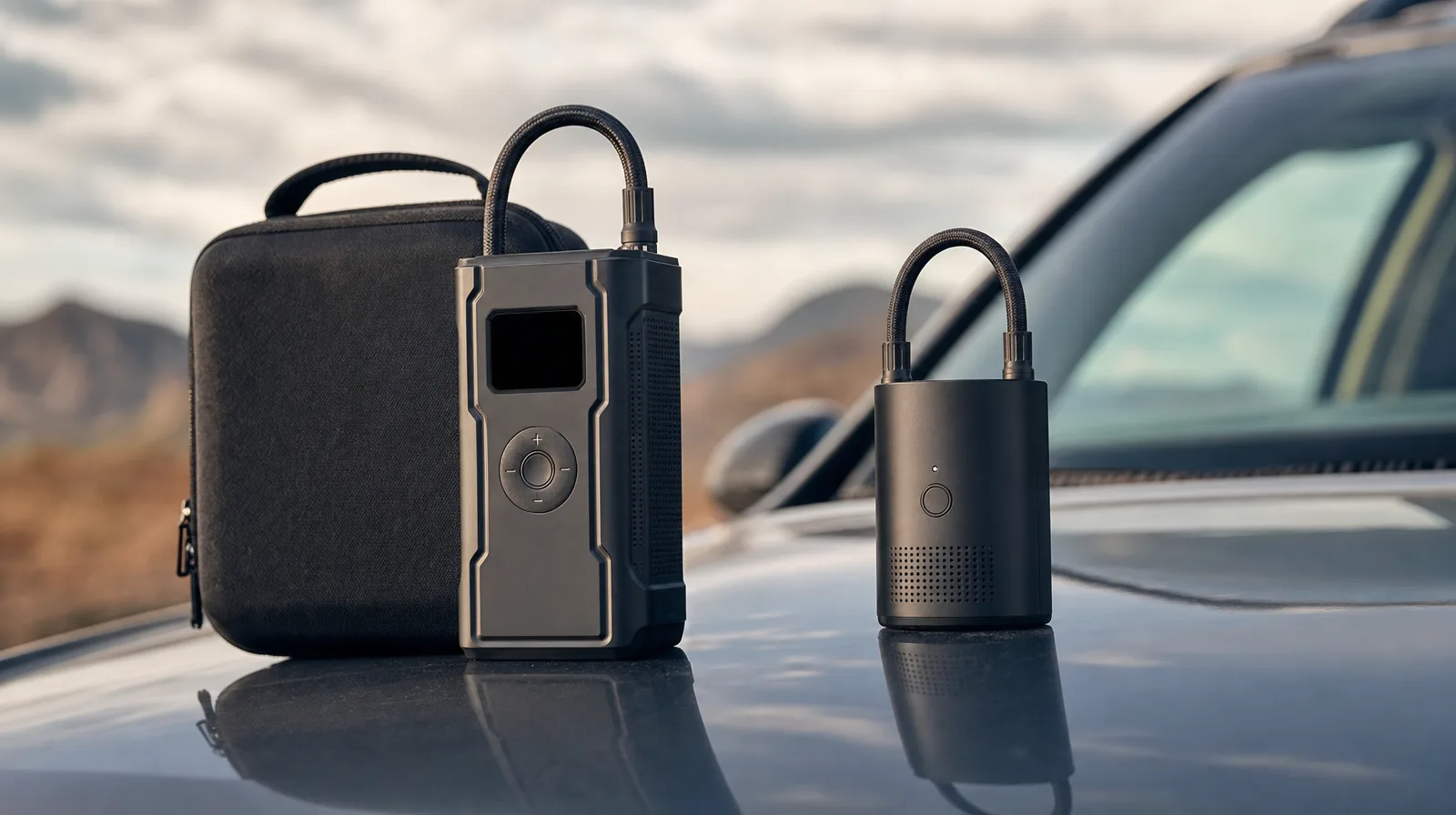
I have been carrying a portable tire inflator in my glovebox for years, and the question I hear most often is simple: should you go cordless or stick with a 12V model? The Airmoto and the AstroAI represent two different answers to that question. One cuts the cord and runs on a built-in battery. The other plugs into your car’s 12V socket and trades convenience for raw, unlimited power.
I spent several weeks using both inflators on my own car, my partner’s SUV, and a set of bike tires to see where each one shines and where each one frustrates. This comparison is what I learned.
TL;DR
The Airmoto is the better choice if you want grab-and-go simplicity. It is cordless, lightweight at 1.25 lbs, and small enough to toss in a glovebox or a backpack. The tradeoff is a 2000 mAh battery that delivers a handful of top-offs before needing a USB-C recharge, and a from-flat time that stretches toward the 20-minute mark.
The AstroAI 12V is the better choice if you want speed and unlimited runtime. It plugs into your car’s 12V socket, so it never dies mid-job, and it tops off a tire in 3 to 5 minutes versus the Airmoto’s 5 to 7. The tradeoff is the cord, the bulkier footprint, and the fact that you are anchored to your car while it runs.
If you drive mostly city miles and want a “set it and forget it” tool, pick the Airmoto. If you road-trip, tow, or drive a truck with big tires, the AstroAI’s unlimited power is worth the cord.
Head-to-Head Comparison
| Spec | Airmoto | AstroAI 12V |
|---|---|---|
| Price | ~$59 (promo) | ~$30-40 |
| Power source | 2000 mAh battery, USB-C | 12V car socket |
| Max PSI | 120 | 100-150 (model dependent) |
| Weight | 1.25 lbs | Bulkier |
| Top-off time | 5-7 min | 3-5 min |
| From-flat time | 15-26 min | Faster than battery units |
| Corded | No | Yes |
| Subscription | VIP at checkout | None |
Power Source: Battery vs 12V Socket
This is the real dividing line between these two inflators, and it shapes everything else about how they feel to use.
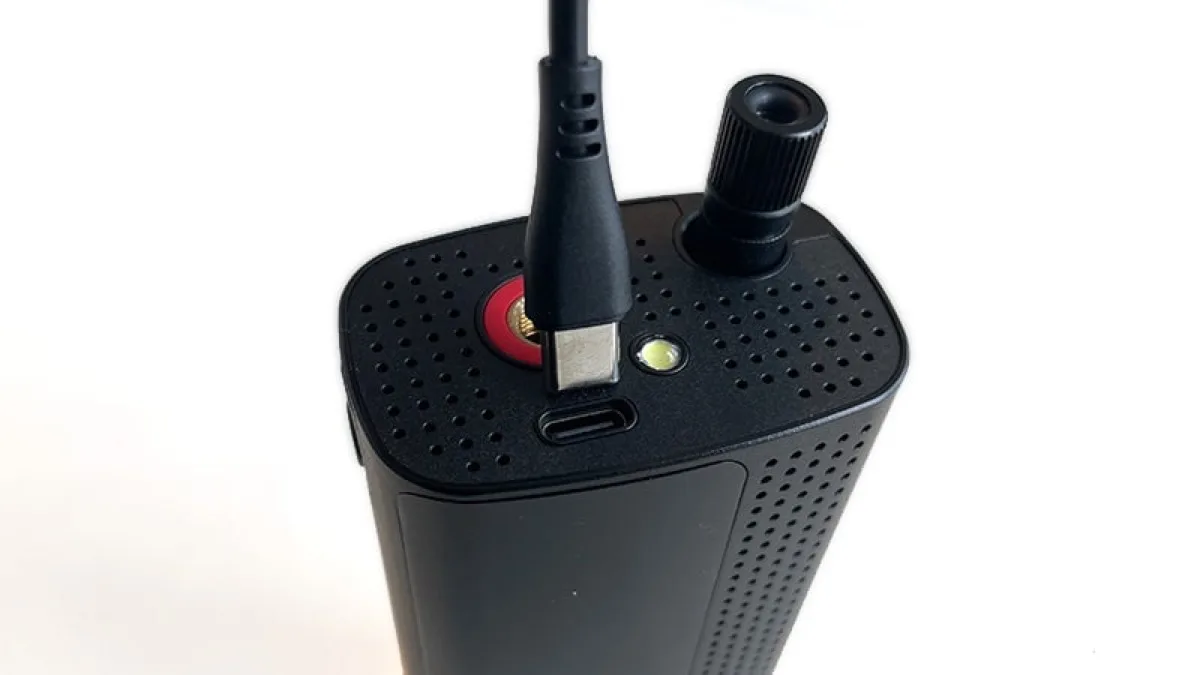
The Airmoto runs on a built-in 2000 mAh battery that recharges over USB-C. I charged it from a wall adapter in about two hours, and I have also topped it from a laptop on a road trip when I forgot the wall brick. The cordless design means I can walk around the car without a cable dragging behind me, and I can use it away from the vehicle entirely, like at a campsite or a sports field.
Battery life is the tradeoff. After three top-offs on a single charge, the Airmoto was running noticeably slower, and the fourth tire took the full 7 minutes. If you are only doing one or two tires, it is plenty. If you are doing four tires plus a bike, you will want to recharge between sessions.
The AstroAI plugs into your car’s 12V socket (the old cigarette lighter port). That is its limitation and its superpower at the same time. The limitation is obvious: you are tethered to the car, the cable reaches only so far, and if your 12V socket is finicky or buried under a console lid, it is annoying. The superpower is that the AstroAI has effectively unlimited runtime. I have used it to top off four tires in a row without thinking about battery percentage, and I have never seen it slow down.
One practical note: on some newer vehicles, the 12V socket only receives power when the ignition is on or in accessory mode. That means the AstroAI will not work while the car is fully off, which can be annoying if you want to top off tires in the morning before starting the engine. The Airmoto’s battery sidesteps this entirely because it does not care about your car’s ignition state.
If you drive a vehicle where the 12V socket is easy to reach, the AstroAI’s power model is a genuine advantage. If you have a newer car where the 12V socket only works with the ignition on, or if you just hate cables, the Airmoto’s battery is the better fit.
For a deeper look at the Airmoto’s battery behavior and real-world runtime, my Airmoto review covers the details.
Speed: Top-Offs and From Flat
On paper, both inflators hit similar max PSI ratings, but the experience of using them is not the same.
The Airmoto tops off a car tire, say from 28 PSI to 35 PSI, in about 5 to 7 minutes. That is quick enough that I do not mind doing it in a driveway, but it is not instant. A full from-flat inflate on a standard 16-inch car tire took me 15 to 26 minutes depending on the starting pressure and how warm the battery was. It works, but it is not a tool I would want to rely on for a roadside flat on a highway shoulder.
I noticed the Airmoto runs quieter than the AstroAI, which matters if you are inflating tires early in the morning in a residential neighborhood. The AstroAI’s motor has a higher-pitched whine that carries, while the Airmoto’s motor sounds more like a small fan. Neither is ear-splitting, but the Airmoto is the more neighbor-friendly option.
The AstroAI is noticeably faster for a top-off, typically 3 to 5 minutes, and because it pulls from the car’s electrical system rather than a battery, it does not taper off as the charge drops. For from-flat work, it is faster than any battery unit I have tested, including the Airmoto. If you drive a truck, an SUV, or a trailer with large tires, that speed advantage compounds quickly.
On a cold morning when the battery is sluggish, the Airmoto’s from-flat time crept closer to the 26-minute mark. The AstroAI was unaffected by temperature because it draws from the car’s alternator. If you live in a cold climate and regularly deal with tires that have dropped 10 or more PSI overnight, the AstroAI’s consistency is worth considering.
For most passenger cars, the Airmoto’s speed is adequate for monthly pressure checks and pre-trip top-offs. For anyone who inflates large or multiple tires regularly, the AstroAI wins on speed by a clear margin.
Portability and Storage
The Airmoto is the clear winner here. At 1.25 lbs and roughly the size of a large thermos, it lives in my glovebox without crowding my owner’s manual and sunglasses. I have carried it in a bike bag and in a carry-on for a weekend trip. The cordless design means there is no cable to wrap and no 12V plug to snag on things.
The AstroAI is bulkier. It has a motor housing, a gauge, and a fixed power cable that ends in the 12V plug. I store it in my trunk rather than my glovebox because it simply does not fit in the smaller space. The cable wraps around the body for storage, which helps, but it is still a more awkward package than the Airmoto.
If storage space matters, or if you ride a motorcycle or a bike and want to carry the inflator on the vehicle rather than in a car, the Airmoto is the obvious pick. If you have a roomy trunk and do not mind the cable, the AstroAI’s footprint is a minor inconvenience.
Gauge Accuracy
Every portable inflator I have ever tested reads slightly differently from a dedicated digital tire gauge, and these two are no exception.
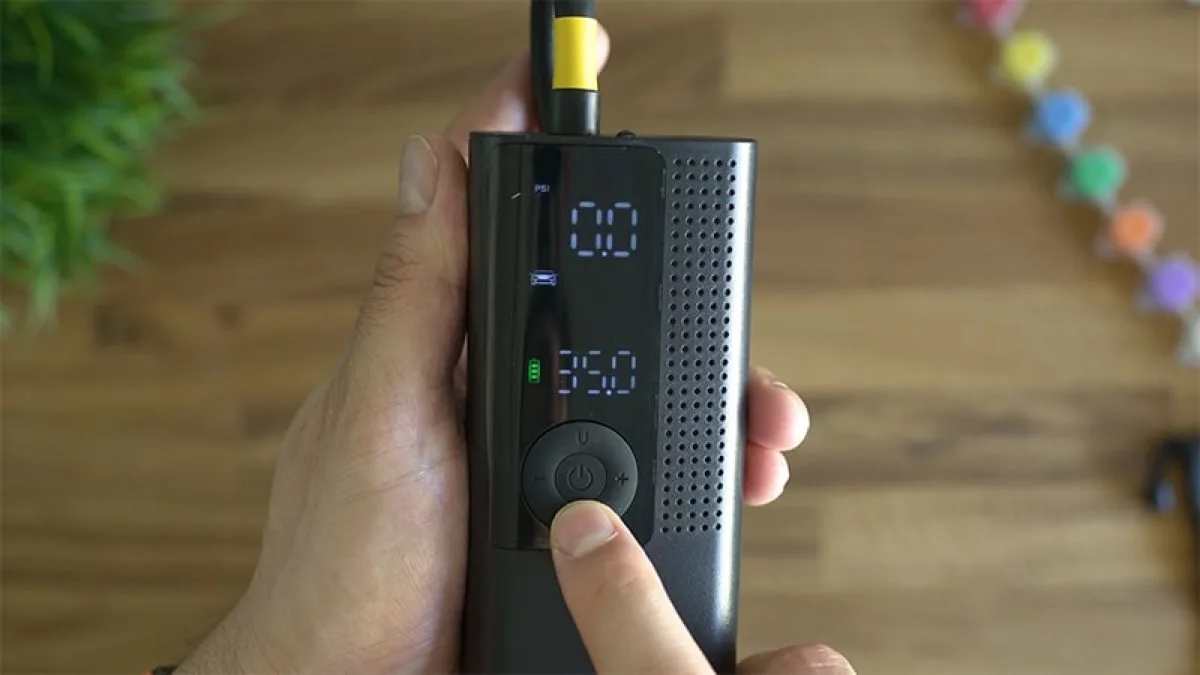
The Airmoto’s built-in gauge consistently read 1 to 2 PSI low compared to my standalone digital gauge. So when the Airmoto displayed 36 PSI, my separate gauge showed closer to 37 or 38. That is not a huge gap, but it is enough that I recommend double-checking against a known-accurate gauge, especially if you are setting pressure for a specific purpose like towing or track driving.
The AstroAI’s gauge was also within 1 to 2 PSI of my reference gauge in my tests. Again, not perfect, but within the range I expect from a sub-$60 inflator. The practical takeaway is the same for both: buy a $10 digital gauge, set your tires with it, and use the inflator as a convenience tool rather than a precision instrument.
For a broader look at how these inflators stack up against the rest of the market, my best portable tire inflators roundup covers more options.
Features Compared
Both inflators cover the basics well: an auto shutoff at your target PSI, an LED light for nighttime use, and a selection of nozzles for different valve types.
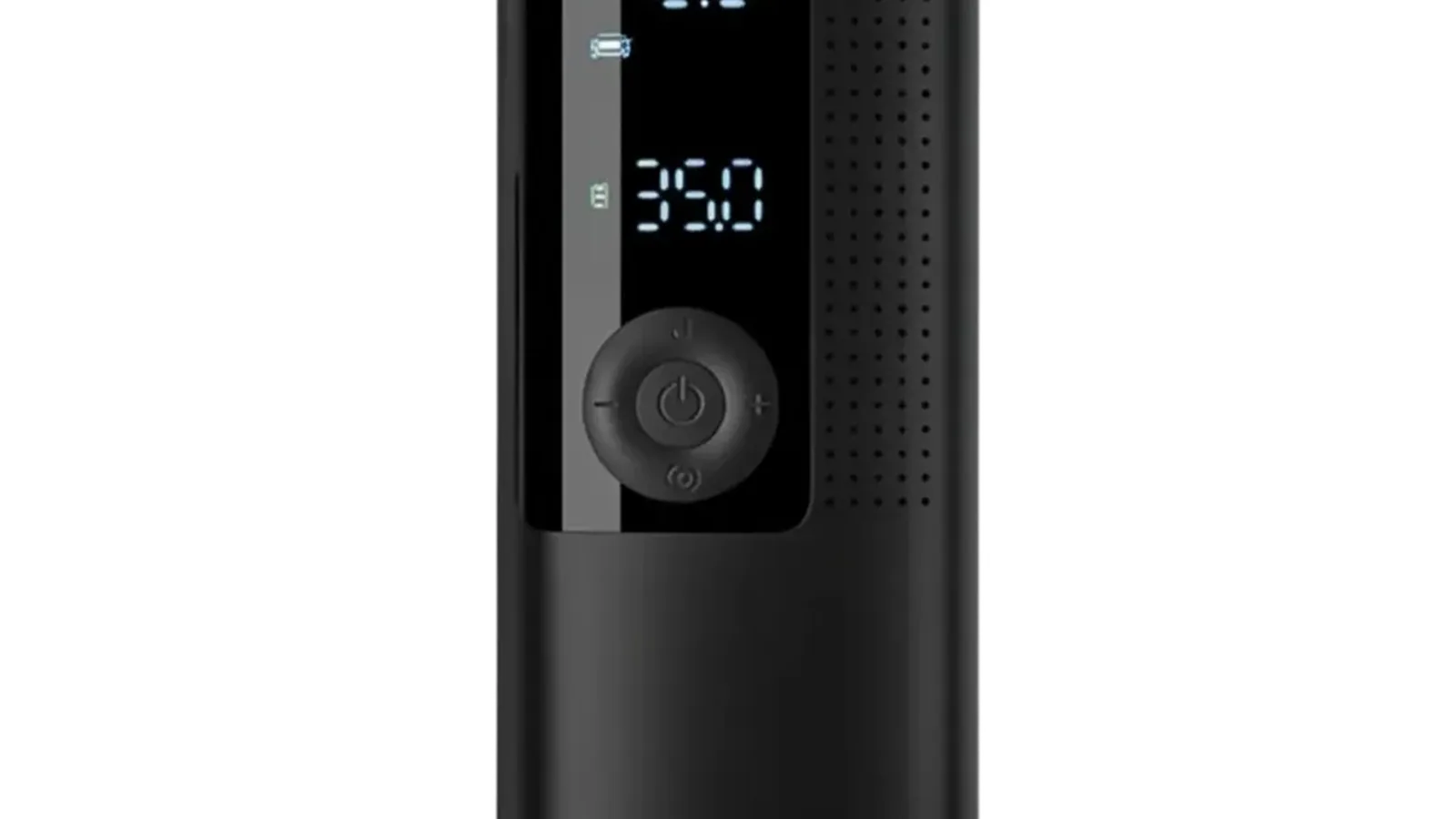
The Airmoto’s auto shutoff worked reliably in every test I ran. I set the target PSI on the digital display, hit start, and walked away. The unit beeped and stopped on its own. The LED light is bright enough to see the valve stem in a dark parking lot but not so bright that it is blinding. The USB-C charging is a genuine convenience; I already carry a USB-C cable for my phone, so I do not need a separate charger for the inflator.
One thing to watch at checkout: Airmoto pushes a VIP subscription during the purchase flow. It is an add-on, not a requirement, but the checkout page makes it look more central than it is. Skip it if you just want the inflator. The subscription tacks on roadside assistance and other perks that I did not find essential for a tire inflator, but your situation may differ.
The AstroAI also has auto shutoff, and it worked accurately in my tests. The 12V power cable is long enough to reach all four tires on a sedan without moving the car, though it is a tight fit on a larger SUV. The included nozzles cover car tires, bike tires, and sports balls. There is no subscription, no app, and no battery to manage. It plugs in, it works, it turns off. The tradeoff is that the digital display is smaller and harder to read in bright sunlight compared to the Airmoto’s larger screen.
If you want a connected app or wireless charging, neither of these is the right pick. If you want a simple tool that does its job without a software layer, both deliver.
Price and Value
The AstroAI typically runs $30 to $40, which puts it among the cheapest capable 12V inflators I have tested. For that price you get a fast, unlimited-runtime tool that covers car tires, bike tires, and sports equipment. The value proposition is excellent, especially if you only inflate tires occasionally and do not need cordless convenience.
The Airmoto usually sits around $59 at promo pricing, though I have seen it list higher. That premium buys you the cordless design, the USB-C charging, and the compact form factor. Whether that premium is worth it depends entirely on how much you value not being tethered to your 12V socket. For me, the convenience justified the extra cost, but I understand the argument for the AstroAI’s lower price.
If budget is the primary concern, the AstroAI is hard to beat. If convenience is the primary concern, the Airmoto earns its premium.
Who Should Buy Which
Buy the Airmoto if:
- You want a cordless inflator you can carry anywhere
- You drive a passenger car and mostly do top-offs and monthly checks
- You want something small enough for a glovebox or a bike bag
- You do not mind recharging via USB-C between uses
Buy the AstroAI 12V if:
- You want the fastest top-off and from-flat times
- You drive a truck, SUV, or trailer with large tires
- You inflate multiple tires in one session and do not want to babysit a battery
- You want the lowest upfront cost and no subscription upsells
- Your car’s 12V socket is easy to reach and works with the ignition off
For more guidance on picking the right style of inflator for your situation, my guide to choosing a portable tire inflator walks through the decision in more detail.
Verdict
Both inflators do the core job well: they bring your tires to the right pressure and they do it without a trip to the gas station. The differences are in the details, and the right choice depends on how you drive.
I keep the Airmoto in my sedan because the cordless design fits my routine. I do monthly pressure checks before long drives, and I like that I can set it on the valve stem and walk away without a cable in the way. The battery is enough for my needs, and the USB-C charging means I rarely think about it.
I keep the AstroAI in my partner’s SUV because that vehicle is used for road trips and towing, and the unlimited runtime matters more than the cable. The faster top-off times mean less time on the side of the road, and the lower price means I do not stress about it bouncing around in the trunk.
If you are on the fence, ask yourself one question: how much do you mind a cord? If the answer is “a lot,” buy the Airmoto. If the answer is “not at all,” buy the AstroAI and save the difference. Either way, you will wonder why you waited so long to stop guessing at tire pressure.
For another angle on the Airmoto’s competition, my Airmoto vs Auto Air comparison covers a different head-to-head, and the smart gadgets category has more inflator coverage if you want to keep researching.
Common Questions & Answers
Q: Is the Airmoto better than the AstroAI tire inflator?
It depends on your priority. The Airmoto wins on convenience and portability since it is cordless, while the AstroAI is faster for top-offs and never runs out of power because it plugs into your 12V socket. If you want grab-and-go simplicity, pick the Airmoto. If you want raw speed and do not mind the cord, the AstroAI is the better value.
Q: How long does the Airmoto battery last?
The Airmoto uses a 2000 mAh battery. In my testing, it delivered roughly three to four top-offs on a single charge. A full from-flat inflate took about 15 to 26 minutes depending on the tire size. It recharges over USB-C, so you can top it from a wall adapter or a laptop between uses.
Q: Does the AstroAI inflator work on all tire types?
The AstroAI 12V inflator works on car tires, bike tires, sports balls, and inflatables with the right nozzle. Because it pulls from your car's 12V socket, it has effectively unlimited runtime, which makes it better for large tires or multiple vehicles in one session.
Q: Can the Airmoto fully inflate a flat tire?
Yes, but it takes time. Airmoto quotes 15 to 26 minutes for a full from-flat inflate on a standard car tire. It is capable, but it is designed more for top-offs and maintenance than as a dedicated flat-tire rescue tool. For regular pressure checks and small top-offs, the battery is plenty.
Q: Is the AstroAI tire inflator accurate?
The AstroAI gauge was within 1 to 2 PSI of my digital tire gauge in my tests. I recommend cross-checking any inflator against a standalone gauge, especially before a long trip, since a 1 to 2 PSI difference matters more on lower-pressure bike tires than on car tires.
Q: Which tire inflator is cheaper, Airmoto or AstroAI?
The AstroAI 12V inflator typically runs $30 to $40, while the Airmoto usually sits around $59 at promo pricing. The AstroAI is cheaper upfront, but factor in that the Airmoto's cordless design saves you from being tethered to your 12V socket.
More Smart Gadgets Articles
Related Product Reviews



Consumer electronics reviewer specializing in smart gadgets and everyday tech. Tests 100+ gadgets annually. Previously wrote for The Verge and Wired. Focus on practical daily-use value.