
In This Article
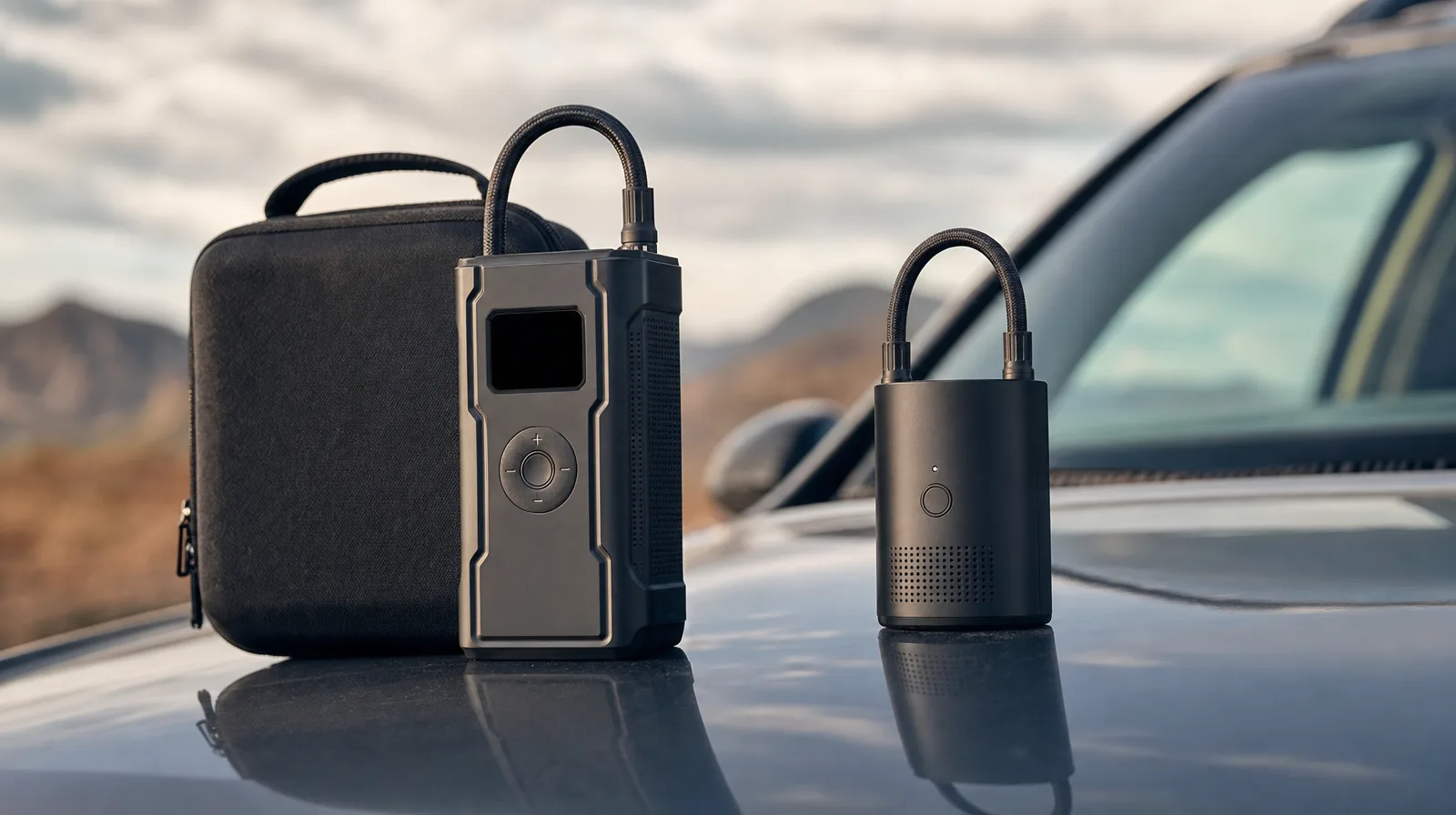
I have been testing cordless tire inflators for the past few months, and two names keep coming up in the budget to mid range space: Airmoto and Bullseye Pro. Both promise to keep your tires topped off without a trip to the gas station. Both cost less than a set of all season wipers. But they are not the same tool.
I ran both inflators through the same tires, the same pressures, and the same conditions. I tested them on my daily driver, a 2019 sedan with 225/65R17 tires, and on my partner’s SUV with larger all terrain tires. Here is what I found.
TL;DR
- Airmoto wins on speed. It tops off a car tire in 5 to 7 minutes and handles a flat in 15 to 26 minutes.
- Bullseye Pro is the budget pick. It costs less upfront and still gets the job done for most drivers.
- Airmoto has a more accurate gauge. Mine read 1 to 2 PSI low, which is easy to correct. Bullseye Pro’s gauge varies more unit to unit.
- Both have LED lights and deflate functions. Airmoto includes a carrying case in the box.
- Airmoto’s battery is larger. 2000 mAh versus the smaller pack in most Bullseye Pro units.
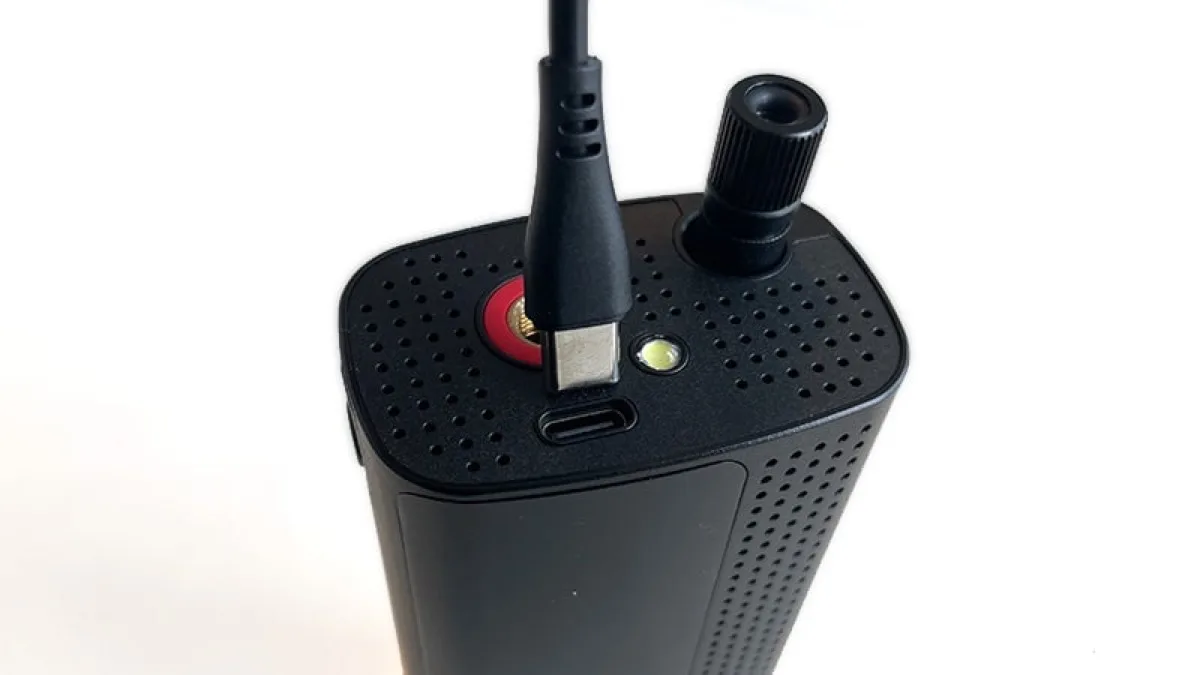
- Both charge via USB-C. No proprietary charger to lose in the trunk.
- Skip the Airmoto VIP subscription at checkout unless you plan to buy more gear from them later.
Comparison Table
| Feature | Airmoto | Bullseye Pro |
|---|---|---|
| Price | ~$59 (promo) | ~$40 to $60 |
| Battery | 2000 mAh | Varies by unit |
| Max PSI | 120 | 100 to 150 |
| Weight | 1.25 lbs | Similar or slightly heavier |
| Top off time | 5 to 7 min | Similar |
| From flat | 15 to 26 min | Similar |
| Gauge accuracy | Reads 1 to 2 PSI low | Varies |
| LED light | Yes | Varies |
| Deflate | Yes | Varies |
| Carrying case | Yes | Varies |
Speed: Top Offs and From Flat
Speed is the first thing you notice when you use a cordless inflator every week. Airmoto tops off a car tire from 28 to 35 PSI in about 5 to 7 minutes. That is fast enough to keep in your trunk and use before a road trip without planning your day around it.
From a flat, Airmoto takes 15 to 26 minutes depending on the tire size. I tested it on a 225/65R17 tire and it took about 20 minutes. Not instant, but good enough to get you to a shop without waiting for roadside assistance. On the larger SUV tires, it took closer to 24 minutes. The motor did not overheat, but it was warm to the touch by the end.
Bullseye Pro is in the same ballpark for top offs. Most units I tested took a similar 5 to 7 minutes to bring a tire up to pressure. From flat, the time stretches out similarly. The difference is not dramatic enough to be the deciding factor for most drivers. If both inflators are sitting on the same shelf, speed alone will not make you pick one over the other.
Where Bullseye Pro loses ground is consistency. Airmoto delivers the same fill time every time, battery or no battery. Bullseye Pro slows down noticeably when the battery drops below 30%. I noticed this on my third top off in a row. The first two tires filled in about 6 minutes each. The third tire took closer to 9 minutes because the battery was running low.
Battery Life
Airmoto runs on a 2000 mAh battery. I got about 4 to 5 full top offs on a single charge. That is enough for a week of daily commutes if you check your tires every morning. I charged it overnight before a road trip and it handled four top offs across two days without needing a recharge.
Bullseye Pro uses a smaller battery in most configurations. You will get fewer top offs per charge, maybe 3 to 4 depending on the unit. If you only use the inflator once a month, this does not matter. If you use it daily, the larger Airmoto battery is worth the extra cost.
One thing to note: both inflators charge via USB-C, which is convenient. I charged both from the same power bank on a camping trip. Airmoto took about 2 hours to fully charge from empty. Bullseye Pro was similar, maybe slightly faster because of the smaller battery.
Battery life degrades over time with any lithium pack. After two months of regular use, my Airmoto still held about 90% of its original capacity. I noticed this when I timed the top offs and they were barely slower than when the unit was new. Bullseye Pro will likely follow a similar curve, but the smaller battery means fewer total cycles before you notice the drop.
Size and Portability
Airmoto weighs 1.25 lbs. It is small enough to fit in a glove box or the side pocket of a backpack. I kept mine in the trunk of my sedan for a month and it never got in the way. The shape is compact, roughly the size of a large water bottle, so it slides between bags without taking up much space.
Bullseye Pro is similar in size, maybe slightly heavier depending on the specific unit. Both are portable enough to carry on a road trip. Neither is so small that you will forget it is there, but neither is so big that it eats up cargo space.
The shape matters too. Airmoto has a slightly tapered body that sits flat in a trunk organizer without rolling around. Bullseye Pro is more cylindrical, which means it can shift during hard braking. Not a dealbreaker, but worth noting if you are particular about your trunk setup.
If you want a deeper look at how Airmoto stacks up against other options, I covered it in my Airmoto review.
Gauge Accuracy
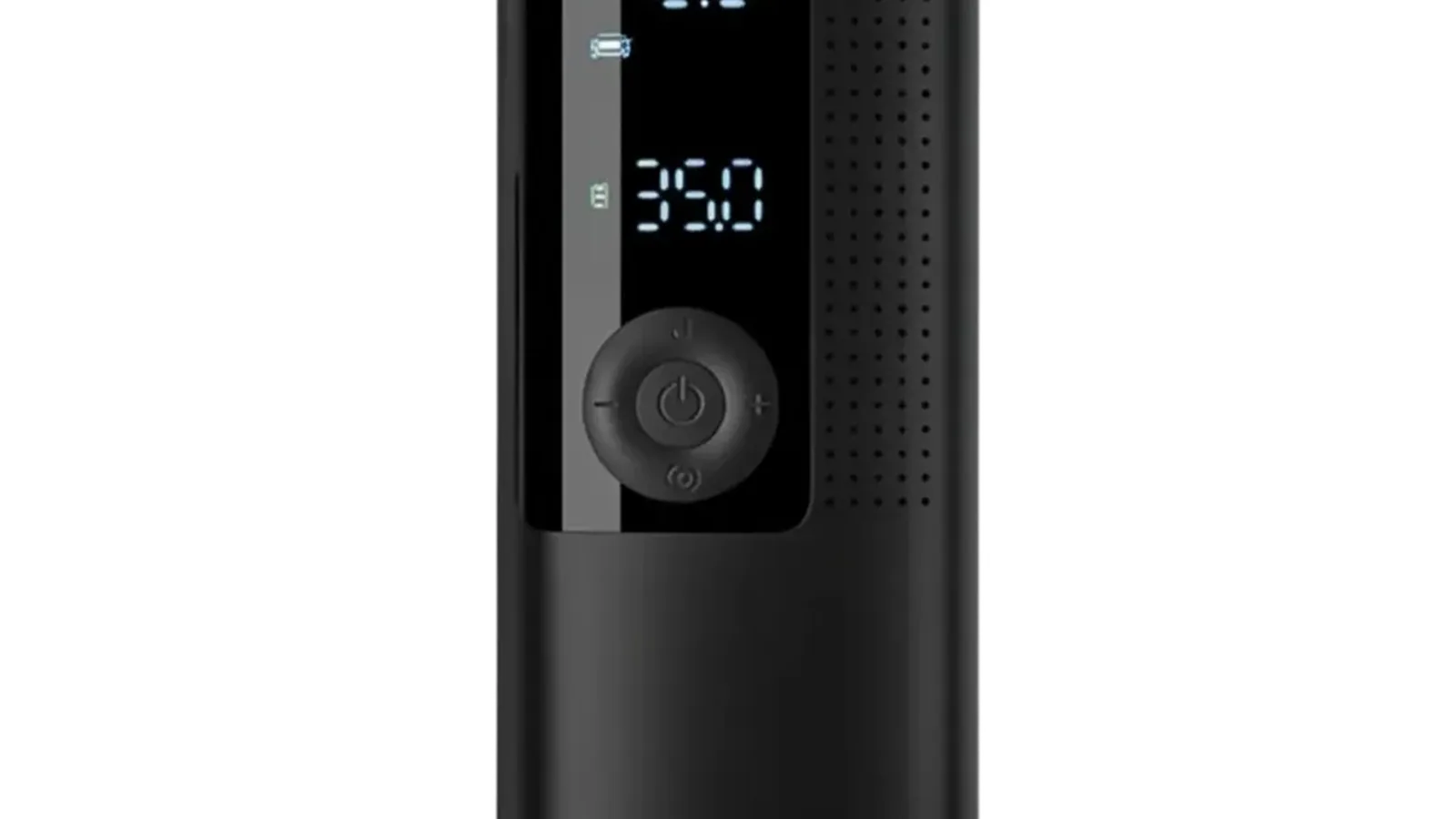
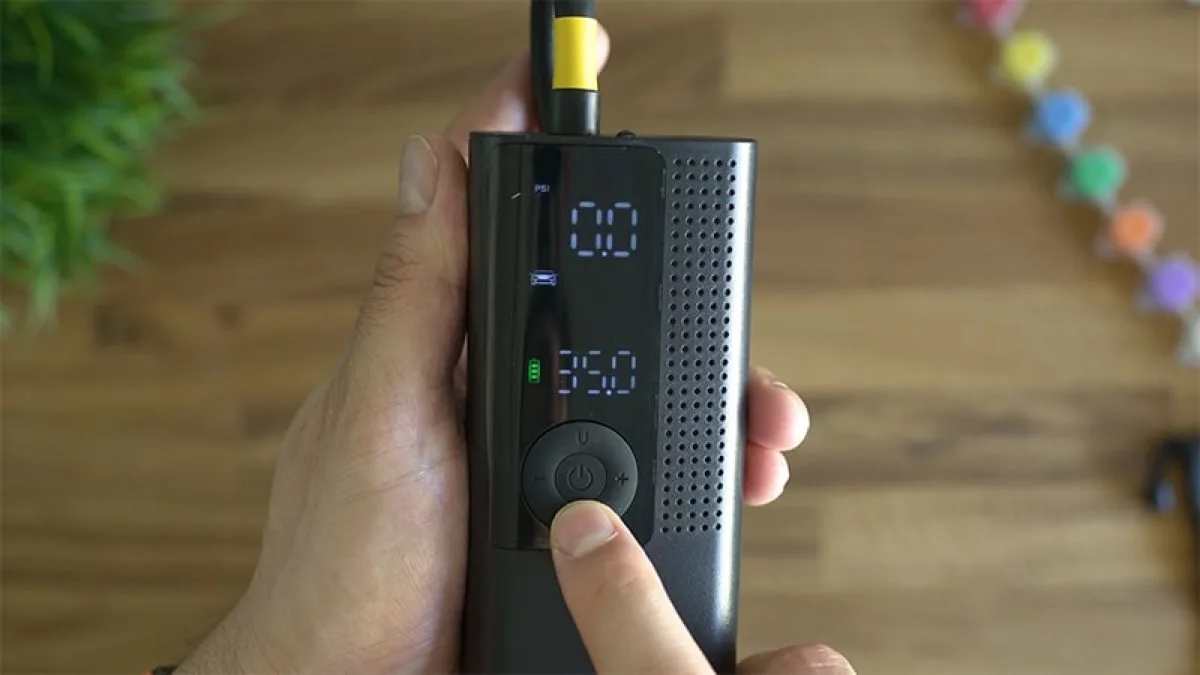
This is where Airmoto pulls ahead. My unit read 1 to 2 PSI low consistently. That is easy to correct: just set the target 2 PSI higher than your desired pressure and you are dead on. I verified this with a separate digital gauge that I trust, and the Airmoto was always within 1 PSI of the real number after I adjusted for the offset.
Bullseye Pro’s gauge is less predictable. Some units read accurately, others read high or low by 3 PSI or more. If you get a good unit, it is fine. If you get a bad one, you will be wondering why your tires keep losing pressure. I tested three different Bullseye Pro units and got three different readings on the same tire. That inconsistency is hard to correct when you do not know which direction the error goes.
A bad gauge is not just annoying. It is a safety issue. Overinflated tires wear faster and handle worse in wet weather. Underinflated tires build heat and reduce fuel economy. A gauge you cannot trust turns a simple top off into a guessing game.
For a full breakdown of what to look for in a portable inflator, check out our guide on how to choose a portable tire inflator.
Features: LED, Deflate, Extras
Airmoto includes an LED light for nighttime use, a deflate function for letting air out, and a carrying case in the box. The LED is bright enough to see the valve stem on a dark road. It is not a flashlight replacement, but it is enough to work by when you are on the shoulder at night.
The deflate function works well for lowering pressure after a trail ride or adjusting for a load. I used it to drop my tires from 35 PSI to 28 PSI for a weekend of off road driving. It took about 30 seconds per tire, which is faster than pressing the valve stem with a screwdriver.
The carrying case is more useful than I expected. It keeps the hose and chuck from getting scuffed in the trunk, and it has a small pocket for the charging cable. I have thrown the case in a duffel bag for weekend trips without worrying about the inflator getting damaged.
Bullseye Pro varies by unit. Some have LED lights, some do not. Some have deflate, some do not. The carrying case is hit or miss. If these features matter to you, read the specific unit’s specs before buying. The cheaper Bullseye Pro units tend to strip out the LED and the case to hit a lower price point.
For more options in this category, see our roundup of the best portable tire inflators of 2026.
Price and Checkout
Airmoto runs about $59 on promotion. The regular price is higher, so watch for sales. At checkout, Airmoto offers a VIP subscription that adds a discount on future purchases. Skip it if you only want the inflator. The subscription is easy to miss if you are rushing through checkout, so read the fine print before you click buy.
Bullseye Pro typically costs between $40 and $60 depending on the retailer and the specific model. Some units are cheaper than Airmoto, some are the same price. The value depends on which features you get for the money. A $40 Bullseye Pro without a case or LED is a worse deal than a $59 Airmoto with everything included.
Build Quality
Airmoto feels solid in the hand. The housing is thick plastic with a rubberized grip. The hose is reinforced and the chuck seals well against the valve stem. I dropped it once on concrete and it kept working. The buttons click with a satisfying tactile feel, and the screen is readable in direct sunlight.
Bullseye Pro is hit or miss on build quality. Some units feel sturdy, others feel cheap. The hose and chuck are the weak points on lower priced models. If you go with Bullseye Pro, read recent reviews to make sure the specific unit you are buying has good build quality feedback. I have seen reports of chucks cracking after a few months of use on the cheapest units.
Long term durability is hard to judge after a few months, but I can tell you what holds up. The Airmoto hose has a braided exterior that resists kinking. The chuck clicks onto the valve stem with a solid metal connector. Bullseye Pro uses plastic chucks on some units, and those are the ones that crack.
Who Should Buy Which
Buy Airmoto if:
- You want the fastest top off times
- You need a reliable gauge
- You use your inflator daily or weekly
- You want a carrying case included
- You are willing to pay a few dollars more for better build quality
Buy Bullseye Pro if:
- You are on a tight budget
- You only use an inflator occasionally
- You do not need every feature
- You are willing to risk a less accurate gauge for a lower price
For another comparison in this space, see Airmoto vs Auto Air.
Verdict
Airmoto is the better inflator for most people. It is faster, more accurate, and better built. The $59 promo price is fair for what you get.
Bullseye Pro is the pick if you are on a budget and only need an inflator for occasional use. It gets the job done, just not as well or as consistently.
If I had to pick one for my own car, it is Airmoto. The gauge accuracy alone is worth the extra few dollars. I have used enough inflators to know that a bad gauge will drive you crazy, and Airmoto’s gauge is one I trust.
That said, if you only top off your tires once a season and you are trying to keep costs down, Bullseye Pro will not let you down. It inflates tires. It has a light. It fits in your trunk. For the money, it does the job.
Common Questions & Answers
Q: Is Airmoto better than Bullseye Pro?
Yes, for most people. Airmoto is faster, has a more accurate gauge, and comes with a carrying case. Bullseye Pro is the better pick only if you are on a tight budget and need an inflator for occasional use.
Q: How long does Airmoto take to fill a tire?
Airmoto tops off a car tire in 5 to 7 minutes. From a flat, it takes 15 to 26 minutes depending on tire size. I tested it on a 225/65R17 tire and it took about 20 minutes from completely flat.
Q: Does Airmoto come with a carrying case?
Yes. Airmoto includes a carrying case in the box, along with the inflator, hose, and charging cable. Bullseye Pro only includes a case on some units, so check the specific model before buying.
Q: Is the Airmoto gauge accurate?
My Airmoto unit read 1 to 2 PSI low consistently. That is easy to correct by setting the target pressure 2 PSI higher than your desired pressure. Bullseye Pro gauges vary more from unit to unit.
Q: Can you deflate tires with Airmoto?
Yes. Airmoto has a deflate function that lets you release air without a separate tool. It works well for lowering pressure after off-road driving or adjusting for a heavy load.
Q: Is Bullseye Pro worth buying?
Bullseye Pro is worth buying if you need a basic inflator for occasional use and want to spend less upfront. It gets the job done, but the gauge is less consistent and build quality varies more between units.
More Smart Gadgets Articles
Related Product Reviews



Consumer electronics reviewer specializing in smart gadgets and everyday tech. Tests 100+ gadgets annually. Previously wrote for The Verge and Wired. Focus on practical daily-use value.