
How to Use a Tire Inflator Correctly
Step by step guide to inflating your tires safely. Avoid the mistakes that cause blowouts and wasted time.

Tech Reviewer
In This Article
- TL;DR
- Step 1: Check Your Recommended Pressure
- Step 2: Prepare the Tire and Inflator
- Step 3: Set the Target Pressure
- Step 4: Let the Auto Shut-Off Do Its Job
- Step 5: Verify the Pressure
- Step 6: Repeat for All Tires
- Common Mistakes That Cause Problems
- What to Know About Airmoto Specifically
- Verdict
- Frequently Asked Questions
- Links
Most people buy a portable tire inflator and never read the instructions. They connect it, press a button, and walk away — only to discover later that the tire is overinflated, the gauge was inaccurate, or the inflator died halfway through. A few simple steps prevent all of that.
This guide covers exactly how to use a portable tire inflator correctly, from checking your tire pressure to verifying the final reading. Follow these steps and your inflator will work safely and last for years.
TL;DR
- Check your door sticker PSI — not the tire sidewall — before inflating
- Always connect firmly — a loose connection wastes air and slows inflation
- Use auto shut-off — never walk away while the inflator is running
- Verify with a standalone gauge — every inflator gauge is off by 1-2 PSI
- Let tires cool before inflating — hot tires read 1-3 PSI higher than cold
- Airmoto makes steps automatic — preset your target pressure and walk away
Step 1: Check Your Recommended Pressure
Look at the driver-side door frame. There is a sticker that says something like “32 PSI” or “35 PSI Max.” This is the pressure your car manufacturer recommends for your tires. Write it down or memorize it before you start.
Never use the number on the tire sidewall. That number tells you the maximum pressure the tire can hold — typically 44-51 PSI — which is much higher than what your car needs. Inflating to the sidewall number will overinflate your tires and reduce grip.
Step 2: Prepare the Tire and Inflator
If you have been driving, wait at least 30 minutes for the tires to cool. Hot tires have higher pressure readings, and inflating them to the cold recommended pressure means you will be under-pressure once they cool down.
Remove the valve cap from the tire by twisting it counterclockwise. Set it aside somewhere safe — these small plastic caps are easy to lose and expensive to replace. Connect the inflator hose to the valve stem by pressing it firmly onto the stem. You should hear air hissing if the connection is not fully sealed. Push it tighter until the hissing stops.
Step 3: Set the Target Pressure
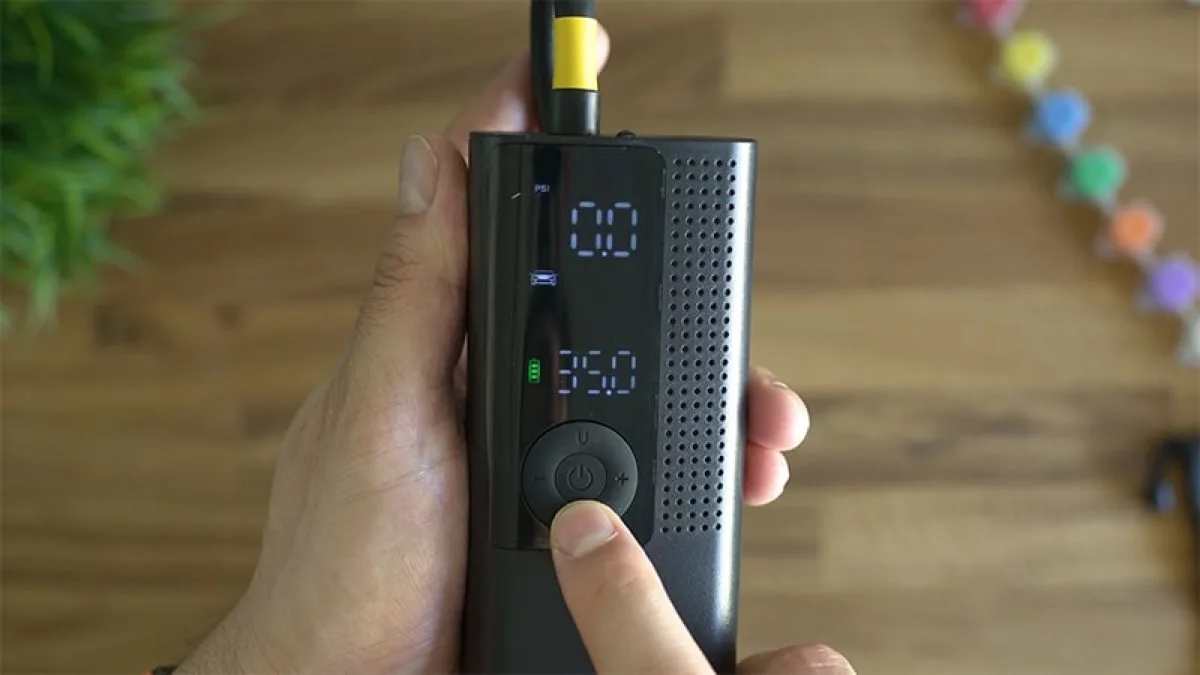
Turn on the inflator and use the plus and minus buttons to set your target PSI. Airmoto remembers your last preset between uses, so if you inflated to 34 PSI last time, it will default to 34 again. You can change this by pressing the plus or minus button before starting inflation.
Do not guess the pressure. Use the inflator’s digital display to confirm the starting pressure, then set the target. If the tire is at 28 PSI and you need 34 PSI, you are adding 6 PSI. Set the target to 34 and walk away.
Step 4: Let the Auto Shut-Off Do Its Job
Walk away. Do not stand there watching the pressure climb. Modern inflators including Airmoto have auto shut-off that stops inflation at exactly your target PSI. This prevents over-inflation and saves you from standing there waiting.
If your inflator does not have auto shut-off, stand near it and listen for the motor to stop or the pressure gauge to reach your target. Never walk away from an inflator without auto shut-off — over-inflation can happen in under 30 seconds and a blown tire is a safety hazard.
Step 5: Verify the Pressure
After the inflator shuts off, remove the hose from the valve stem. Replace the valve cap by twisting it clockwise. Then use a standalone digital tire gauge to verify the pressure. Most inflator gauges are off by 1-2 PSI. A standalone gauge costs $10 and gives you peace of mind.
If the pressure is too low, add a little more air. If it is too high, press the center pin on the valve stem to release a small amount of air. Airmoto has a dedicated deflate mode — hold the button for two seconds to release pressure slowly.
Step 6: Repeat for All Tires
Work around the car in order: right front, left front, right rear, left rear. Check your spare tire too — most people forget it until they need it and then discover it has been flat for months. A full spare on a sedan typically needs 60-80 PSI and Airmoto can handle it, though it will take longer.
Give the inflator a 2-minute break between tires if you are filling more than one. The motor heats up during use and needs a short cooldown. If the hose feels warm to the touch, wait before continuing.
Common Mistakes That Cause Problems
Topping off while the tire is hot adds too much pressure. The tire cools, pressure drops, and you think you have a flat when you do not.
Not replacing the valve cap lets dirt and moisture into the valve stem, which can cause slow leaks over time.
Pressing the hose onto the valve at an angle damages the valve stem and causes air leaks. Always press straight on.
Using the inflator for more than 5 minutes continuously overheats the motor. Take a break between tires or after 5 minutes of continuous use.
Ignoring the battery indicator and running the inflator until it dies completely shortens battery life. Charge when the indicator shows 20 percent remaining.
Blockquote: The AAA reports that 9 percent of roadside flats are actually caused by under-inflation. Checking and inflating your tires monthly takes 8 minutes and prevents most of these flats.
What to Know About Airmoto Specifically
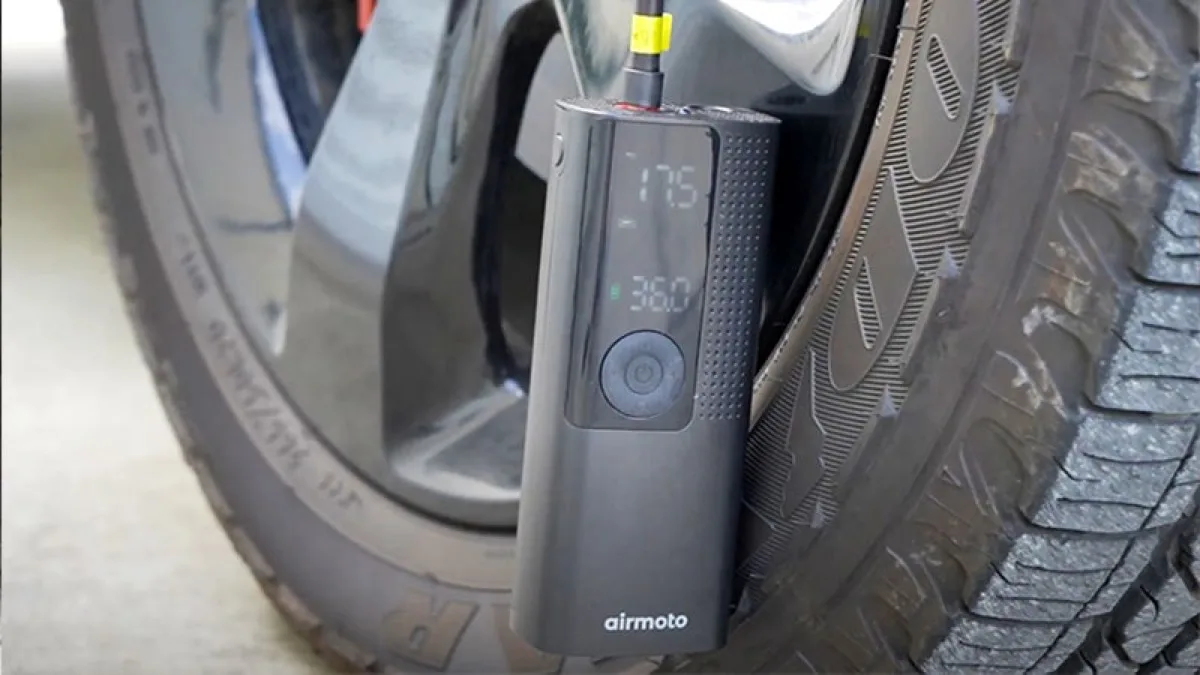
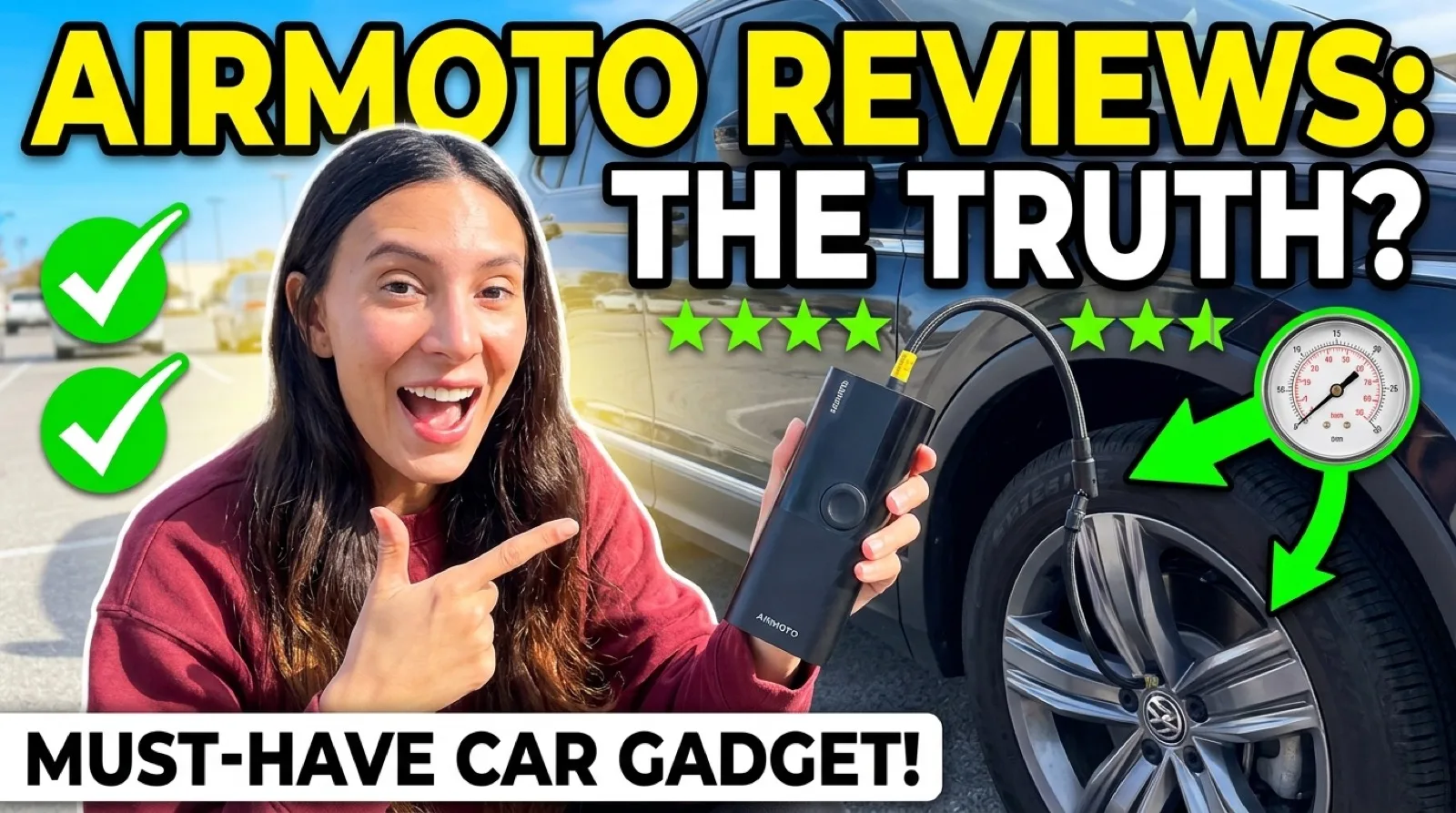
Airmoto makes the inflation process simpler than most models. You set the target PSI once, and it remembers that setting for the next use. The digital display shows both the current pressure and the target simultaneously. Auto shut-off engages at the target, and the deflate mode lets you let air out if you overshoot.
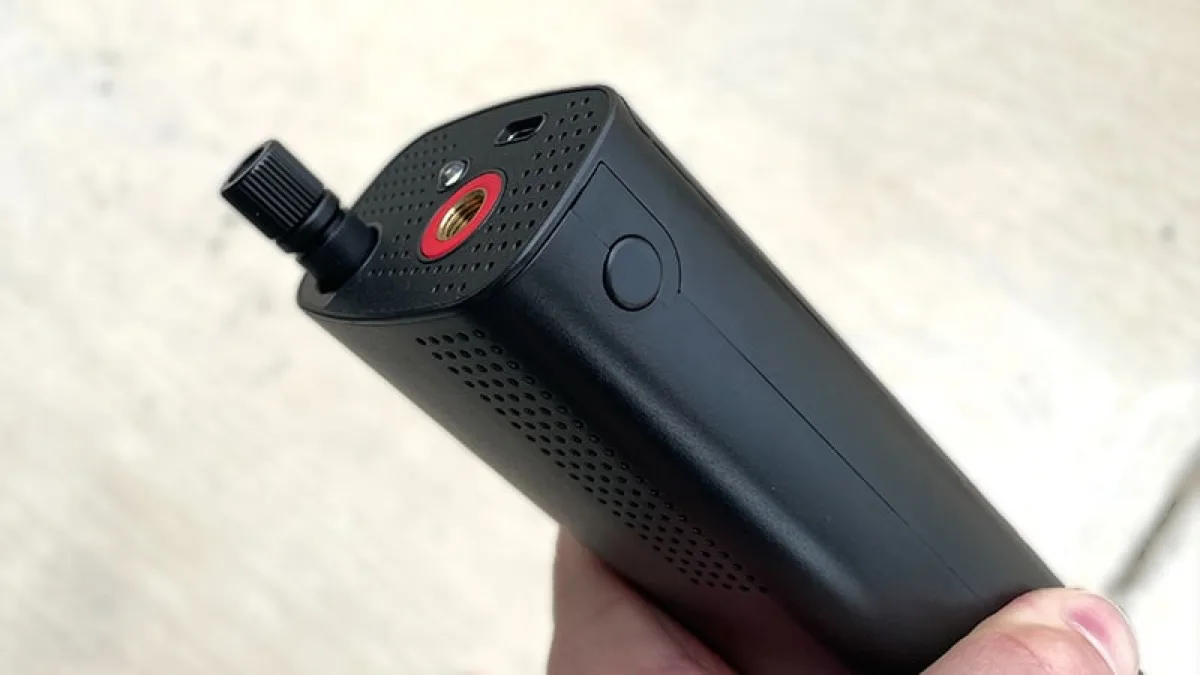
The built-in LED light illuminates the display and the tire area in the dark. The unit is 1.25 pounds and fits in a glove box, so it is always there when you need it. USB-C charging means you can top it up from a car charger, a power bank, or a wall outlet — no proprietary cable needed.
Verdict
Using a tire inflator correctly is simple: check the recommended pressure, connect firmly, set the target, walk away, and verify. Every step is faster with a model that has auto shut-off and a digital display like Airmoto. The biggest mistake people make is guessing the pressure instead of using a gauge. Take 8 minutes per tire, verify with a standalone gauge, and your tires will be properly inflated every time. This one habit prevents most roadside flats and extends tire life by thousands of miles.
Frequently Asked Questions
How do you remove air from a tire after overinflating? Press the center pin on the valve stem with a small tool or the tip of a pen. Air will hiss out until the pressure drops. Airmoto has a deflate mode — hold the center button for two seconds to release pressure gradually.
Can you use a tire inflator on a flat tire? Yes, but it takes longer. A completely flat tire needs 15-26 minutes to fill on a 120 PSI model like Airmoto. The battery may not last for more than one tire from fully flat. For emergency readiness, keep a corded backup or use the inflator in short bursts between driving.
Why does my tire inflator make a clicking sound? The clicking is the auto shut-off activating. It means the inflator reached your target pressure and stopped automatically. This is normal and expected on all quality portable inflators.
Should I inflate my tires to the same PSI in all four tires? Front and rear tires often have different recommended pressures, especially on SUVs. Check your door sticker or owner manual. Most sedans use the same pressure for all four tires, typically 32-35 PSI.
Is it safe to leave the valve cap off after inflating? No. The valve cap protects the valve stem from dirt, moisture, and debris. Without it, the valve can leak over time. Always replace the cap immediately after inflating.
Can a tire inflator damage the tire valve? Only if you press the hose onto the valve at an angle or force it repeatedly. Airmoto’s angled head design makes proper alignment intuitive. If you hear a hissing sound during inflation, the connection is not sealed — push the hose tighter.
Links
For the full Airmoto performance data including battery life, fill times, and gauge accuracy, see the Airmoto detailed review. For the full comparison of all tested models, see our best portable tire inflators of 2026 roundup. For step-by-step instructions on inflating without a gas station, see our how to inflate a tire without a gas station guide. For more car maintenance tools and accessories, visit the smart-gadgets category.
Frequently Asked Questions
How do you use a tire inflator step by step?
Should you inflate tires when hot or cold?
What is the right tire pressure for my car?
Can you overinflate a tire with a portable inflator?
Do I need to let air out after inflating?
How often should you inflate your tires?
What happens if you put too much air in a tire?
Can you use a tire inflator on a run-flat tire?
More Smart Gadgets Articles
Related Product Reviews


Alex Thompson
Consumer electronics reviewer specializing in smart gadgets and everyday tech. Tests 100+ gadgets annually. Previously wrote for The Verge and Wired. Focus on practical daily-use value.
Affiliate disclosure:This article contains affiliate links. If you buy through them, GearPuff may earn a commission at no extra cost to you. It keeps our testing independent and our reviews free.