
MAF Sensor Replacement Cost in 2026: Clean or Replace?
MAF sensor replacement costs $50-$500. Learn when cleaning ($10-$20) fixes the problem vs full replacement, common P0100-P0104 codes, and step-by-step cleaning.

Tech Reviewer
In This Article
- What the MAF Sensor Does
- How It Works
- Common MAF Sensor Trouble Codes
- What Each Code Means
- Symptoms of a Bad MAF Sensor
- Performance Symptoms
- Symptoms That Mimic a Bad MAF
- Cleaning vs Replacing: The Decision
- Clean First ($10-$20)
- Replace ($100-$500)
- Cleaning vs Replacement Comparison
- How to Clean a MAF Sensor (Step by Step)
- Cleaning Tips
- MAF Sensor Replacement Cost
- Aftermarket MAF Sensor
- OEM MAF Sensor
- Brand Pricing Comparison
- Common Vehicle Costs
- DIY vs Shop
- Prevention: How to Extend MAF Sensor Life
- What Happens If You Don’t Fix It
- Seasonal Considerations
- Summer
- Winter
- Rainy Season
- How FIXD Helps
- The Bottom Line
A P0100, P0101, or P0102 code on your OBD2 scanner points to the mass air flow (MAF) sensor. The car runs rough, stalls at idle, and burns way too much gas. The good news: sometimes all it needs is a $10 can of cleaner spray, not a $400 replacement.
The MAF sensor is one of those parts that gets dirty over time and acts broken when it’s just coated in grime. Before you buy a new one, try cleaning it. It’s a 15-minute job that fixes the problem more often than you’d expect. I’ve seen this work on half a dozen cars in my own driveway.
What the MAF Sensor Does
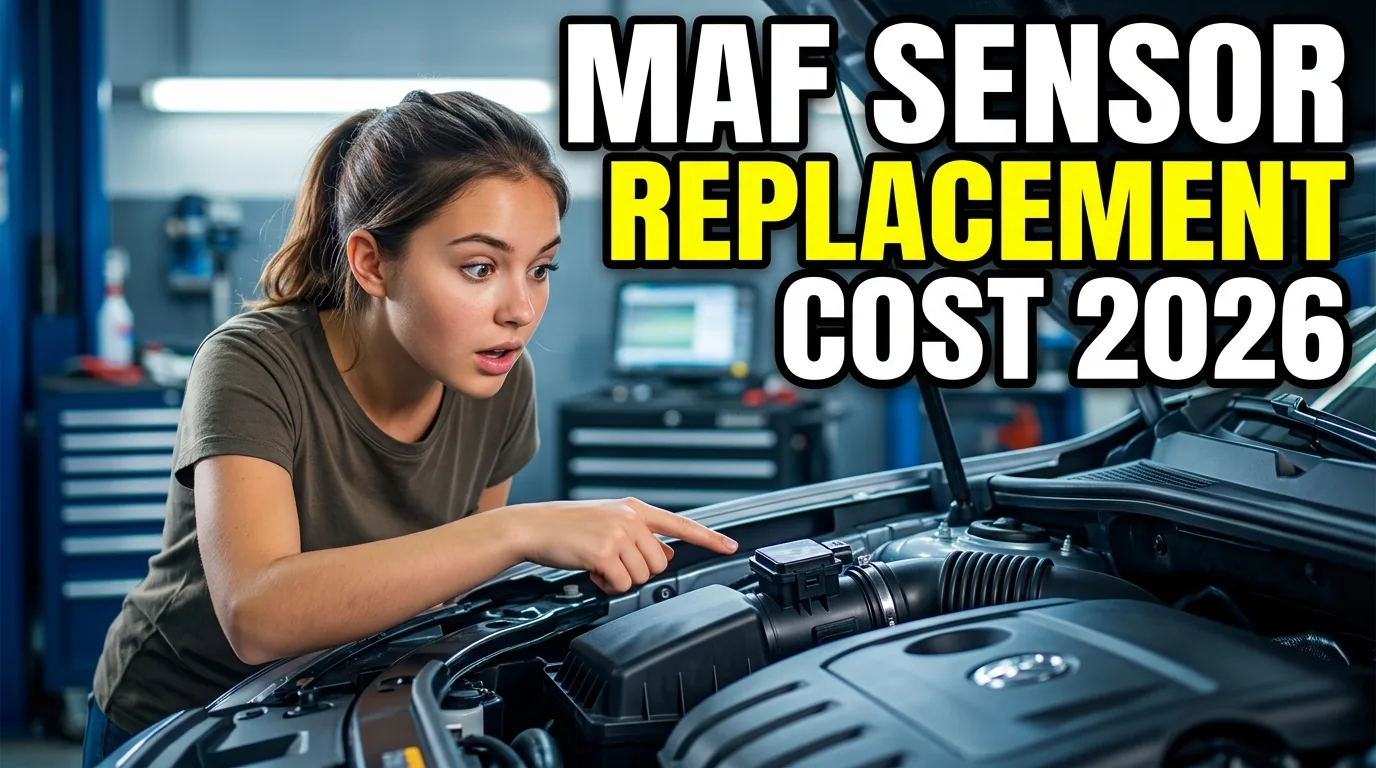
The MAF sensor sits in the intake tract between the air filter and the throttle body. It measures the mass of air entering the engine using a heated wire or film. The ECU uses that measurement to calculate how much fuel to inject.
When the MAF sensor reads correctly, the engine gets the perfect air-fuel ratio (14.7
for gasoline). When it reads wrong, the engine runs rich (too much fuel) or lean (too much air), and you get rough idle, stalling, and poor fuel economy.How It Works
The sensor has a tiny heated wire or film element. Air flowing past it cools the wire, and the sensor measures how much current is needed to keep the wire at a constant temperature. More air means more cooling, which means more current. The ECU translates that current into an airflow reading in grams per second.
This design is why contamination kills MAF sensors. Anything that coats the wire (dirt, oil, dust) insulates it and throws off the reading. The wire can’t cool properly, so the sensor underreports airflow, and the ECU leans out the mixture.
Common MAF Sensor Trouble Codes
- P0100: Mass Air Flow Circuit Malfunction (general failure)
- P0101: Mass Air Flow Circuit Range/Performance (reading outside expected parameters)
- P0102: Mass Air Flow Circuit Low Input (low airflow reading)
- P0103: Mass Air Flow Circuit High Input (high airflow reading)
- P0104: Mass Air Flow Circuit Intermittent (erratic reading)
The FIXD OBD2 scanner reads these codes and tells you whether the issue is the sensor itself, a vacuum leak after the sensor, or a dirty air filter restricting airflow.
What Each Code Means
| Code | Meaning | Likely Cause | Fix |
|---|---|---|---|
| P0100 | Circuit malfunction | Wiring issue or dead sensor | Check wiring, then replace sensor |
| P0101 | Range/performance | Dirty sensor or vacuum leak | Clean first, check for leaks |
| P0102 | Low input | Restricted airflow or dirty sensor | Replace air filter, clean sensor |
| P0103 | High input | Intake leak or wrong sensor | Check for unmetered air |
| P0104 | Intermittent | Loose connector or dirty sensor | Check connections, clean sensor |
Symptoms of a Bad MAF Sensor
The symptoms develop gradually as the sensor gets dirtier. Here’s what to watch for:
Performance Symptoms
- Rough idle: The engine stumbles or hunts for the right RPM at idle. You might see the RPM needle bouncing between 500-1000 RPM instead of sitting steady at 700-800.
- Stalling: The engine dies when you come to a stop or when the AC kicks on. This is dangerous in traffic.
- Poor fuel economy: The ECU compensates for bad MAF readings by dumping extra fuel. Expect 15-30% worse mileage. On a car that gets 30 MPG, that’s dropping to 21-25 MPG.
- Hesitation or stumbling: The engine hesitates during acceleration because the fuel mixture is off. You press the gas and there’s a half-second delay before the car responds.
- Check engine light: Usually with a P0100-P0104 code.
- Black smoke from exhaust: Running rich means unburned fuel exits the tailpipe. You might smell raw gas at idle.
Symptoms That Mimic a Bad MAF
Before you replace the MAF sensor, rule out these lookalikes:
- Vacuum leak: A cracked hose or loose intake boot after the MAF sensor causes lean conditions that look like a bad MAF. Check for hissing sounds with the engine running.
- Dirty air filter: A clogged filter restricts airflow and triggers P0102. Replace the filter ($10-$20) before replacing the sensor.
- Intake leak before the MAF: Unmetered air entering before the sensor doesn’t get measured, causing the ECU to underfuel. Check clamps and gaskets.
- PCV valve failure: A stuck-open PCV valve draws excess crankcase gases into the intake, contaminating the MAF sensor with oil vapor.
Cleaning vs Replacing: The Decision
This is the most important section. Cleaning saves you $100-$400 if it works, and it works more often than you’d think.
Clean First ($10-$20)
Cleaning the MAF sensor fixes the problem 50-70% of the time. The sensor gets coated with dirt, oil, and residue from the air intake. A proper MAF cleaner dissolves that buildup without damaging the delicate wire or film.
When cleaning works:
- The sensor is dirty but not physically damaged
- The P0100-P0104 codes appeared gradually (not suddenly after an event)
- The air filter has been overdue for replacement
- You’ve had the intake apart recently (oil from your fingers can contaminate the sensor)
- The car has over 50,000 miles and the MAF has never been cleaned
When cleaning won’t work:
- The sensor wire or film is physically broken (you can see it under a flashlight)
- The code appeared after water ingestion (flood, deep puddle)
- The sensor has been contaminated with oil from a failed PCV valve or oil blow-by
- Cleaning worked temporarily but the code returned within a few weeks
- The sensor is over 100,000 miles old and has never been replaced
Replace ($100-$500)
If cleaning doesn’t work, the sensor itself has failed. Replacement costs depend on whether you go OEM or aftermarket and how accessible the sensor is on your engine.
When replacement is necessary:
- Cleaning didn’t fix the codes
- The wire or film is visibly broken
- The sensor failed after water damage
- The sensor is original and the car has 100,000+ miles
Cleaning vs Replacement Comparison
| Factor | Cleaning | Replacement |
|---|---|---|
| Cost | $10-$20 | $80-$500 |
| Time | 15-30 minutes | 30-60 minutes |
| Success Rate | 50-70% | 95%+ |
| Tools Needed | MAF cleaner, screwdriver | Screwdriver, possibly socket set |
| Skill Level | Beginner | Beginner to moderate |
| Risk | None | Wrong sensor or poor-quality unit |
How to Clean a MAF Sensor (Step by Step)
Tools needed: MAF cleaner spray ($10-$20), screwdriver (to remove the sensor)
-
Turn off the engine and disconnect the battery. Safety first. You don’t want the sensor powered while you’re cleaning it.
-
Locate the MAF sensor. It’s in the intake tube between the air filter box and the throttle body. It has a small electrical connector and is held in by 2 screws or clips. On most cars, it’s right on top of the engine and easy to find.
-
Disconnect the electrical connector. Push the tab and pull. Don’t yank the wires.
-
Remove the sensor. Unscrew the mounting screws (usually Phillips or Torx). Pull the sensor straight out. Be careful not to damage the wire inside.
-
Spray the sensor with MAF cleaner. Hold the can upright and spray liberally onto the wire or film. Do NOT touch the wire with anything, including your fingers. Let the cleaner dissolve the buildup. You’ll see dirty runoff. Spray 3-4 good bursts.
-
Let it dry. 10-15 minutes. Do not use compressed air or a hair dryer. Let it air dry naturally. The cleaner evaporates completely.
-
Reinstall the sensor. Push it back in, tighten the screws, reconnect the electrical connector.
-
Reconnect the battery and start the car. Clear any codes with your OBD2 scanner. The car may idle rough for the first minute as the ECU recalibrates.
Important: Do NOT use carb cleaner, brake cleaner, or throttle body cleaner. These are too aggressive and will damage the MAF sensor’s delicate wire. Only use a cleaner specifically labeled as “MAF Sensor Cleaner.” CRC MAF Sensor Cleaner ($8-$12) is the industry standard.
Cleaning Tips
- Clean in a well-ventilated area. The spray has strong fumes.
- Don’t rush the drying step. Residual cleaner can cause a lean condition on startup.
- If the sensor is really dirty, spray it twice with a 5-minute gap between sprays.
- Replace the air filter while you’re in there. A dirty filter will just re-contaminate the sensor.
MAF Sensor Replacement Cost
If cleaning doesn’t fix it, here’s what replacement costs:
Aftermarket MAF Sensor
- Part: $30-$150
- Labor: $50-$100
- Total: $80-$250
Aftermarket sensors work fine for most vehicles. Some cheaper units have inconsistent quality, so stick with known brands (Delphi, Denso, Hitachi). Avoid no-name Amazon specials for under $30.
OEM MAF Sensor
- Part: $100-$400
- Labor: $50-$100
- Total: $150-$500
OEM sensors are made by the same manufacturer as the original (Bosch, Denso). They cost more but are guaranteed to work correctly with your ECU. For European cars, always go OEM. The ECU is picky about MAF readings.
Brand Pricing Comparison
| Brand | Type | Price Range | Quality |
|---|---|---|---|
| Denso | OEM for Toyota/Honda | $80-$200 | Excellent |
| Bosch | OEM for BMW/VW/Audi | $90-$250 | Excellent |
| Delphi | Aftermarket | $40-$120 | Good |
| Hitachi | OEM for Nissan/Subaru | $60-$150 | Good |
| Spectra | Budget aftermarket | $25-$70 | Acceptable |
| No-name | Budget aftermarket | $15-$40 | Hit or miss |
Common Vehicle Costs
- Honda/Toyota (4-cylinder): $80-$200 total (sensor is easy to access, usually 2 screws and an electrical connector)
- Ford/GM (V6/V8): $100-$300 total
- BMW/Mercedes: $200-$500 total (expensive OEM parts, sometimes requires coding)
- Subaru: $100-$250 total (sensor is accessible but the intake design is unique)
- Nissan/Infiniti: $80-$200 total
DIY vs Shop
| Factor | DIY | Shop |
|---|---|---|
| Cost | $30-$200 (part only) | $80-$500 |
| Time | 20-40 minutes | 30-60 minutes |
| Difficulty | Easy | Easy |
| Tools Needed | Screwdriver, socket set | Same + diagnostic equipment |
| Warranty on Part | Varies | Usually included |
Prevention: How to Extend MAF Sensor Life
The best repair is the one you never need:
- Replace the air filter regularly. Every 12,000-15,000 miles. A dirty air filter forces the MAF sensor to work harder and clogs it faster. This is the single most important thing you can do.
- Clean the MAF sensor every 50,000 miles. Even if it’s not throwing codes. A quick spray takes 15 minutes and prevents the gradual degradation that leads to poor fuel economy.
- Avoid cheap air filters. Some aftermarket filters use oil that contaminates the MAF sensor. Stick with OEM-spec paper filters unless you’ve verified your intake system is compatible with oiled filters.
- Fix oil blow-by. If your engine is pushing oil vapor into the intake, it coats the MAF sensor. A PCV valve replacement ($10-$30) fixes most blow-by issues.
- Don’t over-oil oiled filters. If you use a reusable oiled filter (K&N, AEM), don’t over-oil it. Excess oil gets sucked into the MAF sensor.
- Avoid dusty environments. If you drive on dirt roads frequently, check and clean the MAF sensor more often.
What Happens If You Don’t Fix It
A bad MAF sensor won’t strand you, but it’ll cost you money every day you ignore it:
- Fuel economy drops 15-30%. On a car getting 30 MPG, that’s burning an extra 1-2 gallons per week. At $3.50/gallon, that’s $50-$100/month in wasted gas.
- The catalytic converter suffers. Running rich for extended periods pushes unburned fuel through the exhaust, which overheats and damages the catalytic converter. That’s an $800-$2,500 repair triggered by a $100-$400 sensor.
- Spark plugs foul. Excess fuel coats the spark plugs, causing misfires. Now you need spark plugs ($100-$400) on top of the MAF sensor.
- Engine carbon buildup. Running rich deposits carbon on valves, pistons, and in the intake. Over time, this reduces engine performance and can cause expensive repairs.
- Emissions failure. A bad MAF sensor causes high HC and CO readings. You won’t pass an emissions test.
Fix it within a week or two of noticing symptoms. The longer you wait, the more collateral damage accumulates.
Seasonal Considerations
Summer
Heat doesn’t directly damage MAF sensors, but summer driving conditions can accelerate contamination. Dust from dry roads, pollen, and debris get past the air filter faster in summer. If you’re driving in dusty conditions, check the MAF sensor more frequently.
Winter
Cold air is denser, which means the MAF sensor reads higher airflow. A marginal sensor that reads correctly in summer may trigger codes in winter when the air is cold and dense. If your check engine light comes on in fall and goes away in spring, the MAF sensor is probably borderline and needs cleaning or replacement.
Rainy Season
Water ingestion is one of the fastest ways to kill a MAF sensor. If you drive through deep puddles or heavy rain, water can enter the intake and damage the sensor’s wire. If you notice P0100-P0104 codes after driving through heavy rain, the MAF sensor may need replacement rather than just cleaning.
How FIXD Helps
The FIXD OBD2 scanner reads P0100-P0104 codes and tells you whether the MAF sensor is the problem or whether a vacuum leak or dirty air filter is causing the bad reading. That saves you from replacing a sensor when a $5 air filter would have fixed it.
FIXD also tracks freeze-frame data, which shows you the exact conditions when the code was triggered. If the code only triggers in cold weather or at specific RPMs, that points to different root causes.
Our guide on oxygen sensor replacement cost covers O2 sensor codes that sometimes get confused with MAF sensor issues. A bad MAF sensor can cause the O2 sensor to read incorrectly, which triggers false O2 codes. Fix the MAF first and the O2 codes may clear on their own. If the check engine light stays on after replacing the MAF, read the code first. Our guide on check engine light repair cost covers what to do next. An EVAP code alongside a MAF code usually means two separate problems. Our EVAP leak repair cost guide covers EVAP-specific fixes.
The Bottom Line
Try cleaning the MAF sensor first ($10-$20, 15 minutes). If that doesn’t work, replacement costs $80-$500 depending on your vehicle. Keep your air filter clean and spray the MAF sensor every 50,000 miles to prevent the problem. A bad MAF sensor won’t leave you stranded, but it’ll cost you $50-$100 a month in wasted fuel and can damage your catalytic converter over time.
Frequently Asked Questions
Should I clean or replace my MAF sensor?
How do I clean a MAF sensor?
What does a MAF sensor do?
Can I drive with a bad MAF sensor?
How long do MAF sensors last?
What causes a MAF sensor to fail?
Can a dirty air filter cause MAF sensor codes?
What is the difference between MAF and MAP sensors?
Alex Thompson
Consumer electronics reviewer specializing in smart gadgets and innovative tech. Tests 100+ gadgets annually. Previously wrote for The Verge and Wired. Focus on practical daily-use value.
Affiliate disclosure:This article contains affiliate links. If you buy through them, GearPuff may earn a commission at no extra cost to you. It keeps our testing independent and our reviews free.