
In This Article
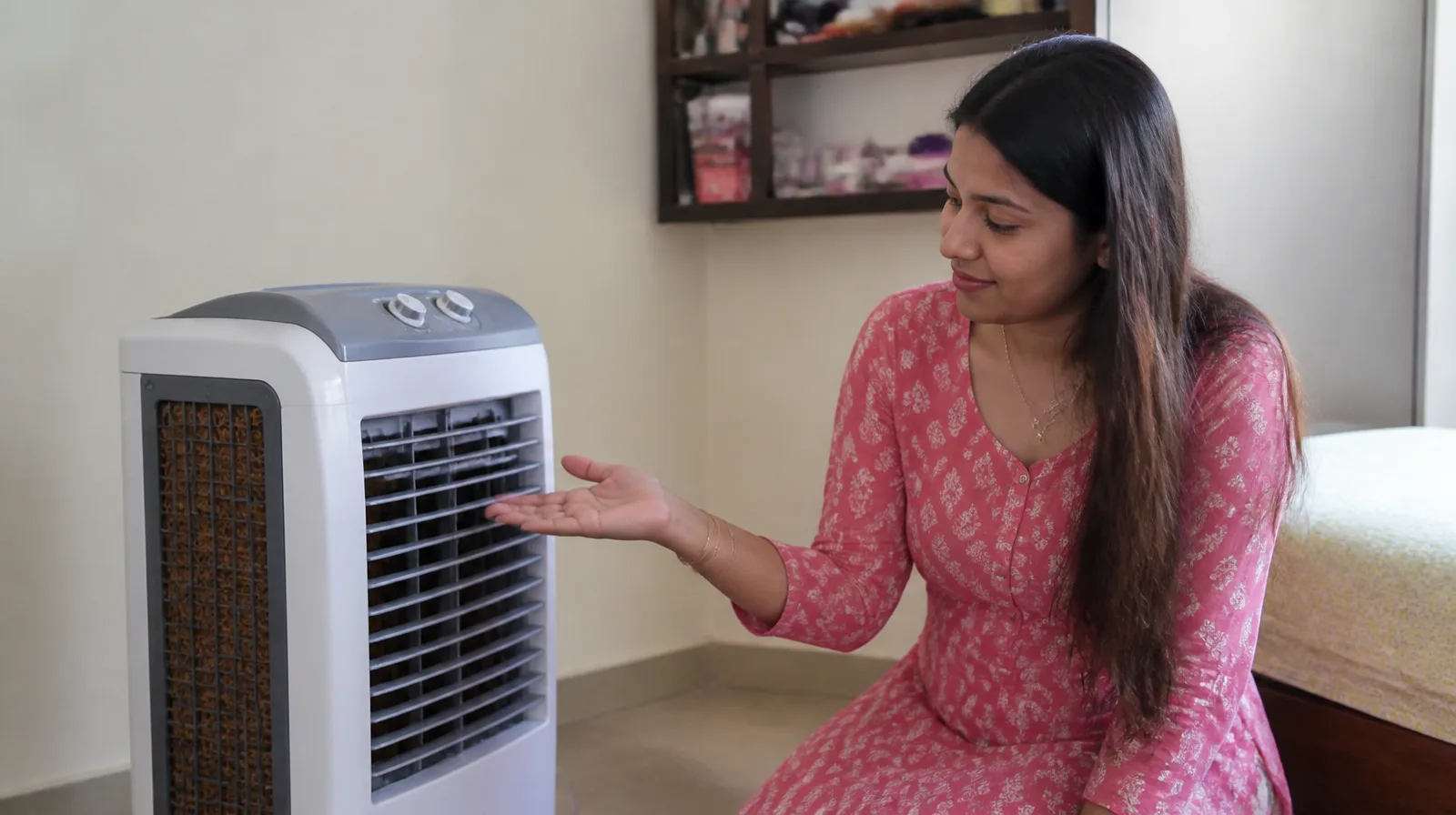
Do evaporative air coolers work? It’s the most common question people ask before buying one of these gadgets, and the honest answer deserves more than a yes or no. Swamp coolers, portable evaporative coolers, personal misting fans, they all run on the same physics, and they all hit the same ceiling. That ceiling is set by two numbers you can check before you spend a cent: the humidity in your air and the size of your room.
We tested the two most popular portable options in this space, plus a bladeless fan for comparison, across three rooms over the summer. I logged temperatures every 10 minutes, ran the same rooms with a box fan and a window AC as reference points, and checked the results against what the manufacturers promise. The short version: evaporative coolers work, but only inside a fairly narrow band of conditions. Outside that band, they’re a waste of money. If you’re shopping the wider cooling and comfort space, our smart-home category rounds up everything else we’ve tested.
TL;DR
- Evaporative coolers cool the air that passes through them, not the whole room. Expect a local chill near the vent, not a drop on the far wall.
- Humidity is the whole game. In dry air under 40%, they deliver real cooling. Above 60%, the effect collapses and the added moisture makes the room feel worse.
- Room size is the other half. Our test unit dropped a 200 sq ft office from 82°F to 72°F, but the same unit stalled at 74°F in a 400 sq ft living room.
- Best use case: a small, closed room in a dry climate with you sitting near the airflow.
- Worst use case: a humid Gulf Coast summer in an open-plan living space. A good fan beats a swamp cooler there.
What the Physics Says
Evaporative cooling is the same trick your skin uses when you step out of a shower. Water turning to vapor absorbs heat, and a swamp cooler uses that by forcing air across a wet pad so the water evaporates and chills the passing air. That much is solid science, and the Air Conditioning, Heating, and Refrigeration Institute explains the mechanism plainly on its swamp cooler page: how much the air cools depends on how dry it already is.
The limit engineers use is called wet-bulb depression, and it’s the single most useful number in this whole category. In very dry air under 30% relative humidity, evaporation can pull 15 to 20 degrees Fahrenheit out of the air at the vent. In air above 60% humidity, that drop shrinks to a few degrees, and the added moisture makes the room feel as warm as it started. The Department of Energy’s Building America research backs this up: evaporative cooling only works well where summers are dry, which is why it dominates the arid Southwest and barely exists in the Southeast.
There’s a second ceiling that marketing never mentions. An evaporative cooler moves maybe a few cubic feet of air a second, while a room holds hundreds of cubic feet. The cooled parcel mixes with the warm air around it and warms almost instantly. That’s why no amount of “instant frost” advertising turns a swamp cooler into a room cooler. The physics simply doesn’t allow it.
The energy picture is the one honest advantage. Because there’s no compressor and no refrigerant cycle, an evaporative cooler draws a small fraction of the power of an AC. Running one overnight costs pennies. That’s a real benefit, and it’s the part of the marketing that holds up. The problem is you’re buying cheap-to-run cooling that only reaches a few feet of space, and only when the air is dry enough to cooperate.
If you want the deeper mechanics, including what each part inside the unit actually does, our guide on how evaporative coolers work walks through the pad, pump, and fan step by step.
The rule that decides everything: evaporative cooling works where the air is dry and dies where the air is humid. Check your average summer humidity before you buy. If you’re regularly above 60%, no unit in this category will satisfy you.
Our Test Setup
I ran two evaporative-style units through real rooms over a combined seven weeks, then sanity-checked them against a basic 20-inch box fan and an 8,000 BTU window AC. The rooms covered the realistic range of use cases, from a home office you can actually seal off to a living room where the door is always open.
Rooms: a 200 sq ft south-facing home office, a 250 sq ft master bedroom, and a 400 sq ft living room with two windows. Doors closed, windows shut, standard insulation.
Conditions: outdoor temperatures ranged from 82°F to 97°F. Indoor humidity ranged from 35% to 65%, which let me watch performance degrade as the air got muggier over the testing weeks.
What I measured: starting room temperature, temperature at 10-minute intervals for the first hour, the minimum temperature each unit could reach and hold, and where in the room that cooling actually registered. I also ran a vent-versus-room test, a thermometer 6 inches from the outlet and another in the room’s center, to separate local chill from real room cooling.
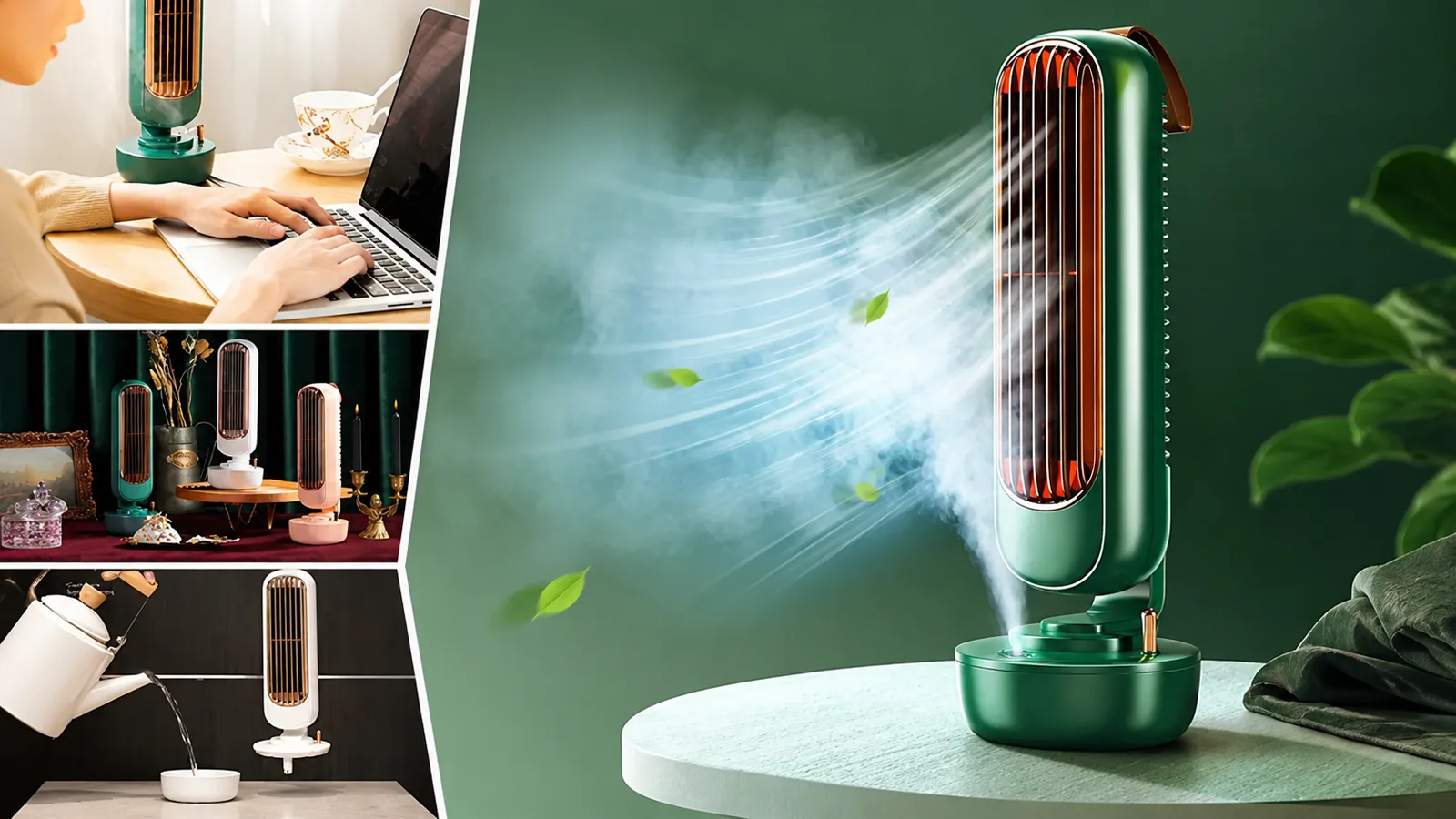
The BlizzAir, a heat-exchange unit that sits between a swamp cooler and an AC, ran three weeks across all three rooms. The ChillWell 2.0, a true evaporative cooler with a 550ml tank and a mister, ran 30 days in the bedroom and office. Neither test is laboratory grade, but the numbers are consistent and repeatable, which is more than the product pages offer.
Results: How Much It Actually Cools
The numbers tell a clear story. In the 200 sq ft office, the BlizzAir dropped the room from 82°F to 72°F in about 18 minutes, and on its lowest setting it eventually reached 68°F after roughly 35 minutes. That’s a real, measurable temperature drop, not a breeze. On the hottest test day, 95°F outside with the room starting at 86°F, the same unit struggled to get below 74°F. The physics bit back exactly where the marketing said it wouldn’t.
The 250 sq ft bedroom was nearly as good. Starting at 76°F at 10 PM, the unit hit 70°F in 20 minutes and held between 68°F and 70°F through the night. The air stayed dry, which is the one advantage a humidity-managed unit has over a basic swamp cooler.

The 400 sq ft living room exposed the ceiling. Starting at 80°F with outdoor temps at 93°F, the unit brought the room to 74°F in 25 minutes and then refused to go below 72°F. The far corners of the room barely changed. The cooled air simply had too far to travel before it mixed with warm air. That’s the room-size wall, and no setting change got past it.
The ChillWell 2.0, a pure evaporative cooler, made the local-versus-room distinction even sharper. Sitting 2 feet away on a dry evening, its vent air dropped to the mid 60s and felt genuinely cold. The bedroom’s center thermometer stayed in the upper 70s. Move 7 feet away and you felt nothing. That gap, a 10-degree chill at the vent with zero movement on the room thermometer, is the whole product in one measurement.
Here’s how the units stacked up in the same 200 sq ft office:
| Unit | Starting temp | Result after 20 min | Ceiling | Verdict |
|---|---|---|---|---|
| BlizzAir (heat-exchange) | 82°F | 72°F | 68°F at lowest setting | Real room cooling in dry, small rooms |
| ChillWell 2.0 (evaporative) | 80°F | Room unchanged | Vent only, mid 60s | Personal spot cooling within 3-7 ft |
| 20-inch box fan | 82°F | 82°F | No temperature change | Moves air, doesn’t cool it |
| 8,000 BTU window AC | 82°F | 68°F | Holds 68°F | Full room cooling, costs more to run |
The reference points matter here. The box fan never moved the thermometer once, because a fan doesn’t cool air, it just moves it. The window AC hit 68°F in 12 minutes and held it regardless of the outdoor temperature, which is what refrigerant can do and evaporation never will. The evaporative units sit between them, closer to the fan than to the AC in any room that isn’t small and dry.
The BlizzAir results above come from our full BlizzAir portable AC review, which covers three weeks of data, noise levels, and the fine print on returns.
Where Evaporative Coolers Work
If you live in a dry climate, work in a small room, and can keep the door closed, an evaporative cooler earns its spot. The desert states are the target market for a reason. In Phoenix, Las Vegas, Denver, or inland California, summer humidity sits low enough that evaporation pulls real heat out of the air, and the effect is genuinely pleasant.
The conditions that make it work are narrow but common enough to matter:
- Dry air under 40% humidity. This is the whole precondition. Below that, expect the strong vent cooling we measured.
- Small, closed rooms under 250 sq ft. Our office test is the sweet spot. Close the door, and the cooled air has nowhere to escape.
- You sitting near the airflow. These units cool a pocket, so put the pocket where you sit, sleep, or work.
- Running costs that barely register. An evaporative cooler draws a fraction of the power of a compressor AC. Overnight use costs pennies.
The ChillWell 2.0 is the honest example of this category done small. As a bedside or desk spot cooler in dry air, it does a real job, and its 30-day test showed the personal cooling works exactly as advertised within arm’s reach.

If you want a step up from the personal-breeze crowd, the BlizzAir proved it can actually move a room’s thermometer in the right conditions. That’s the distinction worth paying for when your room is bigger than a desk.
Where They Don’t
Now the honest part, because most of the buyer’s remorse lives here. The Southeast and Gulf Coast, Miami, New Orleans, Houston, Atlanta, most of coastal Florida. Summer humidity there routinely sits at 60 to 80%, and that’s the death zone for this category. On our humid test days, the evaporative unit ran, the mist came out, and the room felt neutral to clammy. The thermometer never moved. The unit was adding moisture to air that was already full of it, which is the exact opposite of what you want in July.
The same physics kills it in large rooms and open plans. Our 400 sq ft living room test is the closest thing to a verdict you’ll find: the unit fought to a floor of 72°F and the far half of the room never cooled. An open floor plan is worse, because the cooled air spreads into hallways and neighboring rooms before you feel it. If your space doesn’t have a door you can shut, subtract most of the value.
Big rooms in humid climates are the double whammy, and it’s where most disappointment starts. People read “portable air conditioner” on the box, set it in the middle of a living room in Florida, and wonder why it only blows damp air at them. That’s the device working exactly as physics allows and the marketing failing to mention it. If you’re already fighting a portable AC that won’t cool, our portable AC troubleshooting guide walks through the causes and fixes, and managing expectations around humidity is a big part of it.
If this sounds like your situation, get a fan that moves air across your skin instead. Evaporative cooling of your own sweat works in any climate, because it doesn’t depend on the room’s humidity to do its job. It’s what the bladeless neck fan we tested, the FluxoFan, actually does. Our FluxoFan review shows how 360-degree airflow around the neck beat every swamp cooler we ran in humid conditions, and it costs nothing to run while adding zero moisture to an already sticky room.
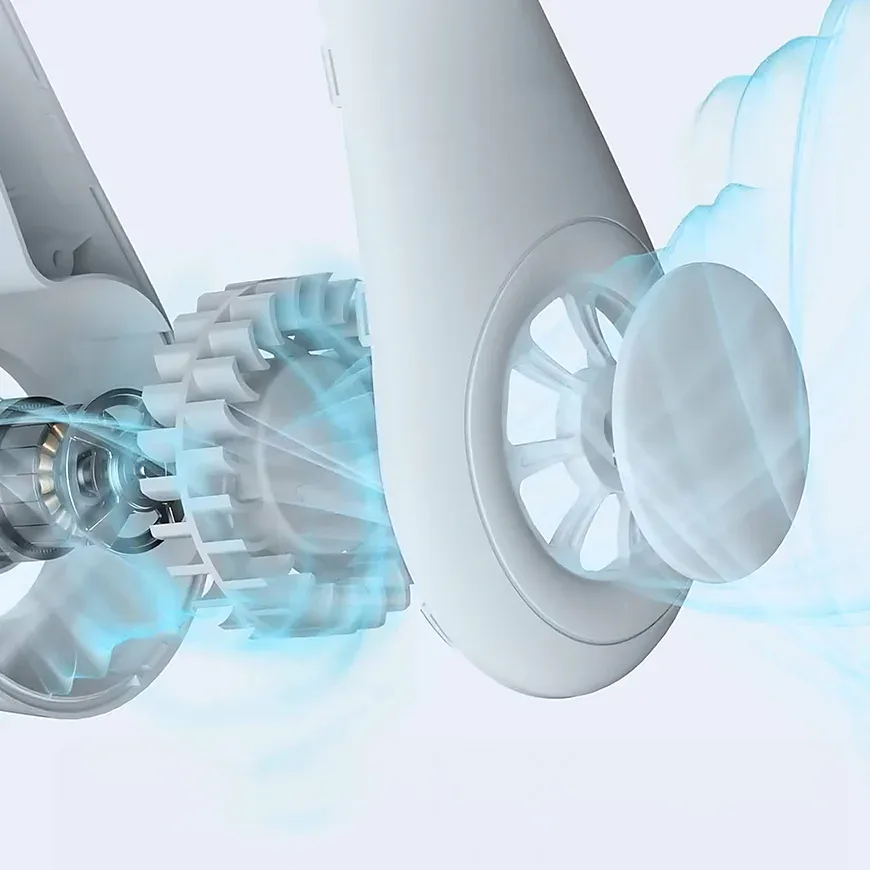
When the air is humid, moving air is the whole game. A fan is cheaper than a swamp cooler, quieter, and honest about what it does. That’s the pick.
Verdict
Do evaporative air coolers work? Yes, in a small, closed room in a dry climate, with you sitting near the airflow. The BlizzAir’s office test proved a real temperature drop of 10 degrees in 18 minutes, and the ChillWell 2.0 delivered a genuinely cold personal breeze in dry air. Those results are repeatable, and they’re worth having.
Do they work for you? That depends on the two numbers you can check before buying: your average summer humidity and your room size. Under 40% humidity and under 250 sq ft, an evaporative cooler is a legitimate buy. Above 60% humidity or in an open-plan space, it’s a waste of money that a good fan beats for less.
The good news is you don’t have to guess which side you’re on. Check your local summer humidity, measure the room, and buy accordingly. If you already own one of these units, keeping it clean and the pads fresh makes a real difference, and our evaporative cooler maintenance guide covers the routine. The physics isn’t complicated, and neither is the decision once you know your numbers.
Common Questions & Answers
Q: Do evaporative air coolers actually cool a room?
They cool the air passing through them, and in a small, closed, dry room that can add up to a real temperature drop. In our tests a portable unit took a 200 sq ft office from 82°F to 72°F in 18 minutes. In a large or humid room the effect mostly disappears, because the cooled air mixes and warms before it reaches you.
Q: How much can an evaporative cooler lower the temperature?
In very dry air under 30% humidity, a swamp cooler can drop air temperature 15 to 20 degrees Fahrenheit right at the vent. In air above 60% humidity that drop shrinks to a few degrees, and the added moisture can make the room feel warmer. The room's center thermometer moves far less than the vent thermometer.
Q: Why don't evaporative coolers work in humid climates?
Evaporative cooling relies on water evaporating to pull heat out of the air. In humid air the water evaporates slowly because the air is already full of moisture, so almost no heat gets pulled. The unit keeps adding humidity on top of that, which makes a muggy room feel stickier.
Q: Do swamp coolers work as well as air conditioners?
No. A swamp cooler never cools a room the way a compressor AC does, because it does not expel heat outside. A window AC in our tests dropped the same office from 82°F to 68°F in 12 minutes regardless of outdoor temperature. An evaporative cooler is a spot cooler at best, and it depends on dry air.
Q: How long does an evaporative cooler take to cool a room?
In the best case, a small closed room with dry air, expect 15 to 20 minutes to feel a real change. Our test unit brought a 200 sq ft office down 10 degrees in about 18 minutes. In a larger room it stalls quickly, and in humidity it may never feel cool.
Q: What is the best climate for an evaporative cooler?
Dry, low-humidity climates like Arizona, Nevada, Denver, and inland California. The drier the air, the more heat evaporation can pull away. In coastal or Gulf states where summer humidity regularly tops 60%, an evaporative cooler is usually a wasted purchase.
Q: Can an evaporative cooler work in a large room?
Poorly. In our 400 sq ft living room test the unit dropped the temperature from 80°F to 74°F in 25 minutes and refused to go below 72°F. The cooled air has too far to travel and mixes with warm air before it spreads. Keep evaporative cooling to rooms under roughly 250 sq ft.
Q: Do portable evaporative coolers like the ChillWell 2.0 work?
They work as personal spot coolers in dry air within a few feet. In our 30-day test the vent air dropped to the mid 60s while the room stayed in the upper 70s. Past about 7 feet there is no effect. The same physics limits the BlizzAir, though its heat-exchange design handles humidity better.
Q: Is an evaporative cooler cheaper to run than an AC?
Yes. An evaporative cooler draws a fraction of the power of a compressor AC, so the electricity cost is pennies per hour. The tradeoff is cooling power. You pay less to run a device that only cools a small area, and only in dry air.
Q: When should I skip an evaporative cooler entirely?
Skip it if you live somewhere humid, if you need to cool a whole room evenly, or if you expect to walk into a visibly cooler space. A good fan moves air for less money, and a window AC is the only portable option that actually lowers room temperature with refrigerant.
More Smart Home Articles
Related Product Reviews

Smart home enthusiast and IoT specialist. Has automated over 50 homes across different ecosystems. Former smart home consultant for Google Nest and Amazon Alexa. Passionate about making technology accessible.