
Best Fabric Shavers 2026: 6 De-Pilling Tools Tested
We tested 6 fabric shavers on wool, cashmere, and upholstery. Real de-pilling results, prices, and the one pick that beats a lint roller on pills.

Tech Reviewer
In This Article
- TL;DR
- How We Tested These Fabric Shavers
- What to Look For in a Fabric Shaver
- 1. NoFuzz — $49.95
- 2. Philips 1000 Series Fabric Shaver — $35 to $45
- 3. MagicTec Rechargeable Fabric Shaver — $13 to $25
- 4. Conair Fabric Shaver and Lint Remover — $15 to $20 plus batteries
- 5. Steamery Pilo No.2 — $60 to $80
- 6. Beautural Fabric Shaver and Lint Remover — $10 to $15
- Comparison Table
- How to Choose the Right Fabric Shaver
- Tips for Getting the Best Results
- Verdict
Every fall I pull my favorite wool coat out of storage and spend ten minutes picking pills off the arms with my fingers. Then I spent three weeks testing the best fabric shavers on the market so I would never have to do that again. This is the result, a buyer’s guide built from real de-pilling sessions on wool, cashmere blends, cotton, fleece, gym wear, and a sofa arm, across six tools ranging from $10 to $80.
The short version: a good fabric shaver revives clothes that look two years older than they are, and the differences between the tools matter more than the marketing suggests. Battery information, speed settings, and blade safety separate the tools you reach for weekly from the ones that eat holes in a favorite sweater. This roundup sits inside our wider smart gadgets coverage. Every tool below earned its spot over a real three-week run. The full garment-by-garment test log is in my NoFuzz review.
TL;DR
- Best overall: NoFuzz, the only rechargeable on this list with a real battery percentage LCD, three speeds, and USB-C charging. Around $49.95.
- Best proven: Philips 1000 Series, the Good Housekeeping Institute’s top scorer at 92/100. Around $35 to $45.
- Best budget: MagicTec, around $13 to $25, with 60 minutes of runtime on a two-hour charge.
- Best design: Steamery Pilo No.2, around $60 to $80, Wirecutter’s design pick.
- Cheapest that works: Beautural, around $10 to $15, battery operated, a legit Amazon bestseller.
- Bottom line: If you own wool coats, cashmere, or knitwear you care about, the NoFuzz is the pick. If you own one fleece hoodie, the MagicTec or Conair will do.
How We Tested These Fabric Shavers
I ran every unit through the same routine: de-pilling a wool coat sleeve, a cashmere-blend cardigan, three cotton tees, a fleece hoodie, and the arm of a sofa. I logged time per garment, how many times I had to empty the lint chamber, whether the blade slowed as the battery dropped, and whether any fabric showed thinning afterward. I also read through owner reviews and, where they exist, independent lab tests.
The two external benchmarks that matter here are the Good Housekeeping Institute’s fabric shaver test and Wirecutter’s category coverage. GH runs the category under controlled conditions and scored a Philips model 92 out of 100, and Wirecutter has repeatedly named the Steamery Pilo No.2 the best-designed de-piller on the market. Both are worth reading before you buy, because they are the only independent third-party checks the category gets.
The one thing I could not test is long-term blade wear, which needs years. What I can tell you from the sessions is which tools cut cleanly, which ones are safe on delicates, and which ones leave you guessing about battery mid-sweater.
What to Look For in a Fabric Shaver
Before the rankings, the four factors that actually decide whether you will use the tool or abandon it in a drawer.
Battery information. Most fabric shavers give you a green charging light or nothing. You start a sweater and the blade slows to a whine halfway through, and there was no way to have known. A digital readout, even a rough one, is the difference between a tool and a gamble.
Speed settings. A single-speed shaver forces you to use the same aggressive setting on everything, which is exactly how delicates get damaged. Three speeds, or at least a low option, let you drop down for cashmere and loose knits.
Blade safety. The mesh guard is what keeps the blade off the fabric. A cheap shaver with a loose mesh and an aggressive blade is how sweaters get eaten. Look for a unit where the guard sits close to the blade and does not flex under pressure.
Maintenance. Lint chambers fill fast and blades collect fiber. A removable chamber that empties in seconds and a cleaning brush that sweeps the blade make the difference between a weekly habit and a chore you avoid.
The single best predictor of whether you will like a fabric shaver is whether you can see the battery. Everything else is fixable with technique.
1. NoFuzz — $49.95
Why it earns the top spot: the only rechargeable fabric shaver with a real battery percentage LCD, three speeds, and USB-C charging, tested clean on seven garments and one sofa arm with zero fabric damage.
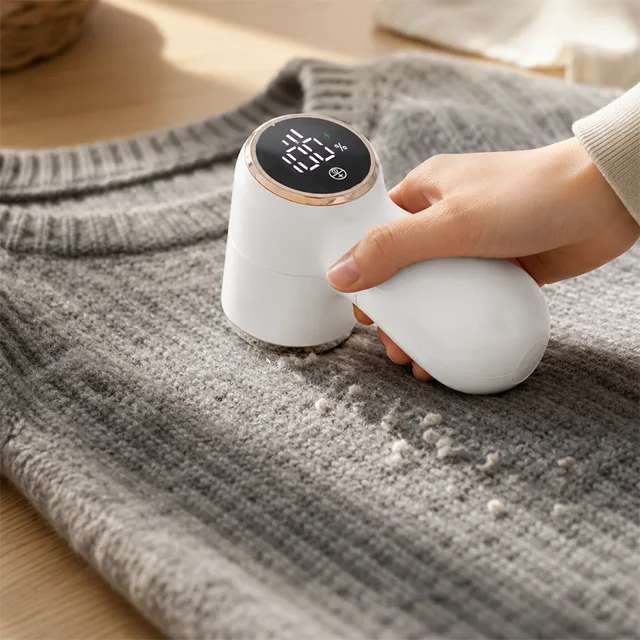
NoFuzz is the tool I kept reaching for after the testing ended. It is a handheld electric shaver with a rotating blade under a safety mesh guard, an LCD that shows the current gear and the exact battery percentage, and three power settings. Low handles cashmere and loose knits, Medium handles everyday garments, and High handles thick outerwear and upholstery.
The LCD is the quiet differentiator. Every other unit on this list either runs on batteries or gives you a charging light and a shrug. NoFuzz shows a number, so I never started a session without checking it and I never got stranded mid-sweater. A full charge took just over two hours on a standard 5W phone brick and delivered three to four 10-minute garment sessions across several days.
The honest caveats are the checkout and the marketing. The checkout showed the single unit at both $49.95 and $69.95 on the same page, the return policy deducts shipping and handling, and the sterilization mode is a toggle with no independent verification. I documented all of it in the full NoFuzz review. The product itself earned an 8-plus in my scoring; the buying experience dragged it down.
2. Philips 1000 Series Fabric Shaver — $35 to $45
Why it earns the proven spot: the Good Housekeeping Institute’s category winner at 92/100, with about 90 minutes of runtime and a protective cap for delicates.
The Philips 1000 Series is the mainstream premium choice and the safest recommendation for anyone who wants an established brand with independent test wins behind it. GH ran the category and picked a Philips model as its top performer, scoring it 92 out of 100, ahead of most rivals. That is the only verifiable third-party win in this category.
It is rechargeable with roughly 90 minutes of runtime, it has a protective cap for delicates, and its head is wider than the NoFuzz, which covers surface area faster. The trade against NoFuzz is real: no battery percentage readout, fewer speed options, and a higher price for a comparable core job.
If the budget stretches and you want the safe, proven pick from a normal retailer, this is it. If you want battery information and a lower price, the NoFuzz does more for less.
3. MagicTec Rechargeable Fabric Shaver — $13 to $25
Why it earns the value spot: 60 minutes of runtime on a two-hour charge, three included blades, and a price that undercuts everything else with a rechargeable battery.
MagicTec is the surprise of the category. It is a rechargeable shaver that runs about 60 minutes on a two-hour charge, comes with three blades, and sells for as little as $13 on Amazon, with the average price around $25. For the money, nothing else matches its combination of rechargeable battery and clean cutting.
The trade-offs are the size and the finish. It is compact, which means a small head and a small lint chamber, so whole-coat jobs take patience and frequent empties. It also has no battery readout, so you are back to guessing when the blade starts to slow.
For a first shaver, or for someone with fleece and cotton and not much else, this is the smart buy. It does the core job at a fraction of the premium price.
4. Conair Fabric Shaver and Lint Remover — $15 to $20 plus batteries
Why it earns the budget spot: everywhere, cheap, with a large lint bin, but it runs on AA batteries and cuts aggressively.
The Conair is the default budget choice you can find in any big box store, and it is the one I used before NoFuzz. It runs on AA batteries, has three depth settings, and a large lint bin that holds a lot before emptying. It also has no rechargeable battery, no battery readout, and blades that are aggressive even on the shallowest setting.
In my testing, that aggression is the problem. It ate a patch out of a sweater because the blade is coarse on the low setting, and Consumer Reports has tested the category enough to warn that cheap shavers vary widely in how aggressively they cut. If you buy one, use the lightest touch and spot-test everything.
It is the right call for a very tight budget and a few fleece items. If you own knitwear you care about, the extra money for a low speed and a battery readout is worth it.
5. Steamery Pilo No.2 — $60 to $80
Why it earns the design spot: brushed steel, a fabric-friendly head, and Wirecutter’s nod as the better-designed de-piller on the market.
The Steamery Pilo No.2 is the premium outlier, a Swedish brand that sells this as much as a design object as a tool. It is brushed steel, it has a fabric-friendly head design, and Wirecutter has named it one of the better-designed de-pillers on the market.
It does the same core job as NoFuzz with nicer materials and a much bigger price. In my experience the extra money buys aesthetics, not better results on fabric. The cut quality matches the mid-tier tools, and you pay for the shelf appeal.
Buy it if you want a beautiful object that also happens to de-pill. Buy NoFuzz if you want the same result with better battery information for less money.
6. Beautural Fabric Shaver and Lint Remover — $10 to $15
Why it earns the cheapest-that-works spot: a legit Amazon bestseller at $10 to $15 with two speeds, two replaceable stainless steel blades, and battery operation.
Beautural is the classic Amazon budget fabric shaver, and the reviews back it up. It runs on batteries, has two speeds, two replaceable stainless steel blades, and sells for around $10 to $15. It is a genuine bestseller, with thousands of owner reviews spread across Amazon and Walmart.
The limits are the same as every battery unit: no battery information, no rechargeable option on the base model, and a small head. For the price, the cutting is fine on fleece, cotton, and moderate knits. On fine cashmere, skip it and spend more on a low-speed unit.
It is the cheapest tool on this list that actually works, and it is the right answer for a casual buyer who wants to de-pill a few sweatshirts without thinking hard about it.
Comparison Table
| Feature | NoFuzz | Philips 1000 | MagicTec | Conair | Steamery | Beautural |
|---|---|---|---|---|---|---|
| Price | ~$49.95 | ~$35-$45 | ~$13-$25 | ~$15-$20 | ~$60-$80 | ~$10-$15 |
| Battery | Rechargeable, USB-C | Rechargeable, ~90 min | Rechargeable, 60 min | AA batteries | Rechargeable | Batteries |
| Battery readout | LCD with % | Light only | None | None | None | None |
| Speeds | 3 | 1-2 | 2 | 3 depth settings | 1 | 2 |
| Head size | Small | Medium-wide | Small | Large | Medium | Small |
| Independent win | None published | Good Housekeeping 92/100 | None | Mixed | Wirecutter design pick | None |
| Best for | Knitwear you care about | Safe, proven pick | First shaver, budget | Tightest budgets | Aesthetics | Cheapest that works |
How to Choose the Right Fabric Shaver
Match the tool to your wardrobe, not to the marketing.
- You own wool coats, cashmere, or knits you care about: get the NoFuzz and use the Low speed. The battery readout and gentle mode are worth the price.
- You want the safe, established pick from a normal retailer: get the Philips 1000 Series. Good Housekeeping scored it 92/100.
- You have fleece and cotton and a small budget: get the MagicTec rechargeable. Sixty minutes of runtime for $13 to $25.
- You want a tool that looks great on a shelf: get the Steamery Pilo No.2.
- You want to spend as little as possible: get the Beautural and spot-test everything.
Tips for Getting the Best Results
- Start on Medium, always. Low is for cashmere and loose knits only. High is for thick upholstery and outerwear.
- Hold the fabric taut. A stretched sleeve or a flat table gives cleaner results than shaving a slack surface.
- Never press down. The mesh does the depth control. Pressure causes the blade to catch and leaves a compressed patch.
- Empty the chamber often. A full chamber chokes airflow and slows the cut.
- De-pill after each wash, not once a season. Maintenance takes two minutes per garment. Rescue takes ten.
- Spot-test a hidden seam first. Especially on cashmere, silk-adjacent knits, and anything with sentimental value.
- Do not shave felted or sun-damaged fabric. If the fibers have matted or faded, removing the pills exposes the damage underneath.
The full technique, including the razor method and how to fix a pilled sofa, lives in our step-by-step guide on how to remove pills from sweaters. A few minutes per garment after each wash is all it takes. And if your knits are balling up and you are not sure why, the science is in our piece on why do clothes pill.
Verdict
Six fabric shavers, three weeks of de-pilling, and the answer is clearer than the price spread suggests. The NoFuzz is the best overall because it is the only rechargeable unit that tells you its battery level, gives you a real low speed for delicates, and charges over USB-C, all at roughly $50. The Philips 1000 Series is the proven pick if you want the Good Housekeeping winner from a normal retailer. The MagicTec is the value buy if you just need something that works without thinking hard.
For my money, the NoFuzz is the tool I keep on the laundry shelf. One saved garment covers its price, and the 30-day guarantee means the real risk is the return shipping cost, not the product. If you have knitwear and coats that pill, that is the one to buy.
Frequently Asked Questions
What is the best fabric shaver in 2026?
Does a fabric shaver ruin clothes?
What is the best budget fabric shaver?
Is a fabric shaver better than a lint roller?
Can you use a fabric shaver on cashmere?
Which fabric shaver did Good Housekeeping recommend?
What fabric shaver does Wirecutter recommend?
How much should I spend on a fabric shaver?
Why do my sweaters pill and is it my fault?
Where can I buy a NoFuzz fabric shaver?
More Smart Gadgets Articles

Related Product Reviews

Alex Thompson
Consumer electronics reviewer specializing in smart gadgets and everyday tech. Tests 100+ gadgets annually. Previously wrote for The Verge and Wired. Focus on practical daily-use value.
Affiliate disclosure:This article contains affiliate links. If you buy through them, GearPuff may earn a commission at no extra cost to you. It keeps our testing independent and our reviews free.