
How to Remove Pills From Sweaters: 5 Methods That Work
Step-by-step methods to remove pills from sweaters and wool without damaging the fabric. Razor, fabric shaver, comb, and tape compared, with what I tested.

In This Article
- TL;DR
- Why Pills Form and Why It Matters
- Check the Fabric Before You Shave Anything
- Method 1: The Electric Fabric Shaver, the Fastest Option
- Method 2: The Razor, Fast but Risky
- Method 3: The Sweater Comb, Gentlest on Delicates
- Method 4: Lint Roller and Tape, for Loose Fluff Only
- Method 5: Prevention, the Method That Saves the Most Sweaters
- What Worked in My Three Weeks of Testing
- Which Method Should You Use?
- What Actually Matters
TL;DR
- Best method: an electric fabric shaver on Medium, with Low reserved for cashmere and loose knits.
- The one rule: never press down. The mesh guard does the depth control, and pressure is how sweaters get eaten.
- The fast backup: a razor glides over flat panels quickly, but it will trim yarn if you are not careful.
- The gentle backup: a sweater comb catches pills by hand, slower but safer on delicates.
- The hard stop: if the sweater is felted, sun-faded, or thin enough to see through, retire it. A shaver will make it worse.
Pills on sweaters are the most annoying wardrobe problem that has an actual fix. Those little gray balls cluster on cuffs, collars, and the sides of every knit you own, and they make a $150 sweater look like it came from a bargain bin. The good news is that removing them is a twenty-minute job you can do at home with the right tool, and the fabric underneath is almost always fine.
This guide walks through the five methods that work, from the fastest electric option to the gentlest hand method, with the exact technique I used across three weeks of de-pilling wool coats, cashmere blends, cotton tees, and fleece. It is part of our wider smart gadgets coverage, and if you want to know which tools to buy, our best fabric shavers 2026 roundup ranks them all.
Why Pills Form and Why It Matters
Pilling is a physics problem, not a defect. Every fabric surface is made of thousands of fiber ends, and every time the fabric rubs against something, a bag strap, a seatbelt, your body, the spin cycle, those loose ends work their way to the surface and tangle into small balls. The standard picture, confirmed by textile researchers for decades, is a three-stage cycle: fibers migrate and form fuzz, the fuzz entangles into pills under continued abrasion, and the pills eventually wear off and fall away.
That is why pilling concentrates where friction happens, the cuffs, the sides, the underarms, the collar. And it is why knits pill more than tightly woven fabric: knit construction leaves more fiber ends exposed. The American Association of Textile Chemists and Colorists and the ASTM both maintain lab tests for pilling resistance, like the ASTM D3512 random tumble test, and they exist precisely because pilling is a measurable, standardized property of fabric.
The practical takeaway is that pilling is surface damage, not structural damage. The base fabric is usually fine, which is exactly why a shaver works at all. It trims the loose fiber balls at the surface without cutting the yarn underneath.
Check the Fabric Before You Shave Anything
This is the step everyone skips and the one that prevents the most ruined sweaters. Hold the garment up to light and look at it. If you can see through the knit, if the fibers have matted into a stiff, felted mass, or if there are sun-faded patches where the fabric has degraded, a shaver will make it worse. Removing the surface fuzz exposes how thin the fabric has become.
I made this mistake with a felted acrylic scarf. It came out of the wash stiff and matted, I ran the shaver over it, and the surface looked thinner and worse afterward. The rule is simple: shave fabric that is structurally sound, and retire fabric that is not.
Method 1: The Electric Fabric Shaver, the Fastest Option
An electric fabric shaver is the best method for most sweaters, full stop. It spins a blade under a safety mesh guard, so pills poke through the holes and get cut while the blade never touches the flat fabric. In my testing it removed pills in one to two passes on Medium, and a whole wool coat took about eight minutes including chamber empties.
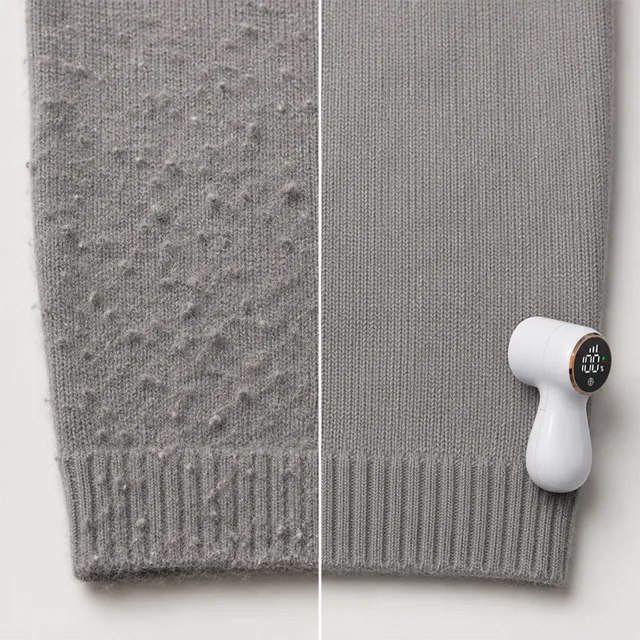
The technique is four steps. Lay the sweater flat on a table or stretch a sleeve over your hand so the fabric is taut. Start on Medium, not High. Run the shaver in short, overlapping passes with a light touch, like you are using a handheld vacuum with patience. Empty the chamber whenever it looks full, because a full chamber chokes airflow and slows the cut.
The most important instruction is also the most counterintuitive: do not press down. The mesh does the depth control, and pressure makes the blade catch and clunk, which is how sweaters get compressed patches or worse. I pressed too hard on my first session with a wool coat and got a patch that looked slightly compressed. The fix was trivial, I lightened up and it never happened again.
Method 2: The Razor, Fast but Risky
A disposable razor glides over the surface and trims pills, and on flat knit panels it is genuinely fast. The technique is to hold the fabric taut with one hand and glide the razor at a low angle in the direction of the weave, never pressing down. It works well on wool coats and flat sweater bodies.
The risk is that a razor has no guard. The blade will trim the pills, and then it will trim the yarn itself if you press, if the fabric is not perfectly taut, or if the sweater has any texture. On cashmere and anything with a loose knit, this is how you get a bald patch. Use the razor method on flat, sturdy knits you can afford to replace. Use a fabric shaver on everything else.
Method 3: The Sweater Comb, Gentlest on Delicates
A sweater comb, sometimes called a fabric comb, is the hand method with the best safety record. It has fine teeth that catch and pull the pills off the surface without cutting the yarn. It takes longer than a shaver and it works best on dry, flat fabric, which is why it is the traditional choice for cashmere.
The technique is to lay the garment flat, hold it taut, and comb in short strokes in the direction of the weave, clearing the teeth of collected pills every few passes. It will not remove the stubborn, well-anchored pills as cleanly as a blade, but it will never eat a hole, which matters more when the sweater is expensive.
Method 4: Lint Roller and Tape, for Loose Fluff Only
A lint roller or packing tape lifts loose hair and fiber dust that sits on the surface, but it cannot cut pills that are attached to the fabric. Use it as a finishing step after shaving, to grab the fiber dust the blade left behind, and between wears to keep a sweater from looking fuzzy.
The misconception to drop is that a lint roller replaces a shaver. It does not. A pilled sweater needs a blade or a comb. A lint roller is the polish on top, and many wardrobes genuinely need both tools.
Method 5: Prevention, the Method That Saves the Most Sweaters
De-pilling after every few washes takes two minutes per garment, and it is the difference between maintenance and rescue. Pills that get removed early never mat into felt, and a sweater that is de-pilled regularly looks years younger than one that is rescued once a season.
The laundry side matters too. Wash knits on a gentle cycle or by hand, in a mesh bag, cold, and dry them flat. The friction of a tumble dryer is a pilling machine. If your sweaters are balling up in the wash, the cycle is doing half the damage, and the full explanation of why fabric pills sits in our why do clothes pill article.
What Worked in My Three Weeks of Testing
I de-pilled seven garments and one sofa arm across three weeks, and the pattern was consistent. The wool coat was the best result, eight minutes on Medium and the arms and collar looked like the day I bought it. The cashmere-blend cardigan was the nervous test, and on Low with a light touch it came through clean with no pulling and no holes. The fleece hoodie was the easiest, pills lifted almost instantly. The leggings surprised me, the bobbles between the thighs came off on Medium and the fabric felt smoother on the next run.
Two items failed, and both were structurally damaged. The felted acrylic scarf came out worse, and the sun-faded sofa arm could not be saved. The lesson holds across every method in this guide: the tool is only as good as the fabric it is working on.
Which Method Should You Use?
Here is the decision in one table.
| Situation | Best method | Why |
|---|---|---|
| Daily-wear sweaters, wool coats | Electric fabric shaver | Fastest, safest, one to two passes per pill |
| Cashmere and loose knits | Fabric shaver on Low, or sweater comb | Lowest risk of damage |
| Flat, sturdy knit panels | Razor | Fast, but press and you lose a patch |
| Between wears | Lint roller or tape | Lifts fluff, cannot cut attached pills |
| Felted, faded, or see-through fabric | None, retire it | Shaving exposes the damage |
What Actually Matters
The whole craft of de-pilling comes down to three things. Check the fabric is sound before you start. Hold it taut and never press down, because the tool does the depth control, not your hand. And do it as maintenance, a few minutes after each wash, instead of a rescue mission once a season.
For the tool itself, my testing keeps landing on the NoFuzz. The three speeds mean you have a genuine low setting for cashmere, the LCD means you always know how much battery is left, and the USB-C charging means one cable tops it up. The full test log, the checkout caveats, and the honest failures are all in my NoFuzz review. A $50 shaver pays for itself the first time it saves a sweater you were about to replace.
If you have knitwear and coats that pill, twenty minutes tonight restores them. That is the whole trick, and it works.
Frequently Asked Questions
What is the fastest way to remove pills from a sweater?
Can I remove pills from a sweater with a razor?
Does shaving a sweater damage it?
Why do sweaters pill in the first place?
What should I do if my sweater is already felted or matted?
Can I use a lint roller instead of a fabric shaver?
How do I de-pill a wool sweater without a shaver?
Should I de-pill sweaters when they are wet or dry?
How often should I de-pill my sweaters?
Which fabric shaver is best for sweaters?
More Smart Gadgets Guides

Related Product Reviews



Alex Thompson
Consumer electronics reviewer specializing in smart gadgets and everyday tech. Tests 100+ gadgets annually. Previously wrote for The Verge and Wired. Focus on practical daily-use value.
Affiliate disclosure:This article contains affiliate links. If you buy through them, GearPuff may earn a commission at no extra cost to you. It keeps our testing independent and our reviews free.