
Why Do Clothes Pill? The Science and the Fix
Why do clothes pill and what actually stops it? The three-stage science behind pilling, which fabrics pill most, and how to fix it without damaging the fabric.

Tech Reviewer

In This Article
Every few months the same question shows up in our inbox: why do my clothes pill? It looks like a defect, but it is the opposite. Pilling is a physics property of fabric, it happens to everything from a $15 sweatshirt to a $200 cashmere sweater, and understanding it is the first step to stopping it. This article walks through the science, the fabrics that pill most, and the fix that actually works.
The short version: pilling is surface damage from friction, and the fabric underneath is usually fine. That is why the fix works. This is part of our smart gadgets coverage. Pilling is fixable at the surface, and the right tool makes it a two-minute job. For anyone ready to fix it, our best fabric shavers 2026 roundup ranks the tools we tested.
TL;DR
- Why it happens: friction. Fiber ends migrate to the surface and tangle into balls wherever fabric rubs, on your body, against a bag, inside the washing machine.
- It is not a quality signal: wool and cashmere pill because natural short-staple fibers have more loose ends. Even expensive knits do it.
- Knits pill more: sweater construction leaves more fiber ends exposed than woven fabric, which is why knitwear goes first every season.
- The washing machine is a pilling machine: sustained friction on wet fibers, made worse by hot water and the tumble dryer.
- The fix: wash knits gently and dry flat to prevent, and trim pills with a fabric shaver before they mat into felt.
What Pilling Actually Is
Pilling is the formation of small fuzzy balls on the surface of fabric. Every fabric is made of thousands of individual fiber ends, and each time the fabric rubs against something, those loose ends work their way to the surface and tangle together into balls.
The balls are not dirt, and they are not damage to the yarn itself. They are surface clutter made from the garment’s own fibers, which is why they are usually the same color as the fabric. Pilling concentrates where friction happens, the cuffs, the sides, the underarms, the inner thighs, because those are the abrasion points.
The Three-Stage Pilling Cycle
Textile researchers have studied pilling for decades, and the standard model is a three-stage cycle. Loose fibers migrate to the surface and form fuzz. That fuzz entangles into pills under continued abrasion. The pills eventually wear off and fall away.
That cycle explains two things you have noticed yourself. Pilling concentrates where friction happens, and pilling seems to come and go, because stage three, the pills falling off, is part of the cycle. Your clothes are not randomly pilling. They are pilling wherever they rub, and then rubbing again.
Why Knits Pill More Than Woven Fabric
The biggest single factor in whether a fabric pills is construction. A sweater is a knit, a series of loops, and each loop leaves more fiber ends exposed to the surface than a tightly woven fabric. More exposed ends means more fuzz, more tangling, and more pills.
That is why knitwear is the first casualty every season. The arms of a wool coat, the collar of a cardigan, the cuffs of any sweater, these are knit surfaces under constant friction with the structure to pill. A tightly woven cotton shirt has far fewer exposed ends, so it resists pilling until it is worn very thin.
The same logic explains why the cuffs of a coat pill before the body does. The fabric is identical. The cuffs get rubbed against desks, tables, and car doors. The body does not.
Why Expensive Fabrics Pill Too
Here is the part that surprises people: cheap fabric is not the only fabric that pills, and sometimes it is not even the worst. Natural short-staple fibers like cotton, wool, and cashmere have thousands of loose fiber ends by nature, so they fuzz and pill readily. Long-staple and continuous fibers, like a polyester filament, have almost no loose ends to tangle, so they resist pilling for years.
That is why a $200 merino sweater can pill faster than a $25 polyester hoodie, and why a wool coat pills while the polyester jacket next to it stays smooth. The wool is the better fabric. It is also the more pill-prone fabric, because better natural fibers are shorter staples with more ends.
Pilling resistance is a measurable, standardized property. The American Association of Textile Chemists and Colorists and the ASTM both maintain laboratory tests for it, including the ASTM D3512 random tumble test, which tumbles fabric samples in a cork-lined box and rates how much they pill. When a manufacturer claims a fabric is low-pill, there is a real test behind it.
Why the Washing Machine Makes It Worse
If your clothes are pilling more than they should, look at the laundry. The wash cycle is sustained friction, and the fibers are wet and therefore weaker and more mobile, so the tumbling drives loose ends to the surface and tangles them into pills. Hot water softens fibers further, and the tumble dryer is a pilling machine on its own.
The classic patterns match this. Leggings pill between the thighs because of chafing, which is the same mechanism as a wash cycle, sustained friction. Shirts pill at the underarms for the same reason. And whole garments get noticeably fuzzier after a few wash and dry cycles, because the machine is manufacturing pills the drawer never would.
How to Stop Clothes From Pilling
There are two levers, and they work together.
Prevent it at the laundry. Wash knits cold on a gentle cycle, in a mesh bag, and dry them flat. Skip the hot water, the aggressive spin, and the tumble dryer for anything knit. A gentle cycle and flat drying cut the pilling your machine creates by a wide margin.
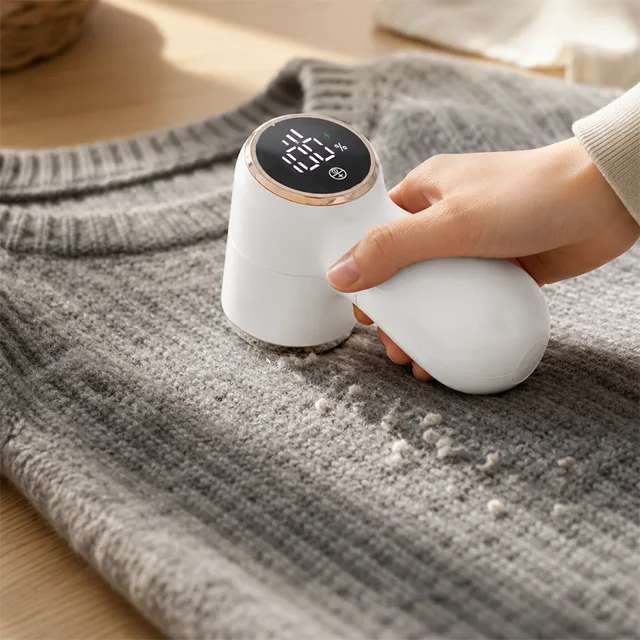
Remove it before it mats. Pills that already formed should be trimmed before they mat into felt, because felted fabric cannot be saved. A fabric shaver removes pills at the surface without cutting the yarn underneath, and the garment looks new again. The full technique, including how to handle cashmere and the razor method, is in our step-by-step guide on how to remove pills from sweaters.
The mistake to avoid is waiting. Pills trimmed after every few washes take two minutes per garment. Pills that wait all season mat into the fabric, and then no tool in the world restores them.
So, Why Do Clothes Pill?
Pilling is friction. Short fibers, knit construction, and repeated abrasion, on your body, against a bag, inside the washing machine, are the recipe, and no fabric is immune. It is surface damage, not a sign that your clothes are cheap, and the fabric underneath is usually fine.
That is why the fix is simple and effective. Wash knits gently, dry them flat, and trim pills as they appear. A fabric shaver with a low speed and a battery readout, the tool I tested and kept on the laundry shelf, makes the maintenance a few minutes per garment. It is the difference between a sweater that looks two years old and one that looks new every season, and the full test log is in my NoFuzz review.
The short answer to the original question: your clothes pill because they rub, not because they are bad. Fix the rubbing, fix the laundry, and trim what is left, and the pills stop running your wardrobe.
Frequently Asked Questions
Why do my clothes pill?
Does pilling mean my clothes are cheap?
Why do sweaters pill more than T-shirts?
Why do my clothes pill in the washing machine?
Why do my leggings pill between the thighs?
Why do some fabrics never pill?
What is the three-stage pilling cycle?
Is pilling tested or measured?
How do I stop my clothes from pilling?
Can I fix clothes that already pill?
More Smart Gadgets Articles


Related Product Reviews


Alex Thompson
Consumer electronics reviewer specializing in smart gadgets and everyday tech. Tests 100+ gadgets annually. Previously wrote for The Verge and Wired. Focus on practical daily-use value.
Affiliate disclosure:This article contains affiliate links. If you buy through them, GearPuff may earn a commission at no extra cost to you. It keeps our testing independent and our reviews free.