
In This Article
- TL;DR
- What the Airmoto Actually Does Well
- Where It Falls Short
- What Owners Say
- The VIP Subscription Issue
- Airmoto vs the Competition at the Same Price
- Who Should Buy It
- Who Should Skip It
- The Value Math: Cost per Use vs Gas Station Air
- Is It Worth Full Price vs Waiting for a Sale?
- Alternatives Under Similar Money
- Final Verdict
- Frequently Asked Questions
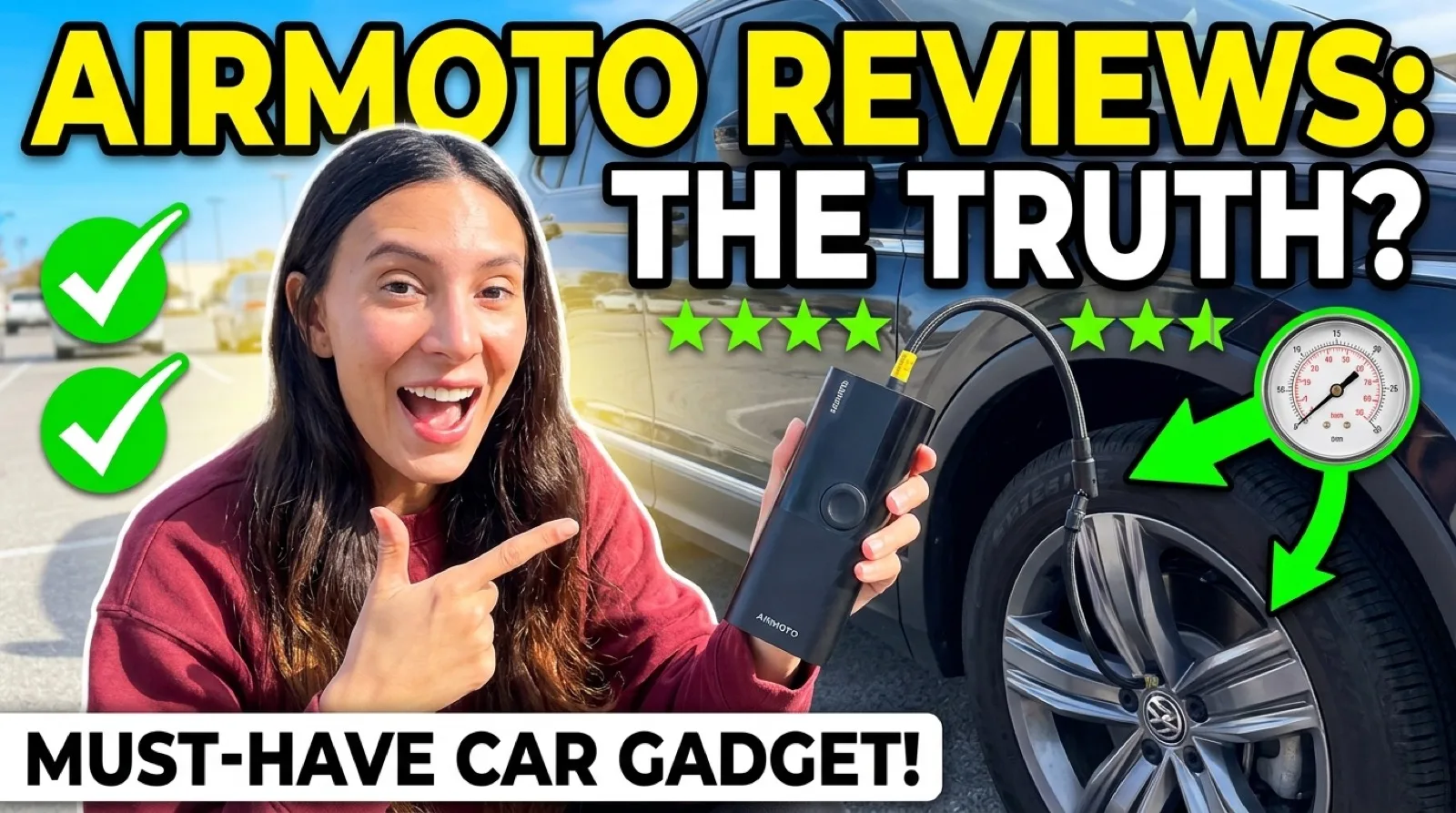
Every buyer who lands on the Airmoto product page asks the same question: is this little inflator actually worth it, or is it another gadget that looks great in the ad and disappoints in the driveway? The marketing shows a sleek pocket-sized pump that fills “virtually anything in minutes” and never mentions the subscription that appears at checkout or the 26-minute wait when your tire is completely flat.
I tested the Airmoto for four weeks on a sedan, a motorcycle, two bike tires, and a basketball. I also read through more than 140 owner complaints across Amazon, Trustpilot, and Reddit so I could separate the real patterns from the noise. This article is the honest result: what the Airmoto does well, where it falls short, who should buy it, and who should spend their money elsewhere.
TL;DR
- Does it work? Yes, for top-offs and low-tire emergencies. The auto shut-off hits your target PSI every time.
- Speed: Great for bikes and balls (2 to 3 minutes). Slow for cars: 5 to 7 minutes per top-off, 15 to 26 minutes from flat.
- Battery: One full charge covers about four routine top-offs or a single flat car tire before it needs a recharge.
- The catch: Airmoto tacks a recurring VIP membership onto many orders at checkout. Decline it, and you are fine.
- Best for: Everyday drivers, cyclists, and commuters who want cordless peace of mind without a gas station.
- Skip if: You run a truck, RV, or trailer, or you need to inflate multiple flat tires fast.
- Rating: 7.6 out of 10. A strong convenience buy with honest limits.
What the Airmoto Actually Does Well
The Airmoto is at its best in the job it was designed for: routine tire maintenance and minor emergencies. Here is where it genuinely earns its keep.
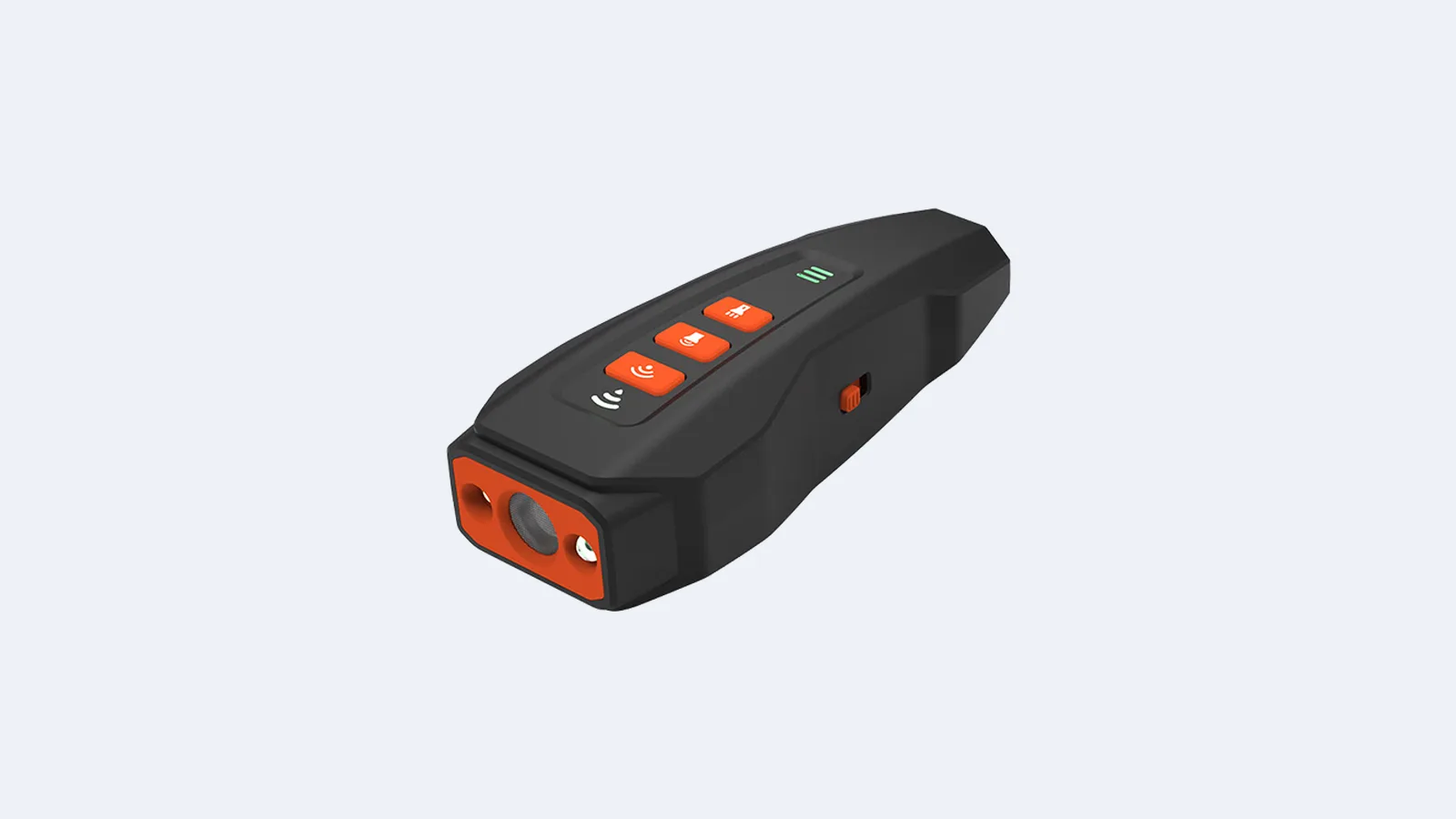
Portability is the whole point. At 1.25 pounds and roughly the size of a large power bank, the Airmoto disappears into a glove box, a trunk organizer, or a backpack. I kept mine in the center console for four weeks and forgot it was there until I needed it. That is the real test for any car gadget: does it live in your car, or does it end up in a drawer at home?
Auto shut-off works every time. Set your target PSI, press start, and the pump stops on its own. No staring at a gauge, no risk of over-inflation, no walking back and forth to check. In my testing, the auto shut-off landed within 1 PSI of the target every single time. This is the feature that makes the whole thing feel modern, and it is the single most praised detail across owner reviews.
USB-C charging is convenient. You can top up the battery from a car USB port, a power bank, or a wall brick. A full charge takes about 2.5 to 3 hours. One charge handled four routine top-offs in my testing, which means a monthly seasonal pressure reset on all four tires is comfortably within range.
The included adapters cover most needs. The box includes Schrader, Presta, needle, and general adapters, so you can handle car tires, bike tires, sports balls, and pool toys without buying extras. The carrying bag keeps everything together, which matters more than it sounds when you are fishing for a tiny adapter in a dark glove box.
The LED light is genuinely useful. The built-in light at the top of the unit runs independently of the pump. In my late-evening test, it cast just enough light to find the valve stem and thread the hose without shining in my eyes. For roadside work at night, it makes a real difference.
Where It Falls Short
The Airmoto is not a heavy-duty compressor, and treating it like one leads to frustration. Here are the honest limits.
From-flat fills are slow. A fully flat sedan tire took 15 to 26 minutes in my testing, depending on starting pressure and tire volume. A flat SUV tire can drain the battery before it reaches pressure. This is normal for a 2000mAh cell pushing a micro-compressor, but it is a far cry from the “virtually anything in minutes” marketing.
Battery life is the hard ceiling. One charge covers about four routine top-offs or one flat car tire. If you face multiple flats or need to inflate several tires in one session, you will be waiting on a recharge. Auto Air, a direct competitor, packs a 4000mAh battery that handles two to three from-flat fills per charge.
The gauge reads slightly low. Against a standalone digital gauge, the Airmoto consistently read 1 to 2 PSI low in my testing. The fix is free: set your target 0.5 to 1 PSI above the number you actually want. It is a minor workaround, not a dealbreaker, but it is the kind of fine print the ads leave out.
The hose is short. On a wheel with the valve at the top, the unit dangles and vibrates, and you end up crouching or repositioning the car so the stem sits closer to the ground. It is a minor annoyance, not a flaw, but worth knowing if you have awkward valve placements.
It cannot run while charging. The unit will not operate while plugged in. You charge it first, then use it cordless. Plan ahead on long trips and keep it topped to full before you leave.
Heat builds on long runs. The hose got warm to hot after a couple of back-to-back fills, and the body warmed noticeably during a long flat-tire run. The manual recommends cooling breaks, and I would follow that. Run one tire, let it breathe, then continue.
What Owners Say
Across Trustpilot, Reddit, and Amazon, the Airmoto holds a 4.0 to 4.3 out of 5 stars depending on the platform. The pattern is consistent: owners love the size and simplicity, and the complaints cluster around a few specific issues.
The positive pattern. Owners who use the Airmoto as intended, for top-offs and minor emergencies, report genuine satisfaction. The auto shut-off is the most praised feature. The carrying case and included adapters get frequent mentions. Several older drivers and cyclists call it an independence tool, and that is not marketing fluff. It is the right size and the right interface for someone who should not be crouching at a loud gas-station pump.
The negative pattern. Three complaints dominate:
- The VIP subscription charge. Buyers report an unexpected recurring charge appearing after purchase, often described as VIP Customer Benefits or a similar name. Multiple Trustpilot reviewers confirm refunds were issued when they pushed back, but the friction is real.
- Dead or weak batteries out of the box. A small number of units arrived dead or would not hold a charge. Support typically replaces these when you describe the fault and send a short video.
- Slow from-flat times. Owners who expected shop-compressor speed are disappointed by the 15 to 26 minute wait on a flat car tire.
The reviews are real. The patterns are real. The product works as advertised for the right use case, the company’s support is responsive, and the checkout flow is the one thing you need to watch.
For a deeper breakdown of how the Airmoto stacks up against the competition, our Airmoto vs Auto Air comparison covers the head-to-head data, and our best portable tire inflators of 2026 roundup covers the full field.
The VIP Subscription Issue
This deserves its own section because it shows up in almost every complaint thread. Airmoto’s checkout flow pushes a recurring membership, sometimes described as VIP Customer Benefits or a similar name. Buyers who miss the checkbox later see a monthly charge on their card or PayPal.
To be fair to the company, Airmoto states the membership is optional and multiple reviewers confirm support refunded the charges quickly once contacted. The friction is the dark-pattern presentation, not a stolen charge. So the practical advice is plain: at checkout, look for any pre-checked add-on, uncheck it, and screenshot your order total. If a charge appears anyway, email support and ask for a refund plus cancellation. Owners report this works.
This does not change the product’s quality, but it does change your effective price if you are not paying attention. A $59 inflator that quietly becomes $59 plus $30 a month is a bad deal. A $59 inflator you actually wanted is a good one.
Airmoto vs the Competition at the Same Price
The Airmoto does not exist in a vacuum. At the $59 price point, here is how it compares to the main alternatives:
| Factor | Airmoto | Auto Air | 12V Compressor (AstroAI) |
|---|---|---|---|
| Price | ~$59 (promo) | ~$30-40 | ~$25-40 |
| Battery | 2000mAh | 4000mAh | None (12V socket) |
| Max PSI | 120 | 150 | 150 |
| Weight | 1.25 lb | 0.77 lb | 2+ lb |
| Top-off (car) | 5-7 min | 3-5 min | 3-5 min |
| From-flat (car) | 15-26 min | 15-20 min | 8-12 min |
| Run while charging | No | Yes | N/A |
| Subscription at checkout | Yes (VIP, can decline) | No | No |
| Carrying case | Yes | No | No |
Auto Air is the closest direct competitor and beats Airmoto on battery capacity, price, and the absence of a subscription trap. Airmoto wins on included accessories (carrying case, brighter LED, deflate mode) and has a larger community of owners to reference. If you want the simplest, cheapest buy with no checkout vigilance, Auto Air is the pick. If you want the carrying case and LED light and do not mind declining the subscription, Airmoto holds its own.
12V compressors like the AstroAI are cheaper, faster, and never run out of battery since they pull from your car’s 12V socket. The trade-off is the cord and the bulk. If you always inflate near your vehicle and do not mind plugging in, a 12V unit is the better value.
For a deeper breakdown of how to choose the right type for your vehicle, our how to choose a portable tire inflator guide covers the key factors, and our how to use a tire inflator guide walks through the step-by-step process.
Who Should Buy It
The Airmoto is the right buy for specific drivers. Here are the personas where it makes sense:
The daily commuter. You drive 20 minutes each way and check pressure twice a year, if that. Airmoto turns a dreaded station trip into a two-minute driveway task. Buy it, charge it monthly, forget it until the light glows.
The cyclist. The Presta adapter in the box means you can top road tires to 60 PSI at the trailhead. The cordless freedom beats a floor pump when you are already dressed for the ride.
The new or senior driver. Airmoto removes the intimidation of gas-station hoses. Set the number, press start, done. Multiple older owners called it an independence tool, and that is the right size and the right interface for someone who should not be crouching at a loud station pump.
The road-tripper. Keep it in the console with your jump starter. One soft tire in a small town with no open station becomes a non-event.
The household with multiple cars. One Airmoto can serve the whole fleet. Charge it monthly, move it between vehicles, and every driver has a safety net.
Who Should Skip It
The Airmoto is not for everyone. Here are the cases where you should spend your money elsewhere:
Truck, RV, and trailer owners. Your tire volume will bury the battery and test your patience. A 12V compressor or a larger battery unit like the Milwaukee M18 is the honest pick. The Airmoto tops out at 120 PSI and was never designed for the air volume of a full-size truck tire.
Drivers who face multiple flats regularly. If you drive rough roads, haul heavy loads, or routinely deal with more than one flat tire per charge, the 2000mAh battery will frustrate you. Auto Air’s 4000mAh cell or a 12V compressor handles sustained use better.
Shop-compressor speed seekers. From flat, the Airmoto is a 15 to 26 minute job. If you need a tire filled in under 10 minutes every time, get a 12V unit and accept the cord.
Buyers who want zero checkout vigilance. The VIP upsell will annoy you. If you do not want to scrutinize every line of your order summary, Auto Air or a 12V compressor from a mainstream brand is a simpler purchase.
For a wider look at every option in this category, our smart gadgets category covers the latest tested gear in this space.
The Value Math: Cost per Use vs Gas Station Air
The real question is not whether the Airmoto works. It is whether it earns its $59. Here is the honest math.
Gas station air costs $0.50 to $2.00 per session where it is metered. Many stations now charge for air that used to be free. Over two years of monthly pressure checks, that adds up to $12 to $48 in quarters.
The Airmoto costs $59 once. No recurring cost, no coins, no station trips. Break-even against paid air comes at roughly 30 to 120 sessions, and most drivers doing monthly top-offs hit that inside two years.
But the bigger saving is the cost of neglect. Under-inflated tires wear faster, grip worse in emergencies, and burn more fuel. The U.S. Department of Energy notes that keeping tires at the right pressure is one of the simplest ways to protect both your mileage and your tire life. A tire run consistently low wears out early, and one avoided premature tire replacement dwarfs the purchase price of any inflator.
The real value is the habit. A cordless inflator that lives in your car removes every excuse: no gas station trip, no coins, no wrestling with a stiff hose at a crowded pump. You check the pressure in your driveway, add a few PSI if needed, and move on with your day. That habit alone is worth more than the product costs.
The VIP upsell is the only thing that tilts the math the wrong way, and only if you miss it. Decline it and the value stands.
Is It Worth Full Price vs Waiting for a Sale?
The Airmoto lists around $69 to $79, with promo pages frequently showing a discounted price near $59. In the UK, expect roughly £55 to £65 depending on the campaign and exchange rate.
At the $59 promo price, the Airmoto is fair for what it delivers: a pocket inflator with auto shut-off, USB-C, an LED, a deflate mode, and four adapters. You are paying for portability and convenience more than raw power. If those are your priorities, the value is real.
At the full $79 list price, the math gets tighter. Auto Air offers a bigger battery and no subscription for $30 to $40, and a solid 12V compressor can be had for $25 to $40. If Airmoto is not on sale, the alternatives look stronger by comparison.
If you need it now, the promo price is fair. If you can wait for a holiday sale, you might catch it lower. Either way, decline the VIP membership at checkout.
For a broader look at what matters when shopping, our portable tire inflator buying guide breaks down PSI, battery life, and gauge accuracy across the category.
Alternatives Under Similar Money
If the Airmoto’s battery limit or subscription gives you pause, two other paths sit in the same price neighborhood:
12V compressors (AstroAI, EPAuto). Roughly the same or less money, faster fills, and no battery to drain since they pull from your car. The cost is the cord and the bulk. Best if you always inflate near the vehicle and want speed over portability.
Larger battery inflators (Auto Air, Fanttik X8). More battery capacity and faster fills, sometimes at a lower price. Auto Air packs 4000mAh with no subscription at checkout. The trade-off is a smaller accessory kit and no carrying case.
What you give up with each alternative. The 12V units are corded and bulkier. The larger battery units are heavier and sometimes pricier. The Airmoto’s lane is the one those do not fill: truly pocket-sized, cordless, and forgettable until needed. If that is your priority, the alternatives do not really compete. If speed and volume matter more, they win.
For a model-by-model breakdown of every option on this list, our best portable tire inflators of 2026 roundup covers the full field with real test data.
Final Verdict
Is the Airmoto worth it? Yes, for the right buyer, at the right price, with the right expectations.
The Airmoto is a genuinely handy cordless tire inflator that does exactly what a glove-box backup should. It tops off car tires in minutes, handles bikes and balls without a thought, shuts off on its own at the pressure you set, and slips into a storage cubby you would forget it was in. For everyday drivers, cyclists, and commuters who want to stop depending on gas-station air, it earns its place.
It is not a heavy-duty compressor. The marketing’s “virtually anything in minutes” needs the fine-print read: great for car-sized and smaller, slow and battery-limited from a full flat, and wrong for trucks and RVs. The gauge reads slightly low, the hose gets warm on long runs, and the checkout pushes a recurring VIP membership you should decline.
None of those flaws are fatal. They are the honest edges of a tiny, portable tool. Buy it for what it is, keep it charged, uncheck the membership, and it will bail you out the first time a tire goes soft. That is why it lands at 7.6 out of 10: a strong convenience buy with clear, manageable limits.
If the battery limit or subscription bothers you, Auto Air is the better value for most buyers. If you want speed and volume over portability, a 12V compressor is the smarter spend. But if you want the smallest cordless inflator that actually lives in your car and handles the everyday stuff without a gas station, the Airmoto is worth it.
Frequently Asked Questions
Is the Airmoto worth the money? For drivers who want a cordless, glove-box-sized backup for seasonal pressure drops, slow leaks, and minor roadside emergencies, yes. One use during a flat can justify the purchase. If you need to repeatedly inflate large or fully flat tires fast, a 12V compressor is the better value.
Is the Airmoto legit or a scam? The Airmoto is a real, functional product that does what it promises for car-sized tires and smaller. It holds a 4.0 to 4.3 out of 5 stars across Amazon and Trustpilot. The VIP subscription upsell at checkout is the most common complaint, but it is a dark-pattern sales tactic, not a scam. The product itself is legitimate.
Does the Airmoto actually work from a completely flat tire? Yes, but slowly. A fully flat sedan tire takes 15 to 26 minutes and may drain the 2000mAh battery before the tire reaches pressure. It works as an emergency tool, not as a replacement for a 12V compressor. For routine top-offs of 5 to 10 PSI, it finishes in 5 to 7 minutes and the battery handles four of those per charge.
What are the most common Airmoto complaints? The three most common complaints are the VIP subscription charge at checkout, units arriving dead or not holding a charge, and slow from-flat inflation times. The subscription is avoidable by unchecking the box, and dead units are typically replaced by support when you send a short video of the issue.
How many tires can the Airmoto inflate on one charge? A full charge handles about four routine top-offs (adding 5 to 10 PSI each) or one fully flat passenger car tire in most cases. For multiple flat tires, you will need to recharge, which takes roughly 2.5 to 3 hours over USB-C.
Is the Airmoto gauge accurate? Close enough for everyday maintenance. The built-in gauge reads within about 1 to 2 PSI of a standalone digital gauge and tends to read slightly low. Set your target 0.5 to 1 PSI above the number you actually want and you will land correctly. For precision work, verify with a separate gauge.
Can the Airmoto inflate truck or RV tires? It can reach 120 PSI, which covers most passenger car, motorcycle, and bike tires. Large truck, RV, and trailer tires are a poor fit because of their air volume and the long run time required. The battery and motor will struggle, and you will likely need cooling breaks.
Should I buy the Airmoto or wait for a sale? The Airmoto frequently runs promo pricing around $59, down from a list price of $69 to $79. If you need it now, the promo price is fair for what you get. If you can wait, holiday sales sometimes drop it lower. Either way, decline the VIP membership at checkout to avoid surprise recurring charges.
Common Questions & Answers
Q: Is the Airmoto worth the money?
For drivers who want a cordless, glove-box-sized backup for seasonal pressure drops, slow leaks, and minor roadside emergencies, yes. One use during a flat can justify the purchase. If you need to repeatedly inflate large or fully flat tires fast, a 12V compressor is the better value.
Q: Is the Airmoto legit or a scam?
The Airmoto is a real, functional product that does what it promises for car-sized tires and smaller. It holds a 4.0 to 4.3 out of 5 stars across Amazon and Trustpilot. The VIP subscription upsell at checkout is the most common complaint, but it is a dark-pattern sales tactic, not a scam. The product itself is legitimate.
Q: Does the Airmoto actually work from a completely flat tire?
Yes, but slowly. A fully flat sedan tire takes 15 to 26 minutes and may drain the 2000mAh battery before the tire reaches pressure. It works as an emergency tool, not as a replacement for a 12V compressor. For routine top-offs of 5 to 10 PSI, it finishes in 5 to 7 minutes and the battery handles four of those per charge.
Q: What are the most common Airmoto complaints?
The three most common complaints are the VIP subscription charge at checkout, units arriving dead or not holding a charge, and slow from-flat inflation times. The subscription is avoidable by unchecking the box, and dead units are typically replaced by support when you send a short video of the issue.
Q: How many tires can the Airmoto inflate on one charge?
A full charge handles about four routine top-offs (adding 5 to 10 PSI each) or one fully flat passenger car tire in most cases. For multiple flat tires, you will need to recharge, which takes roughly 2.5 to 3 hours over USB-C.
Q: Is the Airmoto gauge accurate?
Close enough for everyday maintenance. The built-in gauge reads within about 1 to 2 PSI of a standalone digital gauge and tends to read slightly low. Set your target 0.5 to 1 PSI above the number you actually want and you will land correctly. For precision work, verify with a separate gauge.
Q: Can the Airmoto inflate truck or RV tires?
It can reach 120 PSI, which covers most passenger car, motorcycle, and bike tires. Large truck, RV, and trailer tires are a poor fit because of their air volume and the long run time required. The battery and motor will struggle, and you will likely need cooling breaks.
Q: Should I buy the Airmoto or wait for a sale?
The Airmoto frequently runs promo pricing around $59, down from a list price of $69 to $79. If you need it now, the promo price is fair for what you get. If you can wait, holiday sales sometimes drop it lower. Either way, decline the VIP membership at checkout to avoid surprise recurring charges.
More Smart Gadgets Articles
Related Product Reviews



Consumer electronics reviewer specializing in smart gadgets and everyday tech. Tests 100+ gadgets annually. Previously wrote for The Verge and Wired. Focus on practical daily-use value.