
Tire Inflator Size Guide: Compact vs. Full-Size Models
From glove-box minis to trunk-sized units. Find the right size for your car, your storage, and your needs.

Tech Reviewer
In This Article
- TL;DR
- Size Categories: From Glove Box to Trunk
- Compact: Under 1.5 Pounds, 6-7 Inches Long
- Mid-Size: 1.5-3 Pounds, 7-10 Inches Long
- Full-Size: 3-7 Pounds, 10-15 Inches Long
- How to Choose the Right Size
- Based on Where You Store It
- Based on What You Drive
- Based on How You Will Use It
- The Storage Test: Will It Actually Fit?
- What to Sacrifice and What to Keep
- Verdict
- Frequently Asked Questions
- Links
Portable tire inflators come in every size from a candy bar to a loaf of bread. The right size depends on where you will store it, what you drive, and how you will use it. Choosing the wrong size means either a tool that takes up valuable trunk space or a unit too small to handle your tires.
This guide breaks down every size category with specific model examples so you can match the inflator to your situation.
TL;DR
- Under 1.5 pounds — glove-box compact, fits anywhere, best for daily commuters
- 1.5-3 pounds — mid-size, balances power and portability for SUVs and crossovers
- 3-7 pounds — full-size, trunk-only, for trucks, RVs, and heavy-duty use
- Under 2 pounds is the sweet spot for most drivers — the Airmoto at 1.25 pounds is the benchmark
- Size does not equal quality — a well-built compact is better than a cheaply made full-size
Size Categories: From Glove Box to Trunk
Compact: Under 1.5 Pounds, 6-7 Inches Long
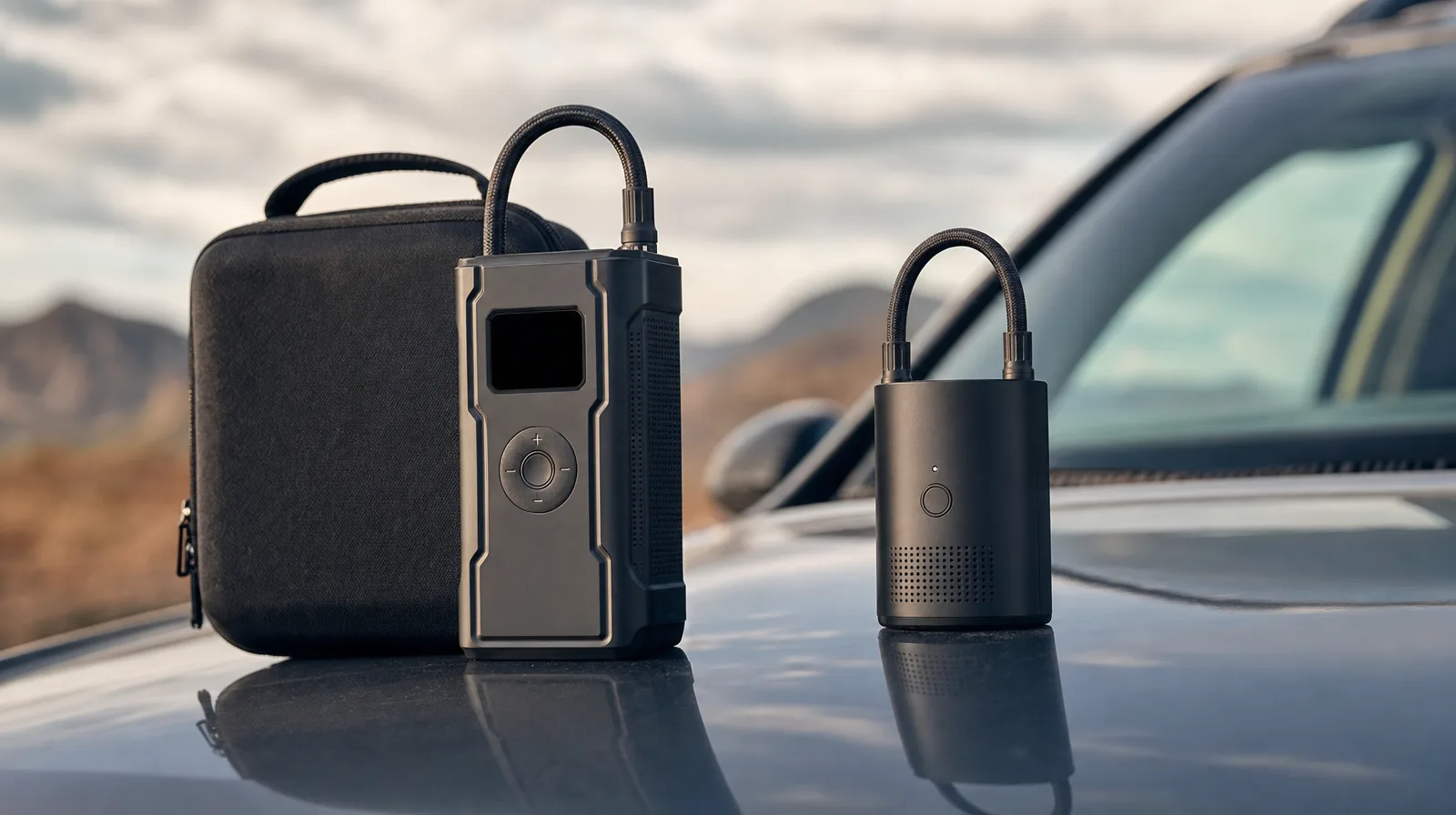
These are the true glove-box inflators. They fit in the glove box, center console, or even a large purse. You can forget they are there until you need them.
What they can handle: Standard car tires (32-35 PSI), motorcycle tires, bicycle tires, and small SUV top-offs. They top off tires in 2-4 minutes and handle 3-4 tires per charge.
What they cannot handle: From-flat fills on SUVs, truck tires, or RV tires. The battery is too small and the motor is not powerful enough for sustained high-draw inflation.
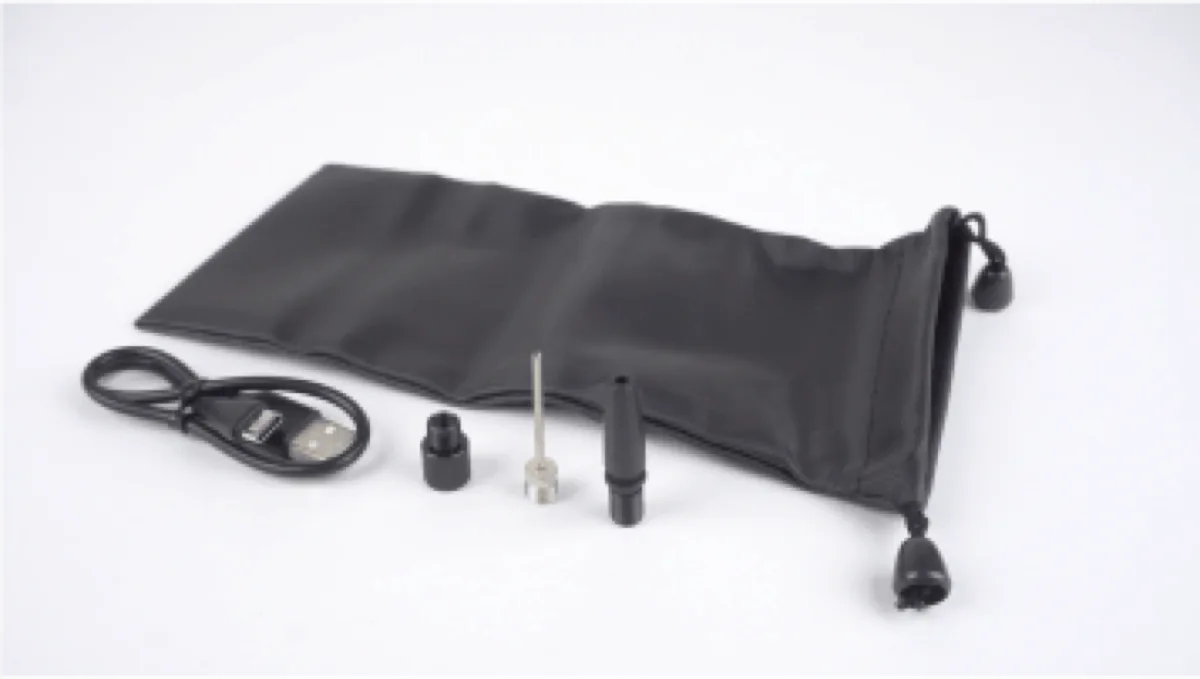
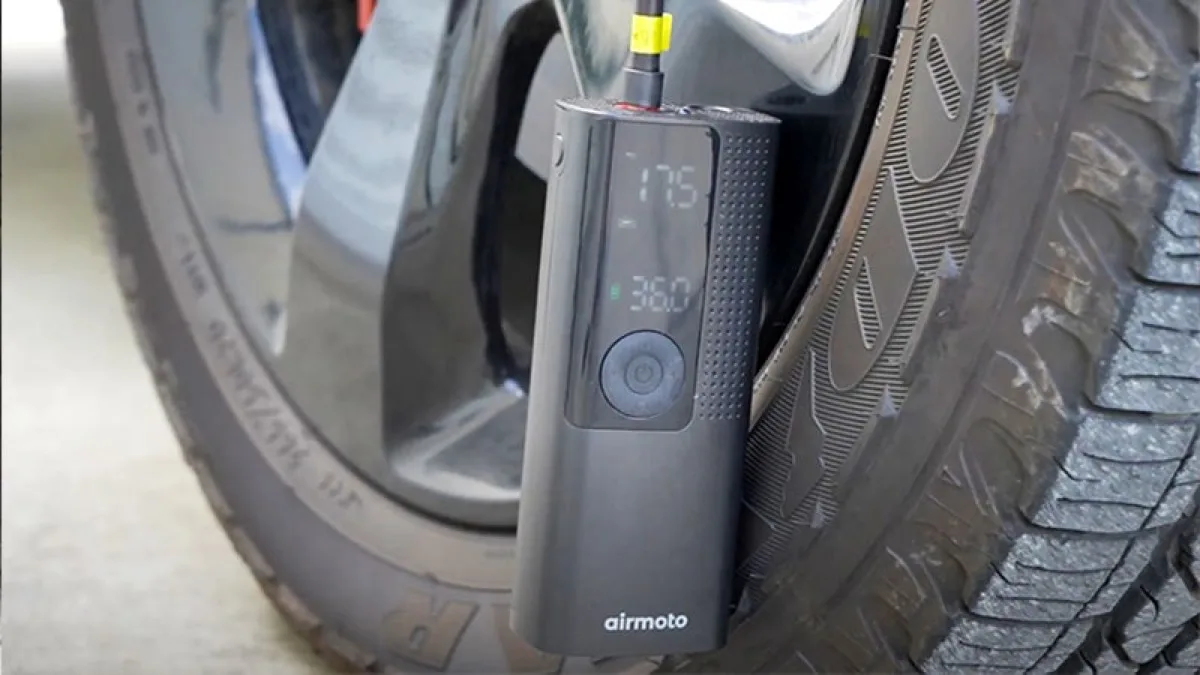
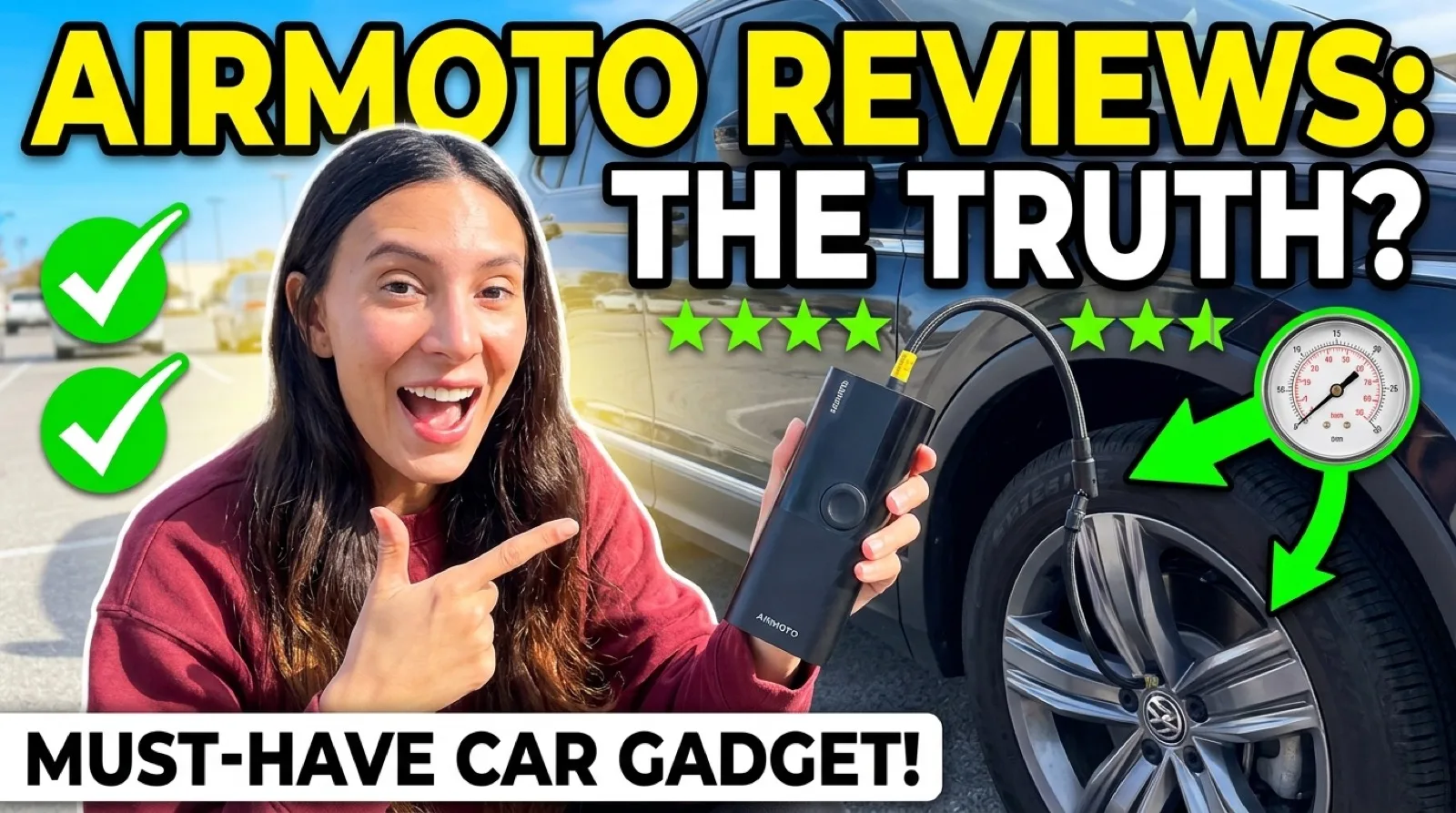
Best example: Airmoto at 1.25 pounds, 6.1 inches, 120 PSI, with a 2000mAh battery. Fits in a glove box and delivers 3-4 tires of top-offs per charge.
Mid-Size: 1.5-3 Pounds, 7-10 Inches Long
These balance power and portability. They fit in most trunks and some larger glove boxes. They are the most versatile category because they have enough battery and motor power to handle most situations without being too heavy to carry.
What they can handle: Car and SUV tires from flat, small truck tires for top-offs, and motorcycle or bicycle tires. Most fill a sedan from flat in 12-18 minutes.
What they cannot handle: Heavy-duty truck tires, RV tires, or commercial use. The battery and motor are not sized for sustained high-pressure inflation on large tires.
Best examples: AstroAI L7 at 2.2 pounds with 150 PSI, Fanttik X8 APEX at 2.5 pounds with 150 PSI, and Kohree at under 1 pound with 120 PSI.
Full-Size: 3-7 Pounds, 10-15 Inches Long
These are trunk units. They do not fit in a glove box and require dedicated storage space in the trunk. They are more like portable compressors than convenience tools.
What they can handle: Truck tires, RV tires, trailer tires, and commercial tires at 150+ PSI. They can fill a truck tire from flat in 3-5 minutes and rarely run out of power.
What they cannot handle: Being carried into a store or used as a portable tool. They are heavy, bulky, and designed for vehicle storage only.
Best examples: Milwaukee M18 at 7 pounds with 160 PSI and 18V battery, DeWalt 20V MAX at 4.4 pounds with 150 PSI, VIAIR 88P at 4 pounds with 120 PSI and 12V power.
How to Choose the Right Size
Based on Where You Store It
Glove box or center console: You need a compact under 1.5 pounds and under 7 inches. Airmoto at 1.25 pounds fits this perfectly. If it does not fit in your specific car’s glove box, try a smaller unit like the Kohree.
Trunk storage: You have more flexibility. A mid-size or full-size unit works. But if you are storing it in the trunk, why not just get a compact that you can also carry into the store?
Truck bed or cargo area: Full-size units are appropriate here. You already have space, and you probably need the extra power for larger tires.
Based on What You Drive
Sedan or compact car: Compact is the clear choice. You need 100-120 PSI and a unit that fits in the glove box. Airmoto covers every scenario for a sedan driver.
SUV or crossover: Mid-size is ideal. You may need to top off at 40-45 PSI on occasion. A 120 PSI model handles this easily for top-offs. From-flat fills are possible but slower — budget 20-25 minutes.
Truck or RV: Full-size is required. You need 150+ PSI and the sustained power to inflate large tires from flat. Corded 12V models are the most reliable for this category.
Motorcycle or bicycle: Compact is more than enough. These tires need very little air volume and a 120 PSI model fills them in 2-3 minutes.
Based on How You Will Use It
Daily top-offs only: Compact. You are adding 3-5 PSI to tires that are slightly low. Any 120 PSI model will do this in under 3 minutes.
Emergency readiness: Mid-size with a 2000mAh+ battery or a corded backup. You want the unit to work from flat on multiple tires.
Commercial or work use: Full-size. You need the power, the durability, and the sustained runtime that only a larger unit provides.
The Storage Test: Will It Actually Fit?
Before buying any inflator, measure your storage space. Here is how:
- Measure the glove box interior — length, width, and height inside the lid
- Measure the center console — if you have one, same measurements
- Measure the trunk floor space if you plan to store it there
- Compare to the inflator dimensions — the manufacturer’s listed dimensions are usually accurate
Most glove boxes are 8-12 inches wide, 4-6 inches tall, and 10-16 inches deep. The Airmoto at 6.1 x 1.6 x 2.4 inches fits with room to spare. If your glove box is unusually small, check the Kohree at under 5 inches.
Blockquote: Consumer Reports found that 38 percent of inflator returns were because the unit did not fit in the buyer’s intended storage space. Always measure before buying.
What to Sacrifice and What to Keep
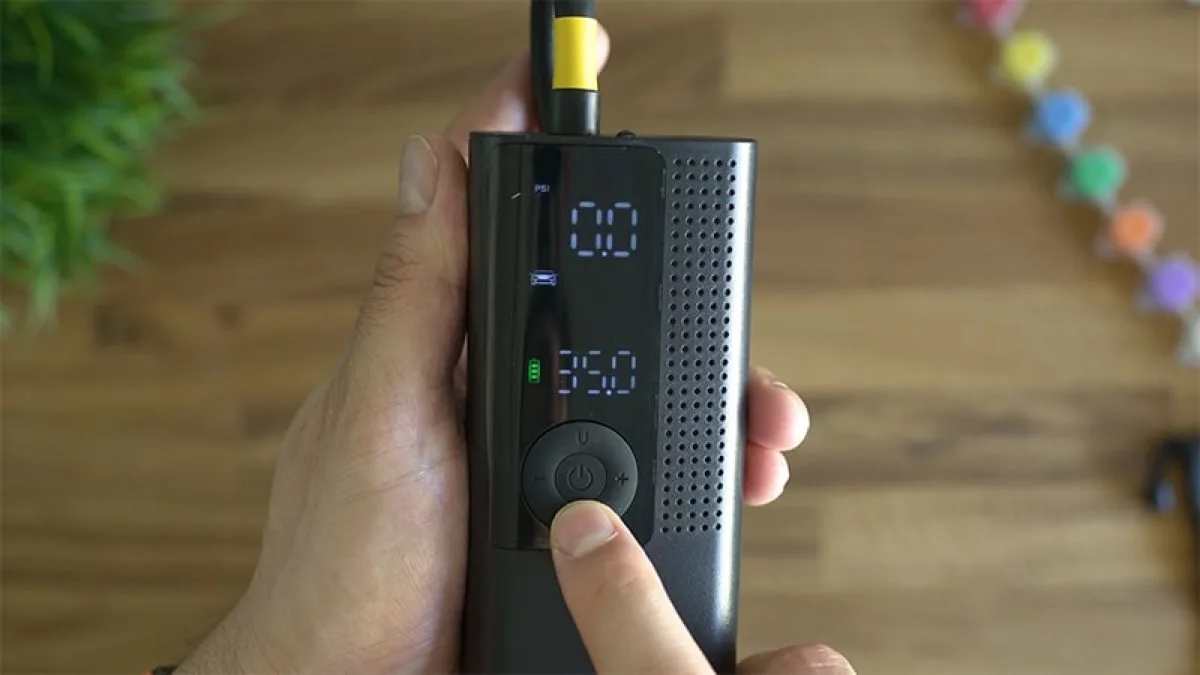
When choosing a compact unit, you do not have to sacrifice quality. The Airmoto at 1.25 pounds has a digital gauge, auto shut-off, USB-C charging, LED light, deflate mode, and a 1-year warranty — features that match or exceed full-size units at half the price.
What you do sacrifice in a compact is sustained power. From a completely flat tire on a large SUV, a compact will take longer and may not finish the job on one charge. That is the trade-off for portability.
What you gain in a full-size is raw power. Truck tires from flat in 3 minutes, unlimited runtime on corded models, and 150+ PSI for serious applications. That is the trade-off for size and weight.
Verdict
For 90 percent of drivers, a compact tire inflator under 2 pounds is the right size. It fits in a glove box, handles daily top-offs and emergency inflation on car and SUV tires, and costs $40-$80. The Airmoto at 1.25 pounds with 120 PSI, a 2000mAh battery, and a digital gauge is the benchmark for this category. Only go larger if you drive a truck, RV, or trailer, or if you need to inflate tires from completely flat on a regular basis. Measure your storage space first, then match the size to your vehicle and use case. The right inflator is the one that fits where you store it and handles what you need it to handle.
Frequently Asked Questions
Can a compact tire inflator fill a truck tire? No, not effectively. Truck tires need 65-80 PSI and much more air volume than a compact unit can deliver. A compact 120 PSI inflator can top off truck tires from 60 to 65 PSI but cannot fill them from flat. You need a full-size 150+ PSI unit for truck tires.
What is the smallest tire inflator that works on cars? The Kohree at under 1 pound and 5 inches long is the smallest we tested that works on car tires. It inflates a sedan tire from 25 to 35 PSI in about 4 minutes. For even smaller options, mini pumps exist at under 8 ounces but take 10+ minutes per tire.
Can I use a compact inflator on an RV tire? Small RV tires (12-14 inches) can work with a 120 PSI compact for top-offs. Larger RV tires (16-22 inches) need 150+ PSI and a full-size unit. Always check the recommended PSI for your specific RV tires.
Do compact inflators have the same features as full-size models? Many do. The Airmoto has auto shut-off, digital gauge, LED light, deflate mode, and USB-C charging — features that match or exceed some full-size models. The main difference is battery capacity and motor power, not features.
Is it worth buying a larger inflator just in case? No, if you drive a car or SUV. A compact unit handles 95 percent of real-world scenarios. Buying a full-size for the rare case of a truck tire flat means carrying 5 extra pounds in your trunk every day. Keep a compact and rent or borrow a full-size if you ever need one for a truck.
Links
For the full Airmoto specifications, features, and testing data, see the Airmoto detailed review. For the head-to-head comparison of the two leading compact models, see our Airmoto vs Auto Air comparison. For the full lineup of tested models, see our best portable tire inflators of 2026 roundup.
Frequently Asked Questions
How big is a standard portable tire inflator?
What is the smallest tire inflator available?
Can a compact tire inflator handle a full-size SUV?
What is the difference between a compact and full-size inflator?
Should I choose a compact or full-size tire inflator?
How do I know what size fits in my car?
Do smaller inflators have worse gauges?
Are compact inflators less durable than full-size models?
More Smart Gadgets Articles
Related Product Reviews


Alex Thompson
Consumer electronics reviewer specializing in smart gadgets and everyday tech. Tests 100+ gadgets annually. Previously wrote for The Verge and Wired. Focus on practical daily-use value.
Affiliate disclosure:This article contains affiliate links. If you buy through them, GearPuff may earn a commission at no extra cost to you. It keeps our testing independent and our reviews free.